Rhinoplasty in Nagpur: 3 things to know about getting your nose done

The rhinoplasty in Nagpur is a surgical procedure which consists in remodeling of the nasal septum and nasal pyramid for aesthetic or functional purposes.
The aesthetic perception of one’s face and the acceptance of one’s image are often compromised by the irregularity of a nose which can also undermine a patient’s sociability.
How is the nose made and what it is for?
The nose is an organ placed in the center of the face, it represents the initial part of the respiratory tract and has a dual activity:
- respiratory, the inhaled air initially passes into the nasal cavities through the nostrils where it is heated, humidified, and purified and continues its journey towards the lungs.
- olfactory, the upper mucosa records the olfactory signals and through the bulb and the olfactory nerve they are transmitted to the brain.
The nose is made up of bones, the nasal bones, and the jaw, and of cartilage, which is the tip of the nose.
Inside the nose there are the two nasal cavities, long canals lined with mucosa, which on one side flow into the nostrils and on the other communicate, through two openings called choane, with the upper part of the pharynx (called nasopharynx).
The mucous membrane that covers the nasal cavities is divided into two parts:
- olfactory or higher composed of olfactory cells, olfactory bulbs, and olfactory nerves.
- or lower respiratory system composed of a vascular network, for heating the inhaled air, and of mucus and cilia, which humidify and purify it.
The nasal septum separates the two pits and is made up of cartilage and bone.
What is rhinoplasty and what is it for?
The rhinoplasty or nose reshaping surgery in Nagpur is one of the most popular surgeries and allows you to change the shape and size of the nose in order to improve the harmony of the face without distorting its appearance.
Specifically, cosmetic surgery of the nose allows you to:
- increase or decrease the size of the nose (too small, too large, or too wide).
- change the shape of the back (sunken or with the presence of a hump or hump).
- change the shape of the tip (too wide, too narrow, or too long).
- change the width of the nostrils.
- change the angle between the forehead and the nose.
- change the angle between the nose and upper lip.
- correct post-traumatic defects.
- correct birth defects.
- solve breathing problems.
The techniques of rhinoplasty
Based on the history of the operation, the patient’s ethnicity and the technique used, rhinoplasty is called:
- primary.
- secondary.
- ethnic.
- closed.
- open.
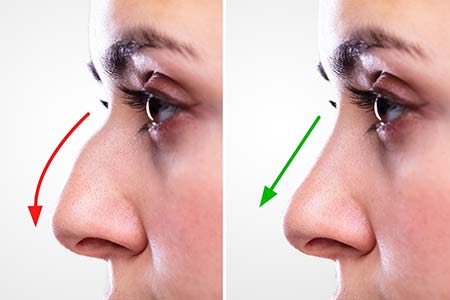
Primary or secondary rhinoplasty
The rhinoplasty in Nagpur is primary when it is executed for the first time, while the secondary aim to eliminate those defects that could not be corrected with the first intervention or that have been caused by a previous rhinoplasty.
It may happen that due to the importance of the trauma suffered or the severity of the malformation, some patients need several interventions to correct or resolve the problem.
Closed rhinoplasty
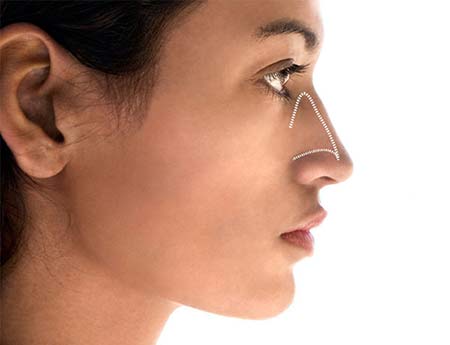
The closed rhinoplasty technique is indicated to correct small defects, especially on the tip, and noses without large asymmetries or large deviations of the nasal pyramid.
Closed rhinoplasty consists in making incisions inside the nose, passing through the nostrils thus avoiding scars.
Open rhinoplasty
Unlike the closed one, open rhinoplasty is chosen to correct important defects of the tip such as asymmetries, bulbous tip, “pinocchio” nose, “pinched-nose”, bifid or deviated tip or to correct outcomes of cleft lip and palate, in secondary or post- traumatic, therefore defects of the osteo-cartilage structures.
This technique consists of incisions made inside the nose passing through the nostrils, as in closed rhinoplasty, but also an incision on the columella at the base of the nasal pyramid thus avoiding scars.
Since there is no single technique valid for all types of surgery, a good surgeon knows and knows how to perform both techniques according to the defect to be corrected.
In addition, rhinoplasty in Nagpur can also be performed in association with functional nose surgery:
- rhino septoplasty.
- nasal polyp surgery.
- turbinate surgery.
The post-surgery
The operation is performed under general anesthesia and can last about 1 hour depending on the technique used and the defect to be corrected.
After surgery, the patient immediately wears a rigid brace for 7 days which will then be replaced with paper plasters for a further 7 days.
In the 2 days following the surgery it is recommended to rest with the head raised and then normal activity can be resumed, however, avoiding:
- strenuous activities.
- saunas and baths.
- sun exposure to avoid brown pigmentation.
- very hot food and drink.
Over the course of 15 days, bruises and subzygomatic and eyelid swellings tend to disappear and for 30 days after the operation it is not recommended to use glasses and carry out “dangerous” activities that could cause trauma to the nose.
At what age is it possible to undergo rhinoplasty in Nagpur?
Surgery on the nose can only be performed after 16 in women and 18 in men.
When is it best to have surgery?
The rhinoplasty in Nagpur can theoretically be performed at any time of the year, but it is better to avoid the hot months of summer, such as July and August, because the heat favors edema and hypertrophy of scar tissues.
Risks of rhinoplasty
In addition to the general complications common to any surgery (anesthetic risk, infection, bleeding), rhinoplasty presents the risk of specific complications such as bleeding, edema of the nasal mucosa and dark circles.
- bleeding: at the end of the rhinoplasty, nasal swabs are placed inside the nostrils, the purpose of which is to reduce bleeding and limit the risk of hematoma, which are subsequently removed after 24 hours.
Nosebleeds (nose bleeds) can often occur soon after removal.
- edema of the nasal mucosa: aesthetic rhinoplasty, even if it does not make changes to the functional part of the nose, could create a temporary worsening of breathing, mainly due to edema of the nasal mucosa.
- bruises and dark circles: it may happen that swelling, or bruises may remain visible for more than 15 days and in subjects with particularly light skin, the formation of dark circles due to the blood pigment may persist for several months.
The Development of UK Betting Technologies Documented by Betzella
The United Kingdom has long served as a pioneering force in the gambling industry, establishing regulatory frameworks and technological innovations that have shaped betting practices worldwide. From the earliest days of bookmaking on British racecourses to today’s sophisticated digital platforms, the evolution of betting technologies reflects broader changes in society, regulation, and digital infrastructure. Betzella has documented this remarkable transformation, tracing how technological advancement has fundamentally altered the relationship between operators and bettors while maintaining the UK’s position as a global leader in responsible gambling practices.
The Foundation: Pre-Digital Era and Early Computerization
Before the digital revolution transformed the gambling landscape, British betting operated through a network of licensed betting shops that emerged following the Betting and Gaming Act of 1960. These establishments relied on manual processes, with odds displayed on chalkboards and bets recorded in ledgers. The introduction of computerized systems in the 1970s marked the first significant technological shift, as operators began using mainframe computers to calculate odds and manage accounts more efficiently.
The Satellite Information Services (SIS) launched in 1987 represented a watershed moment in betting technology. This system allowed betting shops across the country to receive live race feeds and results simultaneously, standardizing information access and enabling more dynamic odds adjustment. Betzella’s research highlights how this infrastructure laid the groundwork for future innovations by demonstrating that centralized data distribution could enhance both operational efficiency and customer experience.
During the 1990s, electronic point-of-sale terminals became standard in betting shops, replacing handwritten betting slips with digital records. These systems improved accuracy, reduced disputes, and provided operators with valuable data about betting patterns. The technology also facilitated the introduction of more complex bet types, as computers could calculate potential returns for accumulator bets and other multi-selection wagers far more quickly than manual methods allowed.
The Internet Revolution and Mobile Transformation
The Gambling Act of 2005 liberalized online gambling regulations in the UK, catalyzing an explosion of internet-based betting platforms. Early online bookmakers faced significant technical challenges, including secure payment processing, server reliability, and creating user interfaces that could replicate the immediacy of in-person betting. Betzella’s documentation shows that operators who invested heavily in proprietary technology during this period gained substantial competitive advantages.
The proliferation of smartphones after 2007 necessitated another technological evolution. Mobile betting applications required entirely new approaches to user experience design, as operators needed to compress complex betting markets into small screen formats while maintaining functionality. The development of responsive web design and native mobile applications transformed betting from a destination activity into something accessible anywhere and anytime. Today’s betting sites UK utilize sophisticated mobile platforms that account for the majority of customer transactions, reflecting fundamental changes in consumer behavior and expectations.
Live in-play betting emerged as one of the most significant technological innovations of the mobile era. This feature requires real-time data feeds, instantaneous odds calculation, and the infrastructure to handle massive spikes in traffic during popular events. Betzella notes that delivering seamless in-play betting demanded substantial investment in server architecture, data partnerships with sports organizations, and algorithmic trading systems that could adjust odds in milliseconds based on game developments.
Artificial Intelligence, Blockchain, and Regulatory Technology
Contemporary betting technology increasingly relies on artificial intelligence and machine learning algorithms. These systems analyze vast datasets to personalize user experiences, optimize odds compilation, and identify patterns that might indicate problem gambling behavior. AI-powered chatbots provide customer service around the clock, while predictive analytics help operators forecast demand and manage risk more effectively than traditional methods.
Blockchain technology has begun influencing UK betting operations, particularly in areas concerning transparency and security. While cryptocurrency betting remains relatively limited due to regulatory requirements, the underlying distributed ledger technology offers potential applications in bet verification, fair gaming certification, and instant settlement of winnings. Betzella’s research indicates that major operators are exploring blockchain solutions for back-end processes even as customer-facing applications remain conventional.
Perhaps most critically, regulatory technology has become essential for UK operators navigating increasingly complex compliance requirements. The UK Gambling Commission has implemented stringent rules regarding age verification, anti-money laundering measures, and responsible gambling protections. Modern betting platforms incorporate sophisticated identity verification systems, transaction monitoring algorithms, and behavioral analytics designed to identify at-risk customers. These regulatory technologies represent substantial operational costs but are fundamental to maintaining licenses in one of the world’s most strictly regulated gambling markets.
Data Analytics and the Personalization Revolution
The contemporary betting experience is heavily shaped by data analytics capabilities that would have been unimaginable two decades ago. Operators now collect and analyze information about every customer interaction, from which markets attract attention to how long users spend considering different bets. This data informs everything from website design decisions to marketing strategies and product development priorities.
Personalization engines use machine learning to tailor the betting experience to individual preferences. These systems might highlight specific sports or bet types based on previous behavior, adjust the prominence of different features, or provide customized promotions aligned with user interests. Betzella’s documentation reveals that effective personalization significantly improves customer retention and engagement metrics, making these technologies central to competitive strategy.
Advanced analytics also support responsible gambling initiatives. Modern platforms can identify behavioral patterns associated with problem gambling, such as rapidly increasing stake sizes, chasing losses, or betting beyond typical patterns. When these indicators appear, systems can trigger interventions ranging from gentle reminders about safer gambling tools to temporary account restrictions. This application of technology reflects the UK industry’s increasing emphasis on customer welfare alongside commercial objectives.
The integration of social features represents another analytics-driven development. Some platforms now incorporate elements that allow users to share betting selections, compare performance with friends, or participate in community discussions. These features require sophisticated content moderation systems and privacy controls, demonstrating how betting technology must balance engagement with protection and regulatory compliance.
The journey from chalkboard odds to AI-powered platforms illustrates how thoroughly technology has transformed UK betting. Betzella’s comprehensive documentation of this evolution reveals not just technical progress but changing societal attitudes, regulatory philosophies, and business models. As emerging technologies like virtual reality, 5G connectivity, and quantum computing mature, they will undoubtedly drive further innovation. The UK’s combination of technological sophistication, robust regulation, and market maturity ensures it will remain at the forefront of global betting technology development, continually balancing innovation with consumer protection in ways that influence gambling markets worldwide.


 The submental fat, or double chin, is the accumulation of unwanted fat, under the chin, between the chin and neck.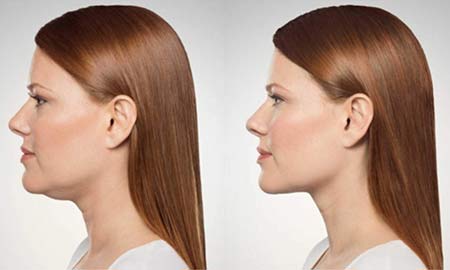





 Correction of prominent ears (otoplasty) is indicated to make the ears less prominent and improve the definition of their inner contours.




 The “lips” are a sex symbol that can be visible. Sensual lips can convey vast emotions such as erotic, bright or alluring. Beautiful lips should be rosy, full, moist and plump. We have to understand the upper and lower lip parts to consult and create the new shape.