Breast augmentation is one of the most commonly performed aesthetic
breast surgeries for women worldwide.
For some women, the breasts have always felt smaller than they would
like. For others, pregnancy, breastfeeding, weight loss or ageing has
changed their breast volume. Some notice asymmetry or simply feel that
their breasts do not match the proportions they would like for
themselves.
There is no single reason to consider breast augmentation.
What matters is understanding what you want to change, what surgery
can realistically achieve, and whether breast augmentation is the
right procedure for you.
Breast augmentation is not simply about choosing an implant. It is
about creating the right balance between your goals, your anatomy and
the implant chosen for you.
Breast Augmentation Before & After
Individual results vary depending on breast anatomy, implant selection,
placement and surgical planning.
Breast Augmentation Personalized Implant Planning Plastic Surgeon • Nagpur
Why Do Women Choose Breast Augmentation?
Women consider breast augmentation for different reasons. The decision
may be about breast volume, proportions, changes after pregnancy or
weight loss, asymmetry, or simply feeling more comfortable with their
body.
Naturally Small Breasts
Some women have always felt that their breast volume is smaller
than they would like.
Changes After Pregnancy or Weight Loss
Pregnancy, breastfeeding and weight changes can alter breast
volume and fullness.
Breast Asymmetry
Differences between the two breasts may become more noticeable
and can sometimes be improved as part of augmentation planning.
Body Proportions
Some women want breast volume that feels more balanced with the
rest of their body.
Feeling More Comfortable With Your Body
For some women, changing breast volume can improve how comfortable
they feel with their appearance.
Choosing cosmetic surgery does not automatically make the decision
superficial. You do not have to justify wanting a change to anyone.
A Different Way to Look at It
Breast augmentation is still surgery. The useful question is not
whether you should want it, but whether the change would be meaningful
to you and whether you are comfortable with what the surgery involves.
A good decision comes from understanding the possible benefits,
limitations, risks and long-term implications rather than simply
choosing a particular implant size.
Breast augmentation primarily changes breast volume and projection.
It can also alter how the breasts relate to the chest and overall body
proportions.
Increase Volume
Adds breast volume according to the implant selected and the
available breast tissue.
Restore Fullness
Can restore some of the fullness lost after pregnancy, breastfeeding
or weight change.
Increase Projection
Implant dimensions and profile influence how much the breast projects
from the chest.
Improve Proportions
Appropriate implant dimensions can create better balance between
the breasts, chest and overall body.
Address Selected Asymmetry
Implant selection can sometimes help reduce differences between
the two breasts, although perfect symmetry cannot be guaranteed.
Important Limitation
Breast augmentation cannot guarantee a particular cup size or perfect
symmetry. It also does not automatically correct significant breast
drooping. The aim is improvement, not perfection.
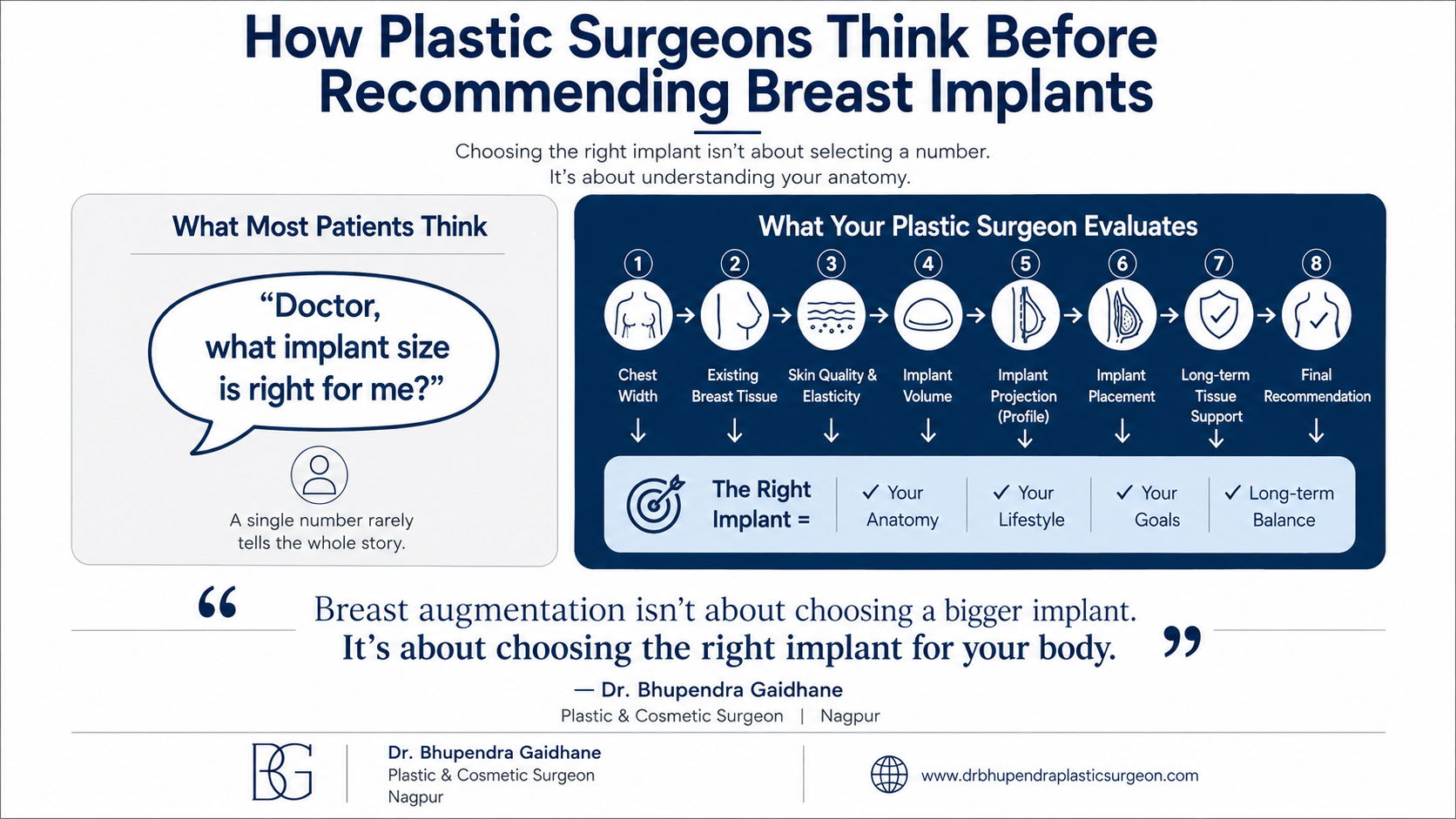
Patients often ask, “Should I choose 250 cc, 300 cc or 350 cc?”
But implant volume alone does not determine the result.
Quick Answer
The same implant volume can look very different on two different
women. Implant width, projection, chest dimensions, breast tissue,
skin quality and proportions all influence the final appearance.
Your Goals
The desired change in volume, fullness and overall appearance is
discussed first.
Your Measurements
Chest and breast dimensions help determine which implant dimensions
are suitable.
Your Tissue
Existing breast tissue and skin coverage influence how an implant
can be used appropriately.
Shape & Symmetry
Differences between the breasts and the existing breast shape are
considered during planning.
Implant Dimensions
Width, projection, profile and implant shape are considered together
rather than volume alone.
Placement & Lift
Implant position and whether a breast lift is required are part of
the overall surgical plan.
The better question is not simply, “How large can I fit?”
It is:
“Which implant is appropriate for the result I want and the anatomy
I have?”
Implant brand is one consideration, but it is not the only factor that
determines a good result.
Quick Answer
A premium implant cannot compensate for inappropriate sizing or poor
planning. Implant selection should follow the patient’s anatomy and
surgical plan.
Depending on the clinical requirements and availability, suitable
options may include established implant systems such as Motiva or
GC Aesthetics. The appropriate choice is discussed during consultation.
Breast augmentation changes more than breast volume. It can change the
fullness, projection and overall proportion of the breasts, while also
changing how your clothes fit and how you feel about your body.
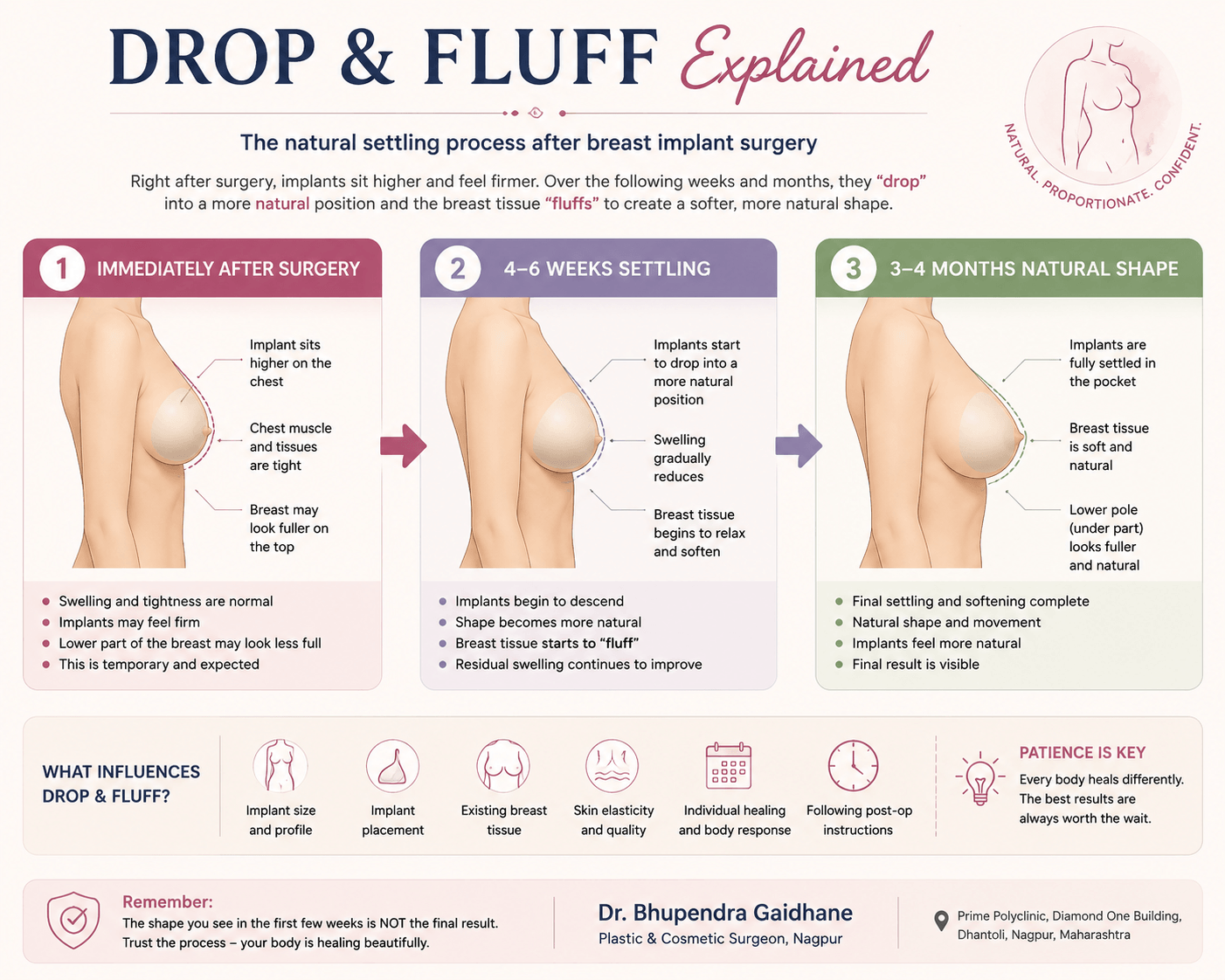
It is important, however, to understand that the result does not appear
fully formed immediately after surgery. The breasts go through an early
recovery period before gradually settling into their more stable shape.
Immediately After Surgery
The breasts may feel tight, swollen or firm, and their position may
initially appear higher than expected. Some discomfort is normal during
the early recovery period.
As Recovery Progresses
Swelling and tightness gradually reduce. The implants and surrounding
tissues settle, and the breast shape becomes softer and more natural
over time.
As the Result Settles
The final appearance becomes easier to appreciate as the tissues adapt
and the breasts settle into their new shape and position.
Important to know:
Early postoperative appearance is not the final result. Swelling,
tightness and temporary changes in breast position are part of the normal
settling process.
Recovery After Breast Augmentation
Breast augmentation is usually performed as a day-care procedure.
When recovery is uncomplicated and you are medically fit for discharge,
you may be able to go home the same day after appropriate postoperative
observation.
Most patients find that the first few days are the most limiting. You may
need some help with routine activities initially, but independence usually
returns progressively as discomfort and swelling improve.
A Practical Recovery Timeline
Day 0 — Surgery Day
Surgery, recovery and postoperative observation are completed at the
hospital. Same-day discharge is possible when appropriate. Plan to rest
at home and have someone available to assist you.
Days 1–3 — Early Recovery
Mild to moderate discomfort, tightness and swelling are common. Avoid
strenuous activity and heavy lifting. You may remain somewhat dependent
on others for routine activities during these first few days.
Around Day 3 — Shower
Many patients can shower around the third day, depending on the wound
and dressing. Follow the specific postoperative instructions given to
you.
By the End of Week 1
Simple household activities can usually be resumed gradually. Many
patients can return to work at around one week, depending on the nature
of their job and individual recovery.
Following Weeks
Physical activity is increased progressively. Heavy lifting, strenuous
exercise and demanding upper-body activities are resumed according to
your recovery and postoperative advice.
Following Months
Swelling continues to settle and the breasts gradually soften and
refine. Implant position and breast shape become easier to judge as the
tissues adapt.
What About Dressings and Follow-Up?
After discharge, dressings and wound care are managed at home according to
the instructions provided. Regular follow-up visits are important to
monitor healing, swelling, implant position and the developing breast
shape.
Planning your time:
A useful general expectation is: same-day discharge may be
possible → the first 3 days may require more help → showering may be
possible around day 3 → simple chores can gradually resume during the
first week → many patients can return to work around one week → physical
activity increases progressively over the following weeks.
Your actual recovery may be faster or slower depending on the surgical
technique, implant placement, your occupation, physical activity and how
your body heals.
For many women, the possibility of breastfeeding in the future is an
important consideration before choosing breast augmentation.
Breast implants themselves do not automatically prevent breastfeeding.
Many women are able to breastfeed after breast augmentation, although the
ability to breastfeed can vary from person to person and may also depend
on factors unrelated to the implants.
The Implant
The implant is placed beneath the breast tissue or in another planned
anatomical plane, rather than inside the breast gland itself.
Surgical Technique
The incision and surgical approach are planned with your anatomy,
implant choice and future considerations in mind.
Breastfeeding Can Vary
Some women breastfeed normally after augmentation, while others may
have difficulty producing enough milk. This cannot always be predicted
before surgery.
Planning pregnancy?
If you are considering pregnancy or breastfeeding in the future, mention
this during your consultation. It is one of the factors considered while
planning your augmentation.
Pregnancy and breastfeeding can also change breast volume, skin and breast
shape over time. The appearance of augmented breasts may therefore change
after a future pregnancy, just as natural breasts can.
What About Scars After Breast Augmentation?
Every breast augmentation requires an incision, so a scar is an unavoidable
part of the surgery. The aim is to place and close the incision carefully
so that the scar becomes as inconspicuous as reasonably possible.
The final appearance of a scar depends not only on where the incision is
placed, but also on your skin, healing response, genetics and postoperative
scar care.
Where Is the Incision?
The incision may be placed in the fold beneath the breast or, in
selected situations, through another approach. The choice depends on
your anatomy, implant and surgical plan.
How Does the Scar Change?
Scars are usually more noticeable during the early healing period.
Over the following months they generally become flatter, softer and
less noticeable as they mature.
Scar Care Matters
Once the incision has healed sufficiently, appropriate scar care can
help support good scar maturation. Follow-up allows the healing scar to
be assessed and managed when necessary.
What should you expect?
Breast augmentation does leave a scar, but the incision is planned with
scar position and visibility in mind. No surgeon can guarantee an
invisible scar, because scar healing varies between individuals.
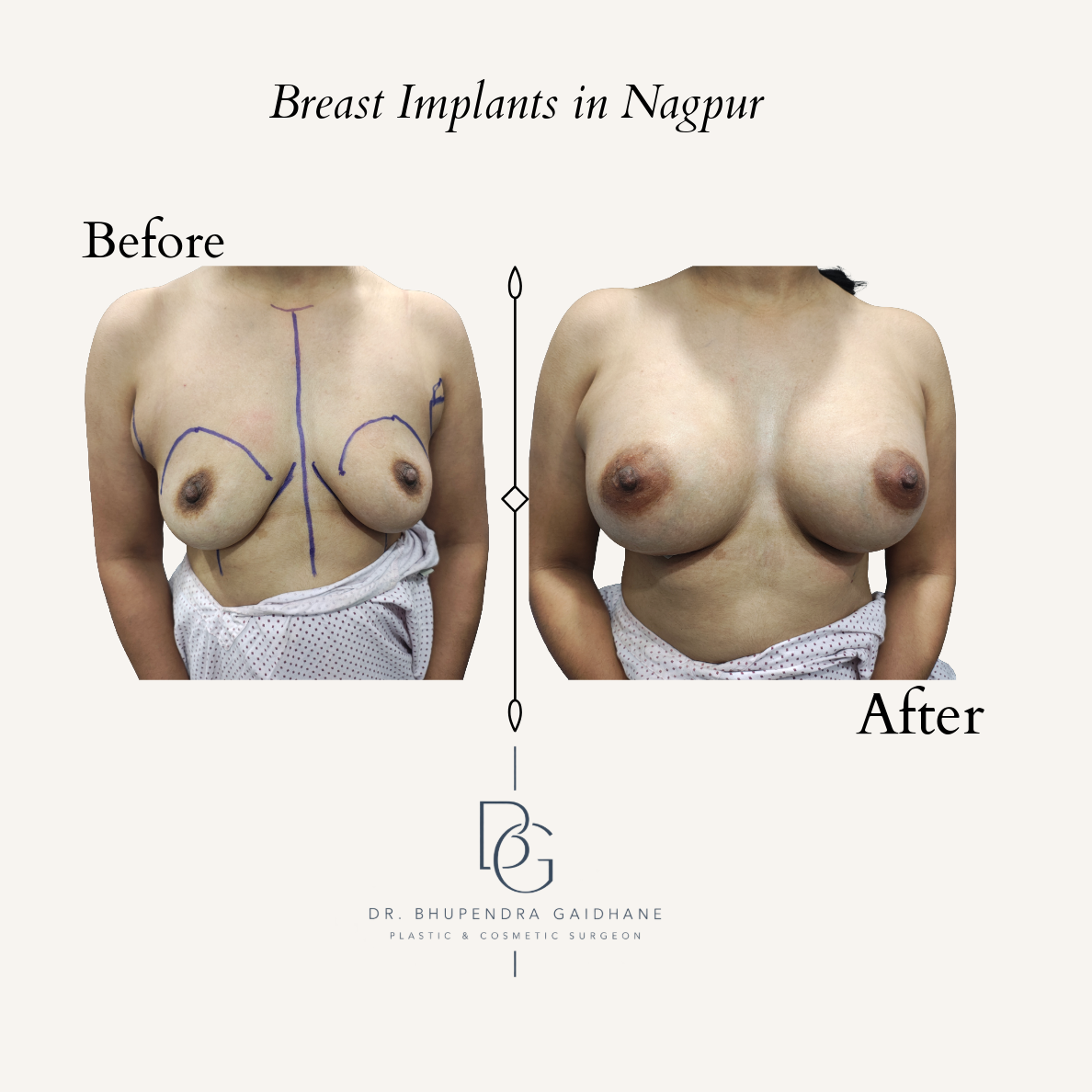
Before-and-after photographs can help illustrate the types of changes
that breast augmentation may achieve, but individual results vary.
Breast Augmentation — 375 cc Motiva Implants
Individual results vary according to breast anatomy, implant selection,
placement and surgical planning.
Individual results vary.
These photographs represent individual surgical outcomes and are
intended to illustrate possible results, not to predict the outcome
of any particular patient.
Breast augmentation is an established surgical procedure, but no
operation or implant is completely free of risks.
What You Should Know
Safety depends on appropriate patient selection, careful implant
planning, qualified surgical care, appropriate anaesthesia and
postoperative follow-up.
Common Surgical Concerns
Swelling, bruising, pain, changes in sensation and asymmetry may
occur during or after recovery.
Implant-Related Risks
Possible complications include capsular contracture, rippling,
rupture and the possibility of additional surgery.
Long-Term Monitoring
Breast implants require ongoing awareness and appropriate follow-up
over time.
A cosmetic result is never more important than patient safety.
Breast Augmentation at Nirvi 2 Hospital, Nagpur
Breast augmentation surgery is performed at Nirvi 2 Hospital, Nagpur,
with appropriate anaesthesia, sterile operating-room protocols and
postoperative monitoring.
Breast implants are not considered lifetime devices. Over time, some
women may require monitoring, further assessment, replacement or
removal depending on their circumstances.
Long-Term Perspective
Choosing breast augmentation means considering not only the initial
surgery, but also the possibility of future changes and additional
procedures.
The cost of breast augmentation depends on the implant selected,
surgical requirements, anaesthesia, hospital-related costs and whether
additional procedures such as a breast lift are required.
Quick Answer
There is no single cost that applies to every patient. The final cost
is determined after assessment and implant planning.
Frequently Asked Questions About Breast Augmentation
These are some of the questions women commonly ask before deciding
whether breast augmentation is right for them.
1. Is breast augmentation safe?
Breast augmentation is an established procedure, but like any surgery
it has potential risks. Patient selection, implant planning, surgical
technique and follow-up are important parts of safe care.
2. How do I choose the right breast implant size?
Implant size is selected according to your goals, breast dimensions,
chest width, tissue coverage, implant width and projection rather
than cc alone.
3. Will my breasts look natural after augmentation?
A natural-looking result depends on implant dimensions, placement,
existing breast tissue, skin quality and overall proportions.
4. Can I choose an implant based only on cup size?
Cup size is not a precise way to select an implant. Different women
can require different implant volumes and dimensions to achieve a
similar overall appearance.
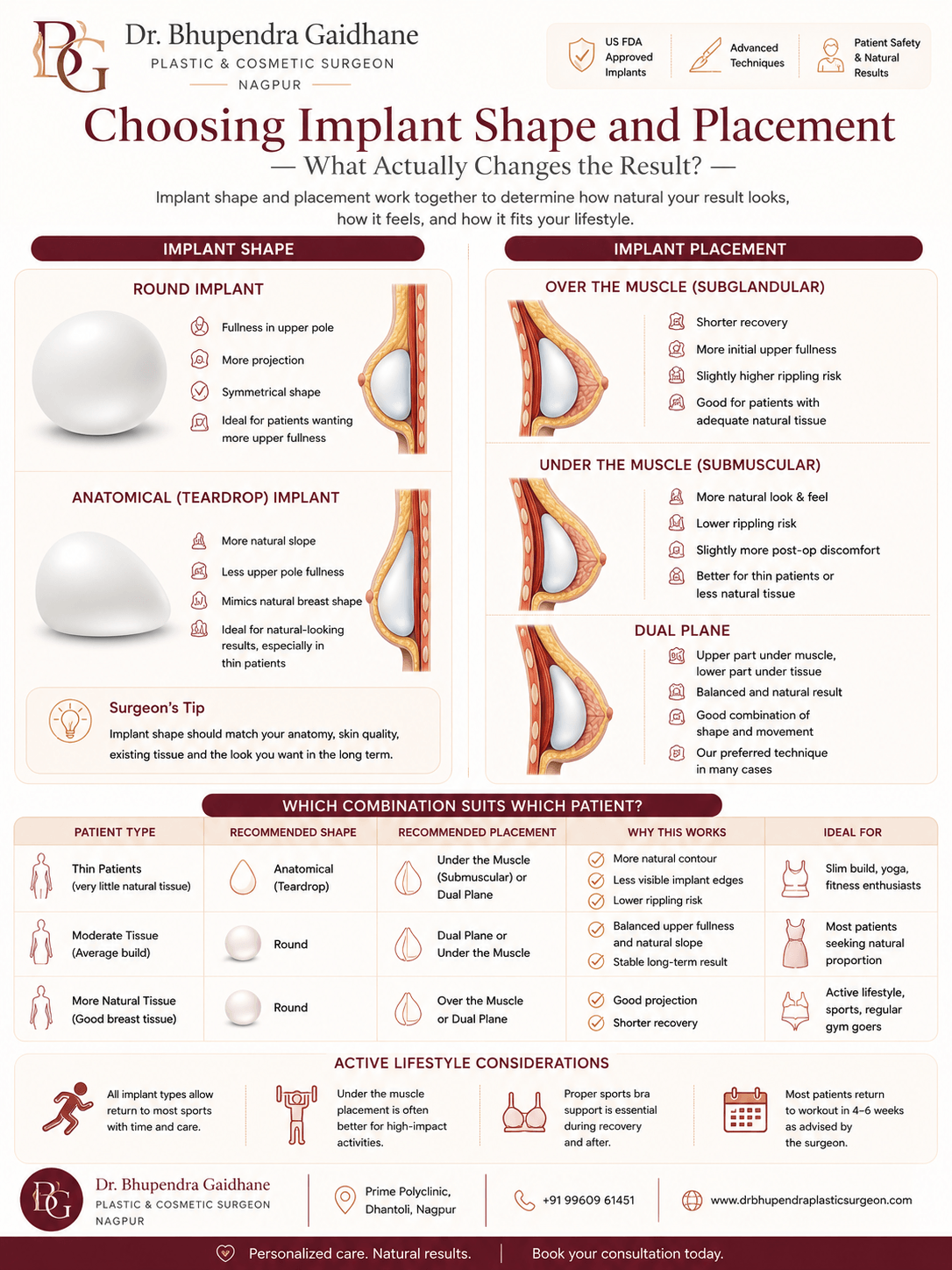
5. Are round or anatomical implants better?
Neither is automatically better. The appropriate implant shape depends
on your anatomy, goals and surgical plan.
6. Will I need a breast lift?
Some women are suitable for augmentation alone, while significant
drooping or excess skin may require a lift as well.
7. Can I breastfeed after breast augmentation?
Many women are able to breastfeed after breast augmentation, but
breastfeeding ability can vary and cannot be guaranteed.
8. Will breast implants affect mammograms?
Breast screening can still be performed with implants. Tell the
imaging team that you have implants so appropriate techniques can
be used.
9. How long do breast implants last?
Breast implants are not lifetime devices. Their lifespan varies and
some women may require further surgery or replacement in the future.
10. Can breast implants be removed?
Yes. Implants can be removed when clinically or personally indicated.
The appearance of the breasts after removal depends on the original
breast tissue, skin and changes that have occurred over time.
11. How long is recovery after breast augmentation?
Recovery varies between patients. Light activities are usually resumed
progressively, while swelling and breast position continue to settle
over the following weeks and months.
The purpose of consultation is not to convince you to have breast
augmentation. It is to help you understand whether it is appropriate
for you and, if it is, how it should be planned.
Next Step
Your consultation is where we assess your goals, breast and chest
measurements, implant dimensions, placement, need for a lift,
expected result, recovery, risks and long-term considerations.
1. Understand Your Goals
Discuss what you would like to change and what type of result you
consider attractive.
2. Assess Your Anatomy
Examine breast dimensions, tissue, skin, chest proportions and
asymmetry.
3. Build the Right Plan
Choose the appropriate implant and surgical approach for your
individual anatomy and goals.
Explore More About Breast Augmentation
If you are considering breast augmentation, these detailed guides can help
you explore the specific aspects of surgery that matter most to you.