Category Archives: Face

Dimpleplasty in Nagpur

Cheek Dimples Creation

Despite being caused by a genetic malformation, dimples are considered a charm by many people. Because of this, a new trend has been gaining more and more space in the field of plastic surgery: it is  dimpleplasty, a procedure performed to create “holes” in the chin and cheeks.

Before anything else, it is important to know that dimpleplasty, even if simple, is a definitive surgery. That is, it is necessary to be completely sure of the desire to undergo the technique, as the procedure does not allow reversal. This same care must be taken when choosing the professional who will perform it, to ensure the success of the procedure.

How Dimpleplasty is Done

Dimpleplasty can be performed by a plastic surgeon, in an office or surgical center. In general, the procedure is quick and requires local anesthesia and light sedation. 

“For cheek dimpleplasty, an incision of one and a half centimeters is made and, with a stitch, the most superficial part of the skin of the buccinator muscle region is glued to the deepest part, creating the depression in the skin characteristic of the dimple. In the chin, the incision and the stitch are made to stick the skin to the bone. In both regions, the patient leaves the office with the procedure completely finished”, describes the plastic surgeon.

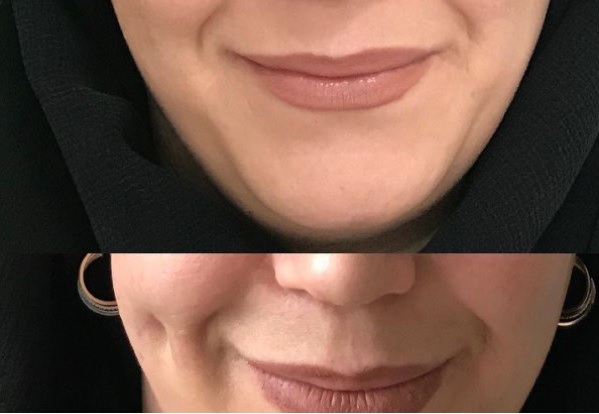
Before and After Dimpleplasty

dimpleplasty

Procedure restrictions

According to Dr Bhupendra, practically everyone can do the procedure, but there are some restricted groups. “It is recommended that people who use anticoagulants or who have  problems with healing  should avoid dimpleplasty, in order to avoid risks in the postoperative period”.

Postoperative dimpleplasty

Like any other procedure, some care must be taken during the first seven days after surgery to avoid infections and bleeding. Among the recommendations indicated by experts are:

  • Perform good oral hygiene
  • Using alcohol-free mouthwash after meals
  • Eat only soft foods
  • Avoid consumption of alcoholic beverages
  • not doing physical activity
  • Avoid sun exposure
  • Do not smoke
  • Avoid sudden movements or trauma to the face region.

According to the plastic surgeon, the healing of dimpleplasty occurs between one and two weeks, so it is important that the patient observes his health condition and follows these care until the end of this period. In addition, it is not necessary to return to the professional to remove the stitches from the surgery.

Risks of Dimpleplasty

Despite being simple, the procedure is not always recommended, mainly because the marks made through dimpleplasty are apparent at all times, unlike natural dimples, which appear only when we smile.

“In addition, when performed incorrectly by an inexperienced professional, the surgery can cause damage to the lips and salivary glands, in addition to leaving the face asymmetrical”.

Ear Reconstruction in Nagpur

Ear Reconstruction

Ear reconstruction

Earreconstruction may be necessary when the patient is born with some deformity in the region or when the ear undergoes some type of trauma that alters its original formation. This reconstruction can be partial or total, depending on the microtia, that is, the deformity or trauma. 

This anomaly can be uni or bilateral. In most cases, it is one-sided! Only 10% and 20% of patients have the anomaly in both ears. In about 50% of patients, the external auditory canal exists, however, the hearing disorder occurs in only 25% of patients.

How is ear reconstruction surgery performed?

It’s a complex procedure. It is a surgery performed in three main surgical stages, the first of which consists of removing three cartilages from the rib, modeling and sculpting the costal cartilage and including it in the mastoid region. 

The second time is summarized in the placement of a cartilage to increase the position (shim). 

In the third stage, the ear release is reconstructed in order to provide projection and restoration of the angle formed between the ear and the skull.

 When to have the surgery?

Unlike non-syndromic and syndromic craniosynostosis , the ear should not be operated on in the first months of the patient’s life. 

We perform ear reconstruction surgery fromthe age of 10, but this has more to do with the size of the costal cartilages than the size of the ear itself. If we do it with the youngest child, there is a possibility that we will have to collect more than 3 costal cartilages.

This waiting time is because before this period the ear is still growing. That way, any attempt at reconstruction will not be accurate.

When surgery involves total ear reconstruction, in which reliefs must be created, the procedure should be performed after 9 or 10 years of age (depending on the patient’s height and body development).

It is important to wait until the appropriate age to ensure that the ear has fully developed, allowing enough cartilage to be removed.

Is hearing function affected?

It is normal that in cases of ear malformation, the concern with hearing is great. A frequent question is whether the child who is born with the anomaly or the person who acquires it will be completely deaf on the affected side. The answer to these questions is: it depends. The auditory system is complex, consisting of three parts of the ear (outer, middle and inner) and the auditory pathways in the central nervous system.

In fact, in some cases, the ear canal can be affected. When it is the case of total ear reconstruction, this area may be partially or even completely absent.

It is rare to have patients without hearing on the affected side. It’s only 10% of cases!

Generally, people who have these anomalies have at least some hearing. This is because the inner ear, called the receptive ear, is derived from an embryological tissue different from the tissue of the outer and middle ear (conductive portion). therefore, the inner ear is rarely involved. 

When both ears are affected by these anomalies and the ear canals are absent, it will be necessary to wear a device to help the patient hear normally and recover.

Chin Augmentation in Nagpur

Chin Augmentation

Chin augmentation surgery (mentoplasty) is indicated in order to increase the projection of the chin, usually through the inclusion of an implant.

The chin (chin) and nose make up the profile of the face. Thus, a careful evaluation of the isolated part and the whole is always important. The impression of a big nose can be a consequence of a small chin. Surgical treatment of a small or retracted chin ( chin augmentation surgery, chin plastic surgery, correction of hypomentonism, chinoplasty) involves bone advancement of the chin region or the inclusion of an implant, rigid silicone or other materials.

Mentonian implants are composed of alloplastic, biocompatible materials. They rarely cause reactions, have no toxic effects and do not lose their volume and shape over time. The body responds to these materials by forming a fibrous capsule around the implant, insulating it. The most important feature of the implant that determines the nature of its encapsulation is its surface type. Smooth implants promote the formation of smooth-walled capsules, whereas porous implants allow varying degrees of soft tissue ingrowth that result in a less dense and less defined capsule. Thus, porous implants have greater fibrous incorporation rather than encapsulation and have a lower tendency to erode the underlying bone surface or migrate due to mechanical soft tissue forces.


Plastic surgery for chin augmentation can be associated with other procedures, such as:  plastic surgery of the nose  (rhinoplasty), plastic surgery for  facial rejuvenation  (rhytidectomy or facelift) and  facial  liposuction (“double chin” liposuction). When the need for chin augmentation is discreet, this surgery can be replaced by  fillers with fat  or  hyaluronic acid.

Surgical technique      

  • Marking of the chin area to be augmented.
  • Antisepsis + anesthesia.
  • Incision: inside the mouth (intraoral) or under the chin (submental). The most used is inside the mouth, in the inferior gingivolabial sulcus.
  • Detachment of the area in front of the jaw bone.
  • Review of bleeding areas.
  • Inclusion + implant fixation or chin bone advancement + bone fixation with plate and screws.
  • Closure of the surgical wound + dressing with micropore.

Postoperative Guidelines

The micropore dressing over the chin should not be removed for 5 to 7 days. Rest should be done in the first few days in a bed with an elevated headboard or in chairs with a reclining back. When brushing your teeth, it will be important to use a soft bristle brush and avoid sudden movements for 30 days. During this period it is also not recommended to talk a lot or eat hard foods. Activities can be resumed after 2 to 5 days. Purples and bumps will only be more pronounced in the first few days. The pain is mild and lasts for a few days.

Mentoplasty guidelines

  • You will leave the surgery with a local dressing to keep the implant immobilized and protected, which will need to be kept for 5 to 7 days. Pain and discomfort are temporary and will subside easily with prescribed medication.
  • Avoid driving in the first 3 days after surgery.
  • After discharge, it will be important to rest in bed or in a reclining chair. When lying down, keep the headboard elevated 30º for 5 days. Sleep without pressing the operated area against the bed.
  • The day after discharge, you can take a shower. Avoid wetting the dressing for the first 5 days.
  • Operative wounds inside the mouth should be cleaned with the prescribed mouthwash, while surgical wounds on the skin should be washed with the prescribed soap.
  • Brush your teeth with a soft bristle brush and avoid sudden movements for 30 days.
  • From the 1st postoperative day, there will be no need for bed rest. Return to your normal activities, respecting the aforementioned limits.
  • It is likely that bruises (ecchymosis) and swelling (edema) will appear in the operated areas, which will disappear over time. For edema control, we recommend not talking too much and not eating hard foods for the first few weeks. A small amount of bleeding may occur in the first 48 hours. Copious bleeding or sudden volumetric variations associated with pain should be reported to your doctor immediately.
  • After 1 week, the protective dressing will be removed. Before that, it will not be allowed to change the dressing. All dressing changes must be carried out by your doctor or guided by him.
  • Lymphatic drainage sessions may be recommended.
  • Sun exposure should be avoided for the first 30 days after surgery. The use of sunscreen is advisable.
  • More intense physical activities should only be resumed 3 months after surgery (examples: swimming, running, weight training, ball sports).
  • You should return to the doctor’s office regularly, as requested, to evaluate the progress of the surgery and remove the stitches (if necessary).
  • If there are surgical wounds on the skin, after removing the stitches, start massaging the scars with the prescribed oil. In some cases, special care for the scars will be necessary.
  • Makeup can be used after the first week.
  • The outcome of your surgery will depend a lot on following these guidelines correctly. Any questions, contact your doctor.

COMMON QUESTIONS

What is the indication for chin augmentation surgery?

Chin augmentation plastic surgery (mentoplasty) is indicated for men and women who wish to increase the projection of the chin through the inclusion of implant or bone advancement. Other associated mandibular alterations will require more complex surgeries (craniofacial surgeries).

What is the recommended age?

Generally, the recommended age is 17 years and older.

What type of anesthesia is used in chin augmentation surgery?

Local anesthesia associated with sedation is the most used, but the surgery can also be performed under general anesthesia.

How long is the surgery?

Chin augmentation surgery (mentoplasty) lasts about 1 to 2 hours.

What is the length of stay?

Hospitalization time is 6 to 8 hours. Usually, the patient is released on the same day.

When will stitches be withdrawn?

Stitches will only need to be removed when the incision is under the chin, 5 to 7 days after surgery. In the intraoral incision, the thread is absorbable.

Does chin augmentation surgery have risks?

Postoperative complications are rare. Among them we can mention: hematoma, infection, opening of the surgical wound (suture dehiscence), implant extrusion, scar alterations, etc.

How long does it take to get the expected result?

The final appearance of the facial profile occurs at 12 to 18 months. The scar either leaves no marks (inside the mouth) or becomes almost imperceptible (under the chin). In the long term, all alloplastic silicone implants cause local bone resorption, unlike porous polyethylene implants.

Blepharoplasty in Nagpur

Blepharoplasty

Eyelid plastic surgery, Blepharoplasty (upper and lower)

Eyelid rejuvenation plastic surgery (blepharoplasty) removes excess skin and fat pockets located on the upper and lower eyelids, changes that arise with aging. Eyelid rejuvenation surgery can be associated with other procedures such as: eyebrow lifting (eyebrow lifting), face rejuvenation (facelift), etc.

Other alterations that affect the eyelids such as dark circles, pigmentation, lateral “crow’s feet” or sunken eyes, should be treated with other procedures, such as: peeling, application of botulinum toxin, and fillings with fat or hyaluronic acid.

Surgical technique     

  • Marking the eyelids.
  • Antisepsis + anesthesia.
  • Incision + removal of excess skin and fat bags on the upper and/or lower eyelid.
  • Review of bleeding areas + closure of operative wounds with fine thread.
  • Repetition of the same steps on the other side.

Postoperative Guidelines

Rest, use of gauzes moistened with a cold solution over the eyes and eye drops will be necessary for 2 days. The head of the bed must be elevated for five days. The use of sunglasses will be indicated for at least 15 days. You should not sunbathe on the scars for six months. Pain is rare. Purple and bumps are common and will tend to disappear during the postoperative course.

Blepharoplasty guidelines

  • For 2 days, keep sterile gauzes soaked in cold saline or iced chamomile tea over the eyes throughout the day. The saline solution, or the tea, should be placed in an ice bucket or in the refrigerator and the gauzes moistened every 30 minutes. You can moisten the gauze yourself as long as the serum or tea is near you. Every time you need to get up, remove the gauzes, discard them and, when you come back, put new gauzes over your eyes and moisten them again. At night, at bedtime, moisten the gauzes, there is no need to moisten them again every half hour. There is usually no pain after the surgery.
  • Avoid driving in the first 3 days after surgery.
  • After discharge, it will be important to rest in bed or in a reclining chair. When lying down, keep the headboard elevated 30º for 5 days. Sleep without pressing the operated areas against the bed.
  • The day after discharge, you will be able to take a full-body bath, even washing the operated areas, without rubbing them, using the prescribed soap. Carefully wash operative wounds (areas with stitches). Complete the bath with normal soap.
  • Always have a separate clean face towel to dry the operated area and a regular towel to dry the rest of the body.
  • After 48 hours, there will be no need for bed rest. Return to your normal activities, respecting the aforementioned limits. Stay away from household chores for at least 20 days.
  • It is likely that bruises (ecchymosis) and swelling (edema) will appear in the operated areas, which will disappear over time. A more pronounced tearing may also occur in the first few days. Use the eye drops prescribed on the same day as the surgery, as prescribed.
  • Sun exposure should be avoided for the first 30 days after surgery. The use of caps, wide-brimmed hats and sunglasses is recommended. The use of sunscreen is also advisable.
  • More intense physical activities should only be resumed 3 months after surgery (examples: swimming, running, weight training, ball sports).
  • You must return to the doctor’s office regularly, as requested, for the removal of the stitches and evaluation of the evolution of the surgery.
  • After removing the stitches, start massaging the scars with the prescribed oil. In some cases, special care for the scars will be necessary.
  • The outcome of your surgery will depend a lot on following these guidelines correctly. Any questions, contact your doctor.

COMMON QUESTIONS

What is the indication for blepharoplasty?

Eyelid rejuvenation plastic surgery is indicated for women and men who wish to have a more youthful appearance, eliminating the appearance of “tired eyes” and improving vision when excess eyelid skin gets in the way. This surgery corrects sagging and excess fat pockets located in the eyelids. Lateral wrinkles (“crow’s feet”) are not corrected with this procedure alone.

What is the recommended age?

Generally, the recommended age is from 35 years old, however, there is no ideal age to perform this surgery.

What type of anesthesia is used in eyelid surgery?

Local anesthesia associated with sedation is the most used, but the surgery can also be performed under general anesthesia.

How long is the surgery?

The eyelid rejuvenation surgery lasts about 1.5 to 2 hours.

What is the length of stay?

The hospital stay is 8 to 12 hours. Usually, the patient is released on the same day.

When will stitches be withdrawn?

Stitches will be removed 4 to 5 days after surgery.

Does blepharoplasty have risks?

Postoperative complications are rare. Among them, we can mention: hematoma, eversion of the lower eyelids (ectropion), drooping of the upper eyelids (palpebral ptosis), scarring alterations, etc.

How long does it take to get the expected result?

The scars usually become imperceptible after 6 to 12 months and are hidden in a natural crease on the upper eyelids and just below the lashes on the lower eyelids. The result occurs after 6 to 12 months. There may be partial loss of the result due to the continuous aging process.

Kuinka Kasinord tarkastelee 2 euron talletusten ominaisuuksia

Nettikasinoiden kehitys on tuonut mukanaan merkittäviä muutoksia pelaajien talletusvaihtoehtoihin. Viime vuosina erityisesti pienet talletukset ovat nousseet suosioon, ja 2 euron talletusmahdollisuus on muodostunut tärkeäksi osaksi nykyaikaista kasinokulttuuria. Kasinord on erikoistunut arvioimaan näitä matalan kynnyksen pelialustoja, ja heidän tarkasteluprosessinsa tarjoaa pelaajille arvokasta tietoa päätöksenteon tueksi. Tämä artikkeli pureutuu siihen, miten Kasinord lähestyy 2 euron talletuskasinoiden arviointia ja mitä ominaisuuksia he pitävät keskeisinä.

Pienten talletusten historiallinen kehitys

Verkkokasinoiden alkuaikoina 2000-luvun alussa minimiталletukset olivat tyypillisesti huomattavasti korkeampia kuin nykyään. Ensimmäiset nettikasinot vaativat usein vähintään 20-50 euron talletuksia, mikä asetti merkittävän kynnyksen uusille pelaajille. Tämä korkea aloituskynnys johtui pääasiassa maksujenkäsittelykustannuksista ja teknologian rajoitteista.

2010-luvun puolivälin jälkeen tilanne alkoi muuttua nopeasti. Maksutekniikan kehittyminen ja kilpailun kiristyminen kasinomarkkinoilla johtivat siihen, että operaattorit alkoivat tarjota yhä pienempiä minimitalletuksia. Ensimmäiset 5 euron talletuskasinot ilmestyivät markkinoille noin vuonna 2015, ja ne saavuttivat nopeasti suosiota erityisesti satunnaispelaajien keskuudessa.

2 euron talletusmahdollisuus on suhteellisen tuore ilmiö, joka on yleistynyt vasta viime vuosien aikana. Tämä kehitys on ollut mahdollista erityisesti uusien maksumenetelmien, kuten e-lompakoiden ja kryptovaluuttojen, ansiosta. Nämä maksutavat mahdollistavat mikromaksujen käsittelyn taloudellisesti kannattavalla tavalla, mikä on tehnyt erittäin pienistä talletuksista liiketoiminnallisesti järkevän vaihtoehdon kasinooperaattoreille.

Kasinordin arviointikriteerit ja metodologia

Kasinord on kehittänyt kattavan arviointijärjestelmän, joka ottaa huomioon useita keskeisiä tekijöitä 2 euron talletuskasinoita tarkasteltaessa. Ensimmäinen ja ehkä tärkein kriteeri on pelialustaan liittyvien ehtojen läpinäkyvyys. Pienten talletusten yhteydessä bonusehdot ja kierrätysvaatimukset voivat vaihdella merkittävästi, ja Kasinord kiinnittää erityistä huomiota siihen, että nämä ehdot on esitetty selkeästi ja ymmärrettävästi.

Toinen keskeinen arviointikriteeri on pelivalikoimaan liittyvä saavutettavuus. Kasinord tutkii, voivatko pelaajat 2 euron talletuksella päästä käsiksi kaikkiin samoihin peleihin kuin suurempia summia tallettavat asiakkaat. Jotkut kasinot rajoittavat tiettyjen pelien saatavuutta pienille talletuksille, mikä voi vaikuttaa merkittävästi pelikokemukseen. Kasinordin asiantuntijat testaavat järjestelmällisesti, mitkä pelit ovat todella käytettävissä minimitalletuksella ja dokumentoivat mahdolliset rajoitukset.

Maksutapojen monipuolisuus on kolmas tärkeä osa-alue Kasinordin tarkasteluissa. Kaikki maksumenetelmät eivät tue yhtä pieniä transaktioita, ja Kasinord kartoittaa systemaattisesti, mitkä maksutavat toimivat 2 euron talletusten kanssa. Tämä tieto on erityisen arvokasta pelaajille, jotka haluavat katso parhaat 2 euron talletuskasinot ja vertailla eri vaihtoehtoja keskenään. Kasinord dokumentoi myös kunkin maksutavan käsittelyajat ja mahdolliset lisämaksut, jotka voivat olla suhteellisesti merkittäviä pienillä summilla.

Asiakaspalvelun laatu muodostaa neljännen keskeisen arviointikohdan. Kasinord testaa, reagoivatko kasinot yhtä nopeasti ja ammattimaisesti pienten talletusten tehneiden pelaajien kysymyksiin kuin suurempien summien pelaajien. Valitettavasti joillakin alustoilla on havaittu eroja asiakaspalvelun laadussa talletussumman perusteella, ja Kasinord pyrkii paljastamaan tällaiset käytännöt.

Tekniset ominaisuudet ja käyttäjäkokemus

Kasinord arvioi myös teknisiä yksityiskohtia, jotka vaikuttavat erityisesti pienten talletusten käyttökokemukseen. Yksi tärkeä tekijä on alustan kyky käsitellä pieniä saldoja tehokkaasti. Jotkut kasinojärjestelmät on suunniteltu ensisijaisesti suurempia summia silmällä pitäen, mikä voi johtaa teknisiin ongelmiin tai epäselvyyksiin, kun saldo on hyvin pieni.

Kasinord kiinnittää huomiota myös siihen, miten kasinot esittävät tietoa panosten minimikoosta suhteessa talletussummaan. 2 euron talletuksella pelaajan on tärkeää ymmärtää, kuinka monta kierrosta tai peliä hän voi realistisesti pelata. Parhaat kasinot tarjoavat selkeitä työkaluja budjetin hallintaan ja auttavat pelaajia ymmärtämään pelaamisen kustannuksia.

Mobiiliyhteensopivuus on toinen tekninen osa-alue, joka saa erityishuomiota Kasinordin arvioinneissa. Pienten talletusten tekijät ovat usein mobiilipelaajia, jotka haluavat pelata lyhyitä sessioita liikkeellä ollessaan. Kasinord testaa, toimivatko 2 euron talletukset sujuvasti mobiililaitteilla ja ovatko kaikki ominaisuudet yhtä helposti saavutettavissa kuin työpöytäversiossa.

Vastuullisen pelaamisen näkökulma

Kasinord pitää vastuullista pelaamista keskeisenä osana arviointiprosessiaan, ja tämä näkökulma on erityisen tärkeä 2 euron talletuskasinoiden yhteydessä. Pienet talletukset voivat toimia tehokkaana budjetinhallinnan työkaluna, mutta ne voivat myös johtaa tiheään talletusten tekemiseen, jos asianmukaisia suojamekanismeja ei ole käytössä.

Kasinord arvioi, tarjoavatko kasinot riittäviä työkaluja talletusten rajoittamiseen ja peliajan hallintaan. Parhaat alustat mahdollistavat päivittäisten, viikoittaisten ja kuukausittaisten talletusrajojen asettamisen riippumatta yksittäisen talletuksen koosta. Kasinord tarkistaa myös, lähettävätkö kasinot muistutuksia peliajasta ja käytetystä rahasummasta.

Toinen tärkeä vastuullisen pelaamisen osa-alue on itsepoissulkumahdollisuuksien saatavuus. Kasinord varmistaa, että pienten talletusten tekijöillä on samat mahdollisuudet sulkea tilinsä väliaikaisesti tai pysyvästi kuin muillakin pelaajilla. Lisäksi arvioidaan, kuinka helposti pelaajat voivat asettaa taukoja pelaamiseen ja miten tehokkaasti nämä rajoitukset toimivat käytännössä.

Kasinord kiinnittää huomiota myös siihen, miten kasinot viestivät pelaamisen riskeistä ja tarjoavat tietoa avun saamisesta mahdollisten ongelmien ilmetessä. Vastuullisen pelaamisen tietojen tulisi olla helposti löydettävissä ja ymmärrettävässä muodossa, riippumatta siitä, millä summalla pelaaja on aloittanut pelaamisensa.

Kasinordin 2 euron talletuskasinoiden tarkasteluprosessi on monipuolinen ja perusteellinen, ottaen huomioon sekä tekniset että inhimilliset näkökulmat. Heidän metodologiansa perustuu systemaattiseen testaukseen, vertailuun ja dokumentointiin, mikä tarjoaa pelaajille luotettavaa tietoa päätöksenteon tueksi. Pienten talletusten suosion kasvaessa tällainen riippumaton arviointi on yhä tärkeämpää, sillä se auttaa pelaajia löytämään turvallisia ja laadukkaita pelialustoja, jotka todella vastaavat heidän tarpeitaan. Kasinordin työ korostaa sitä, että pienelläkin talletuksella pelaajilla tulisi olla oikeus samanlaiseen laatuun, turvallisuuteen ja läpinäkyvyyteen kuin suurempien summien käyttäjilläkin.

Buccal Fat Removal in Nagpur

Buccal Fat Removal

Bichectomy / Buccal fat removal in Nagpur is a surgical procedure to remove excess Bichat ball and promotes the reduction of the cheeks. This surgery has become popular in India recently. Famous people, like some Hollywood actors, are fans of this type of surgery and contributed to its spread.

Some people are uncomfortable with the size of their cheeks. The Bichat ball or buccal adipose body is a structure composed of fat, located on the face, in the region of the cheeks. When increased, this fat can change the shape of the face, making it more rounded, which can give the impression that the person is overweight or has a childish appearance. In some cases, this can affect self-esteem and confidence.

Bichectomy in Nagpur is a relatively simple procedure, but the removal of fat requires care because it is a delicate area, between nerves and salivary channels. Through incisions measuring 1.0 to 2.0 cm, on the inside of each cheek, the fat is pulled and extracted. The amount of fat removed varies according to each case.

Only a plastic surgeon in Nagpur can indicate this type of procedure. Often the cause of a wider face can be due to hypertrophy of the masseter muscle (chewing muscle), treated with botulinum toxin application, or the accumulation of fat below the chin (double chin), treated with liposuction. In addition, if there is sagging of the skin, a facelift is the most suitable.

Surgical technique

  • Marking the location of the incisions on the inside of the cheeks.
  • Antisepsis + anesthesia.
  • A 1.0 to 2.0 cm incision in the mucosa inside the mouth, on the inside of each cheek.
  • Identification and dissection of the Bichat ball (always careful not to injure important structures such as nerves and the parotid duct).
  • Gently pulling the fat out of the incision.
  • Resection of excess fat, being careful not to remove too much.
  • Cauterization with an electric scalpel to prevent bleeding.
  • Closure of operative wounds.

COMMON QUESTIONS

Cheek Reduction (bichectomy): Indication

Bichectomy is a plastic surgery indicated for young women and men, who have a rounded face, with protruding cheeks, who wish to acquire a thinner and slimmer face, with more prominent or defined cheekbones.

From what age is bichectomy recommended?

Over 18 years.

What type of anesthesia is used in bichectomy?

Local with sedation, but general anesthesia can also be done.

How long does the surgery take?

About 40 minutes.

What is the length of stay?

Few hours of hospitalization. The patient is released the same day.

When can stitches be withdrawn?

Stitches are absorbable and do not need to be removed.

Are there risks during or after plastic surgery?

Postoperative complications are rare. Among them, we can mention bleeding, hematoma, infection, stitch dehiscence, nerve injury, salivary duct injury (parotid duct), asymmetry, etc. The face may become even thinner if the patient loses weight. There is also concern about the increase in facial sagging, which already occurs with aging.

Cheeck Reduction (Bichectomy) – Result

A definitive result occurs after about 6 months. The scars are hidden inside the mouth. The end result is a thinner, slimmer-looking face.