
Gynecomastia Surgery in Nagpur
Gynecomastia surgery is a procedure that removes excess male breast gland tissue and fat to create a flatter, more masculine chest contour.
Depending on the grade and tissue composition, treatment may involve liposuction, gland excision, or a combination of both techniques.
Quick Summary
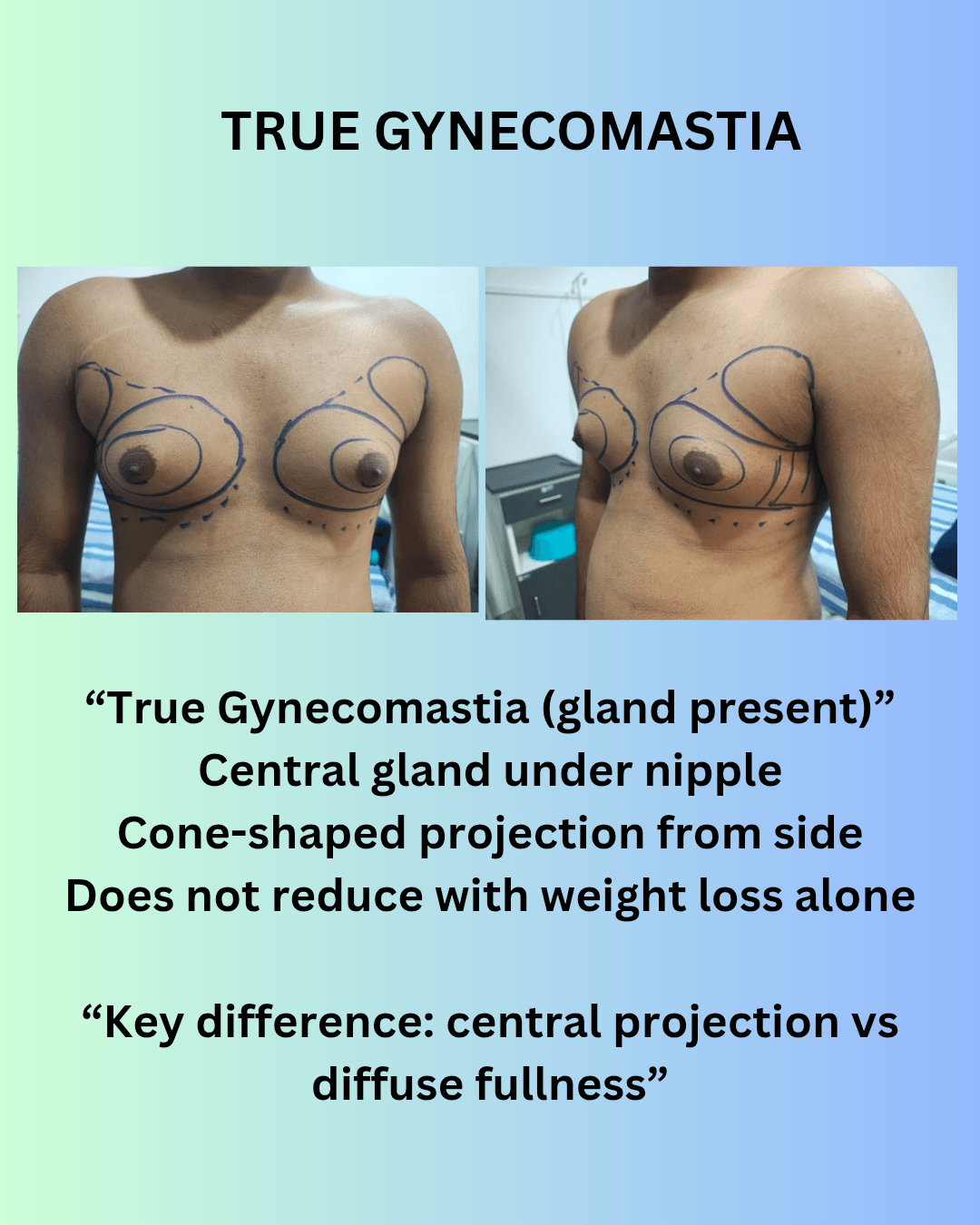
Common Signs of Gynecomastia
Men with gynecomastia may notice several physical changes in the chest area. These signs often persist despite exercise or weight loss.
A clinical examination helps differentiate between simple chest fat and true glandular gynecomastia.
Diagnosis and Evaluation
Accurate diagnosis is important before planning treatment. During consultation, the chest is examined to assess the amount of glandular tissue, fat distribution, and skin laxity.
A clinical examination helps determine whether the chest enlargement is mainly due to fat, glandular tissue, or a combination of both. This assessment guides the surgical plan.
The medical history and current medications are also reviewed, along with possible hormonal or lifestyle factors that may contribute to gynecomastia.
This assessment helps determine whether liposuction alone, gland excision, or a combination approach is most appropriate.
What Is Gynecomastia?
Gynecomastia is an enlargement of male breast tissue caused by glandular tissue, fat, or a combination of both.
Gynecomastia is not simply excess chest fat. True gynecomastia involves enlargement of glandular breast tissue, often combined with varying amounts of fat.
The distinction matters because exercise and weight loss may reduce excess fat but cannot reliably remove established glandular tissue.
Grading & When Surgery Is Indicated
Gynecomastia can vary considerably in size, tissue composition, skin excess, and chest contour. The grade helps describe the overall appearance and assists in treatment planning.
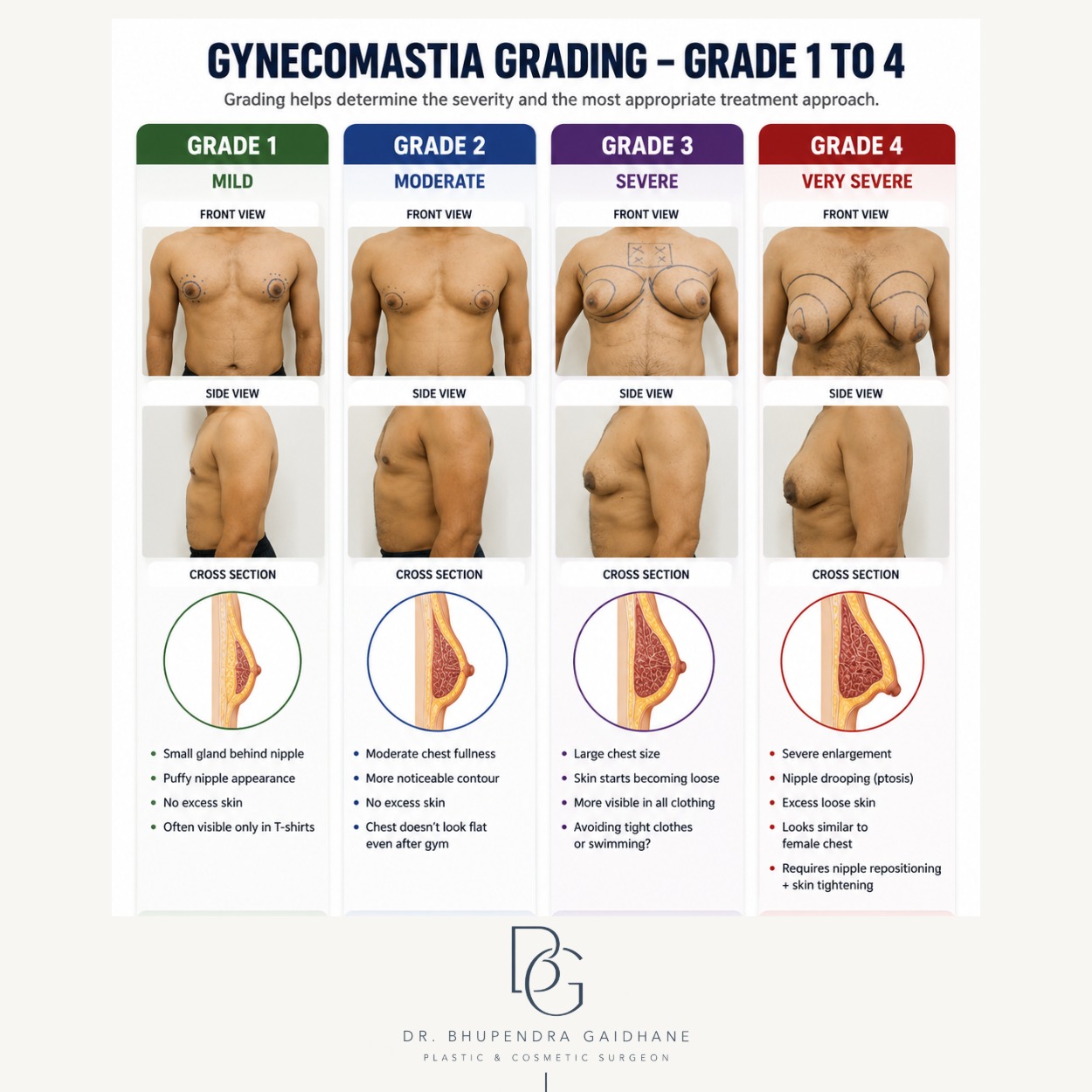
Surgery is considered when gynecomastia is persistent, causes significant chest prominence or contour concerns, or does not respond to appropriate non-surgical measures.
During consultation, the grade is considered together with the underlying tissue and the patient’s goals. This helps determine whether liposuction, gland excision, skin management, or a combination of techniques is appropriate.
Treatment Options
Treatment depends on the underlying cause, the amount of glandular tissue and fat, skin quality, and the overall grade of gynecomastia. There is no single operation that is appropriate for every patient.
Persistent gynecomastia is usually treated by addressing the tissue that is actually responsible for the chest enlargement. This may involve liposuction, gland excision, or both.
In selected patients, additional contouring may be required to create a smoother transition between the treated chest and the surrounding torso.
The treatment plan is individualized according to the patient’s anatomy and goals rather than being based on grade alone.
How Surgery Is Performed
Gynecomastia surgery is planned according to the patient’s tissue composition, chest shape, skin quality, and degree of enlargement. The aim is to create a flatter, natural-looking masculine chest contour while maintaining appropriate nipple position and proportion.
Most procedures involve liposuction to address excess fat, combined with gland excision through a small incision when firm glandular tissue is present.
The exact sequence and combination of techniques varies according to the individual anatomy and operative plan.
Who Is a Good Candidate?
The ideal candidate is generally someone with persistent gynecomastia who is physically healthy, has realistic expectations, and is bothered by the appearance of the chest despite appropriate lifestyle measures.
Candidacy is determined during consultation after assessing the cause, tissue composition, skin quality, overall health, and expectations.
A detailed consultation is important because the appropriate treatment depends on the individual rather than on the diagnosis alone.
Expected Results
The goal of gynecomastia surgery is a flatter, more proportionate and masculine chest contour that looks natural in clothing and without it.
Most patients notice a significant change in chest contour early after surgery, although swelling means the final result continues to refine over time.
Final results depend on the original anatomy, skin quality, amount of tissue removed, healing response, and adherence to postoperative instructions.
Before & After Results
These real patient photographs show examples of the improvement in chest
contour that can be achieved with gynecomastia surgery. Results vary
depending on the grade, tissue composition, skin quality, and surgical
approach.
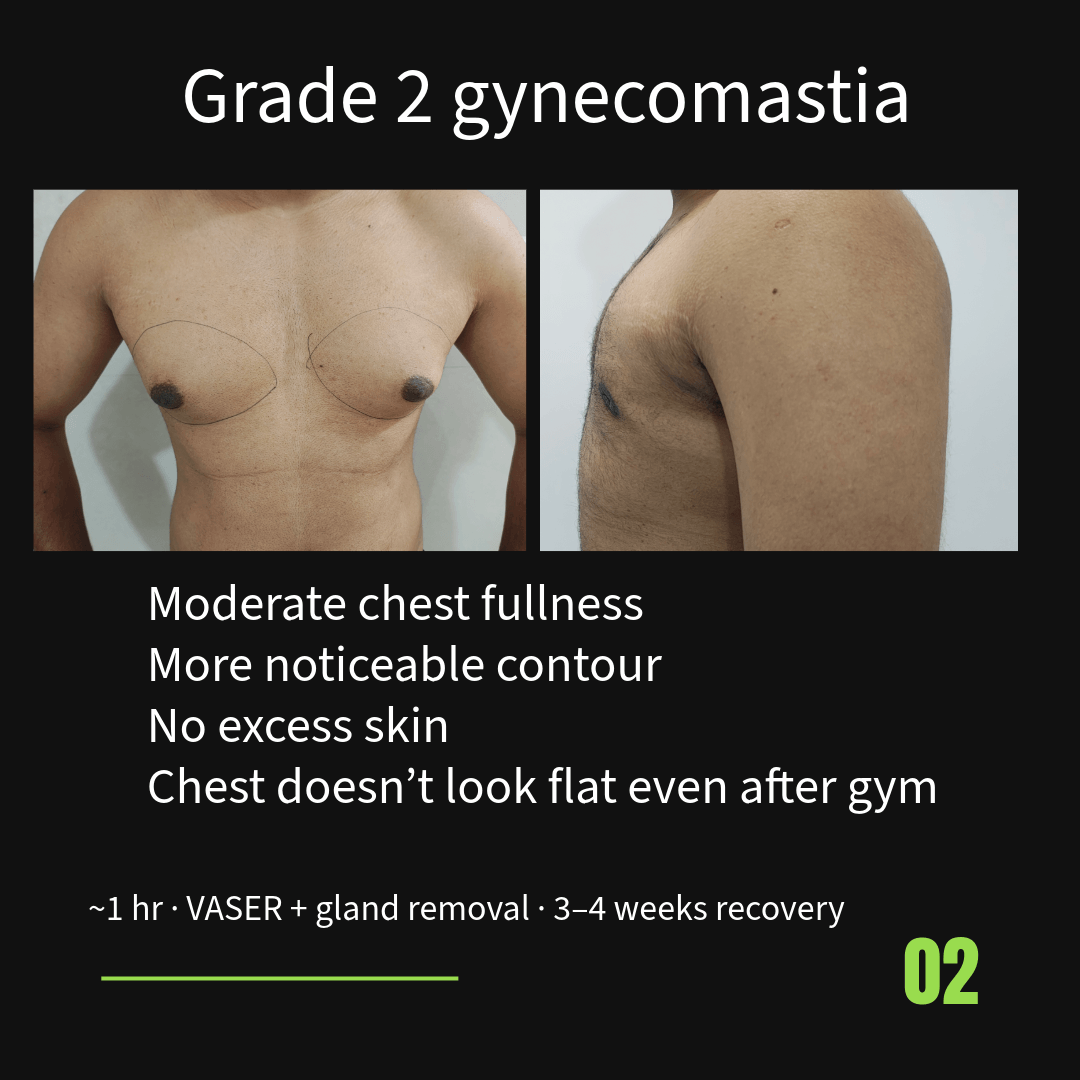
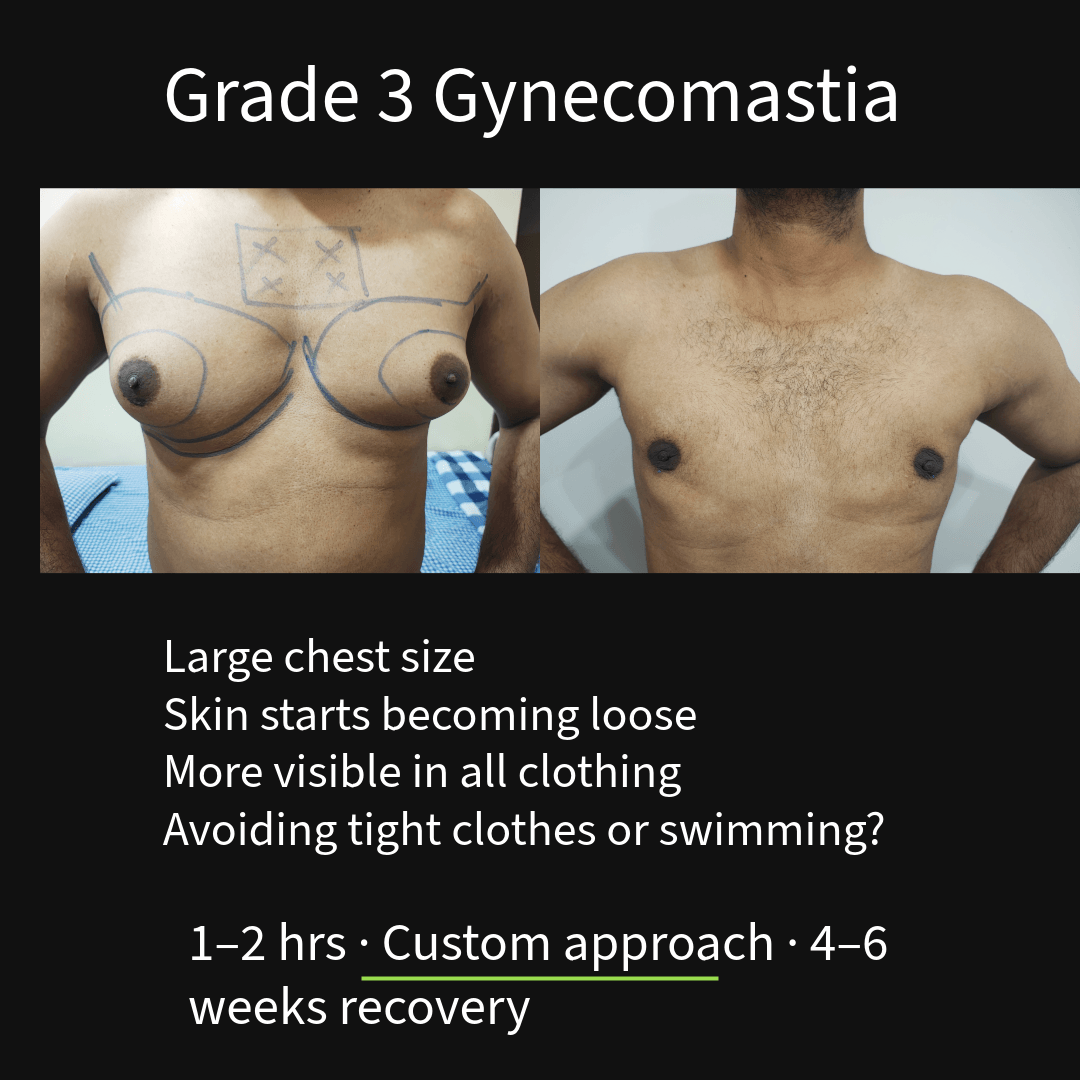
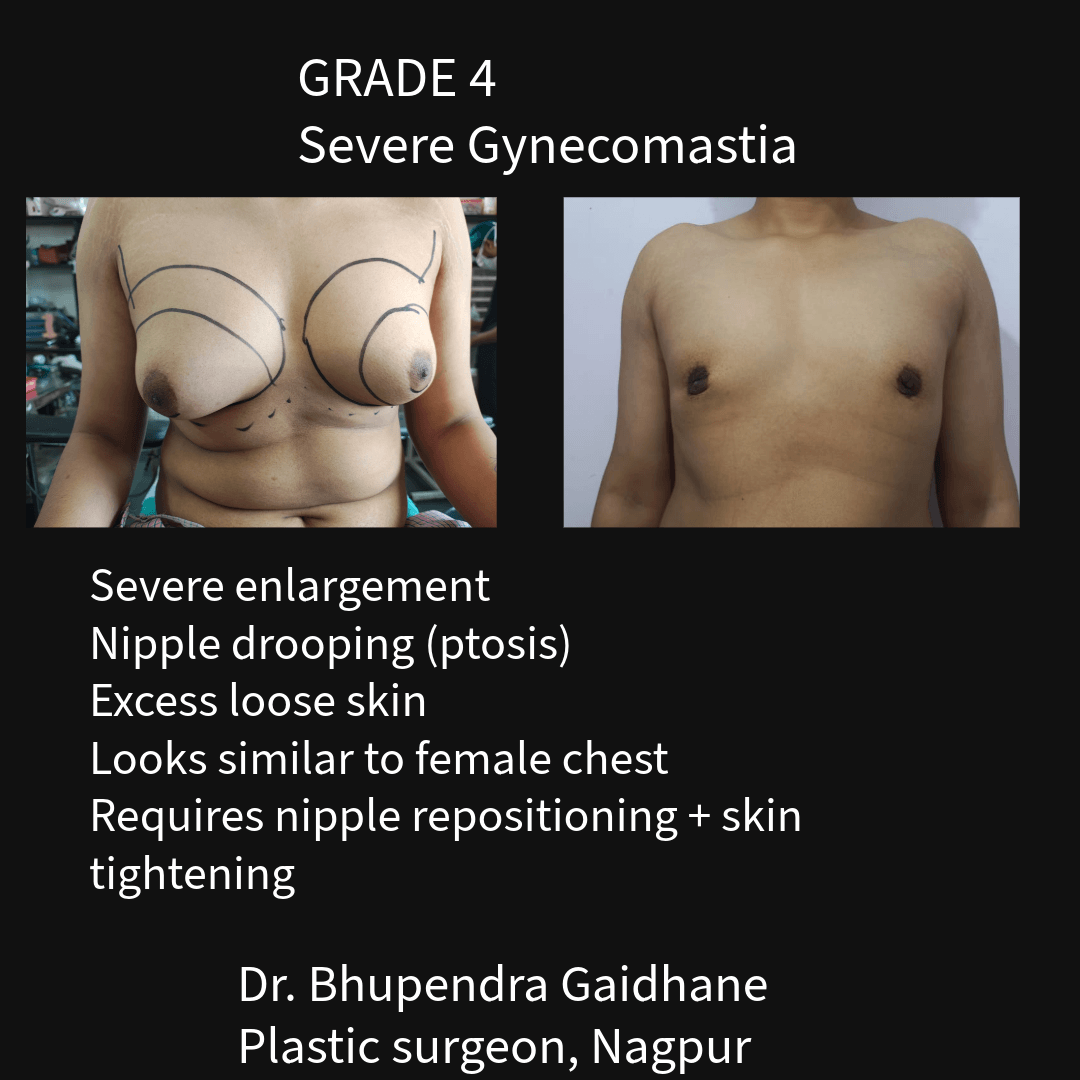
These photographs represent individual surgical outcomes and are intended
to illustrate possible results, not to predict the outcome of any
particular patient.
Recovery After Gynecomastia Surgery
Recovery after gynecomastia surgery is usually progressive. Most patients can return to light daily activities relatively quickly, while strenuous exercise takes longer.
Light activity is often possible within a few days, but swelling, tightness, and temporary numbness can persist while the tissues heal.
The final chest contour continues to improve over the following months as swelling settles and the skin and tissues adapt to the new shape.
Regular follow-ups help assess healing and support an optimal long-term result.
Safety and Possible Risks
Gynecomastia surgery is generally considered safe when performed by a qualified plastic surgeon in an appropriate surgical facility. As with any surgical procedure, temporary effects may occur during the healing period.
Swelling, bruising, temporary numbness, and mild discomfort can occur during recovery. Less commonly, fluid accumulation or asymmetry may occur.
Careful surgical technique and appropriate postoperative care help minimize risks and support smooth healing.
Gynecomastia Surgery Cost in Nagpur
The cost of gynecomastia surgery in Nagpur depends on several individual factors. Since every patient’s condition is different, the final cost is decided after a detailed clinical examination.
Gynecomastia surgery cost typically starts from ₹50,000 and may vary depending on the grade of gynecomastia, the surgical approach required, and the complexity of the case.
A proper consultation is necessary to determine the exact treatment plan and cost.
The cost varies based on the grade and surgical approach. For a detailed explanation: Gynecomastia Surgery Cost in Nagpur
Emotional Transformation After Surgery
Gynecomastia can affect more than physical appearance. Patients may hide their chest, avoid swimming, feel anxious in social situations, or experience teasing and reduced confidence.
The goal of treatment is not simply to remove tissue. For many patients, improving the chest contour can also make everyday situations feel more comfortable.
The physical result and the psychological experience of the patient are both important parts of the treatment journey.
Patient Experiences
Patient experiences provide another perspective on the treatment journey, from the decision to undergo surgery through recovery and the changes patients notice afterwards.
Individual experiences vary, but patients commonly describe satisfaction with their chest contour, recovery, and improved confidence after surgery.
Read more patient experiences and view real surgical outcomes: Gynecomastia Before & After Results .
Frequently Asked Questions (Gynecomastia Surgery in Nagpur)
These are some of the questions patients commonly ask before deciding whether gynecomastia surgery is right for them.
1. Is gynecomastia surgery permanent?
Gynecomastia surgery provides long-lasting results when the enlarged gland tissue is properly removed. Once excised, the gland does not grow back. However, significant weight gain, hormonal imbalance, or certain medications or steroids can affect chest appearance in the future.
2. Will there be visible scars after gynecomastia surgery?
Scars are usually small and discreet. Incisions are placed around the areola or within natural skin creases, where they heal well and gradually fade. With proper technique and care, scars are typically minimally noticeable.
3. What is the recovery time after gynecomastia surgery in Nagpur?
Most patients resume light daily activities within a few days. Desk work is often possible within a week, while strenuous exercise is avoided for a few weeks. A compression garment is used during early recovery to support healing.
4. Is gynecomastia surgery painful?
The procedure is generally well tolerated. Post-operative discomfort is usually mild to moderate and managed with medication. Tightness or soreness in the chest improves gradually over a few days.
5. Can gynecomastia come back after surgery?
Recurrence is uncommon when glandular tissue is adequately removed. However, significant weight gain, hormonal imbalance, or steroid use may influence chest appearance over time.
6. What causes gynecomastia and who usually needs surgery?
Gynecomastia can result from hormonal imbalance, genetics, medications, steroid use, or puberty-related changes. Surgery may be considered when enlargement persists despite lifestyle changes and glandular tissue is present.
7. How can I tell if my chest problem is fat or true gynecomastia?
Chest fat tends to feel soft and diffuse, while true gynecomastia presents as firm or rubbery tissue beneath the nipple. A clinical examination is required to differentiate accurately.
8. What surgical techniques are used for gynecomastia correction?
Treatment may involve liposuction to remove fat, micro-incision excision for gland removal, and in selected cases, limited skin tightening. The approach is individualized based on examination findings.
Book Your Consultation
To know if gynecomastia surgery is right for you, a personal consultation
allows us to assess your chest, understand your concerns, and discuss the
most appropriate treatment plan.
Your consultation is where we determine the grade, tissue composition,
surgical approach, expected result, recovery, and individualized cost.
Your chest is assessed for glandular tissue, fat, skin quality,
symmetry, and overall contour.
We discuss the appropriate combination of liposuction, gland excision,
and contouring for your anatomy.
You receive a clear explanation of the procedure, recovery, expected
result, and individualized cost.