
Gynecomastia surgery can significantly improve chest contour by removing excess gland tissue and fat, creating a flatter and more masculine appearance. Final results depend on factors such as the grade of gynecomastia, skin quality, healing characteristics, and the surgical technique used. Most patients notice an immediate improvement, with continued refinement over the following weeks and months. This page shows real gynecomastia surgery results from Dr. Bhupendra Gaidhane’s practice at Prime Polyclinic, Dhantoli, Nagpur.
Each case is organized by grade — from mild nipple puffiness in Grade 1 to significant skin laxity in Grade 4. The surgical approach, technique used, and recovery outline are included for each case.
Results depend on the grade of gynecomastia, the proportion of fat versus gland tissue, and skin elasticity. These factors are assessed during a clinical consultation before any treatment decision is made.
If you are trying to understand what correction may look like for your specific situation, the cases below are intended to help you make a more informed decision.
Key Takeaways
- Results are visible immediately after surgery.
- Swelling gradually reduces over several weeks.
- Grade 1 and Grade 2 cases often show the quickest recovery.
- Advanced Grade 3 and Grade 4 cases may require a longer healing period.
- Compression garments help optimize contour during recovery.
- Final chest definition is typically appreciated after swelling settles.
.
Understanding Before & After Photos
- Results vary between individuals.
- Different grades of gynecomastia require different surgical approaches.
- Early postoperative photographs may still show swelling.
- Final contour continues to improve over time.
Grade 1 Gynecomastia – Mild Puffiness Around Nipple
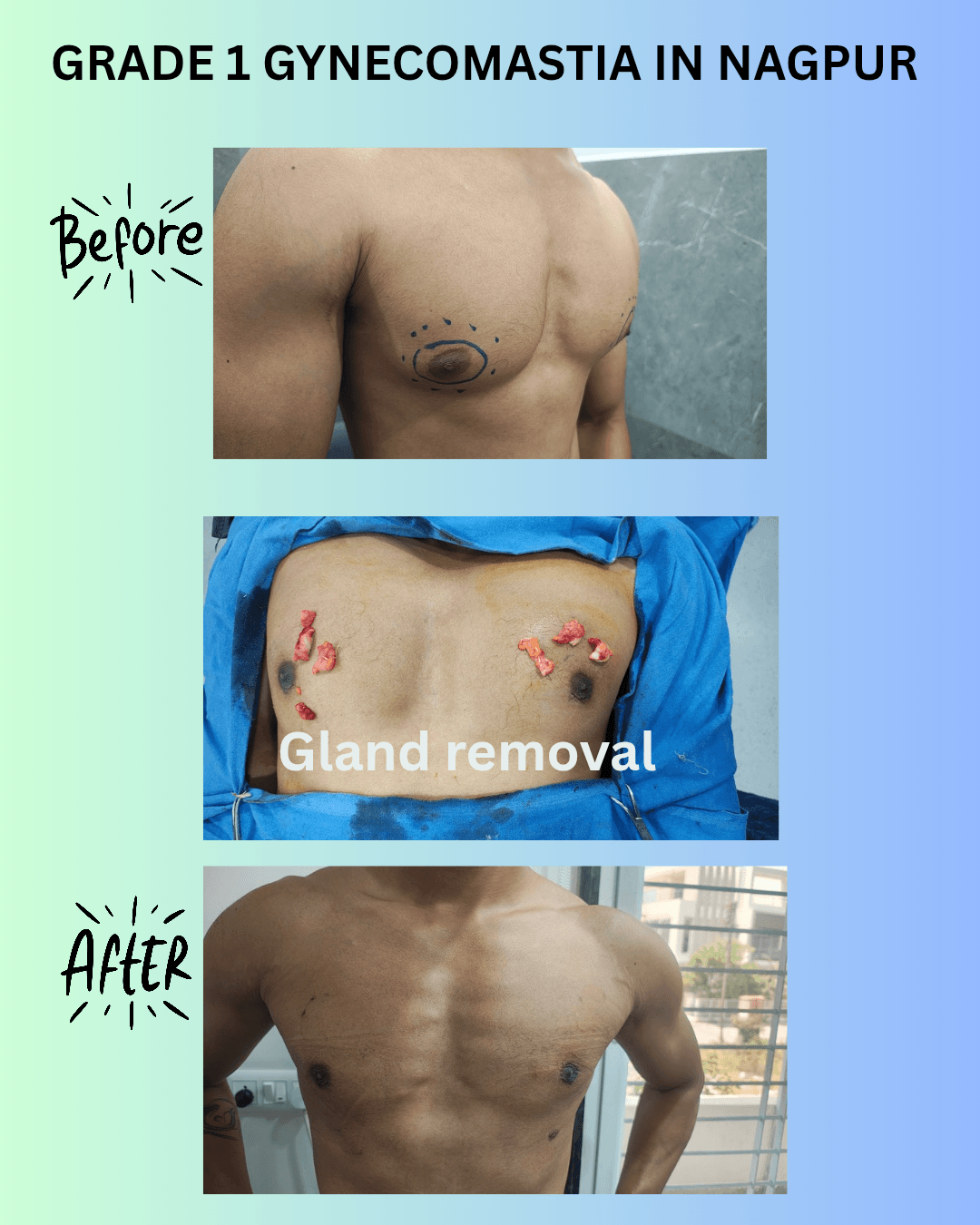
This is the earliest and often the most confusing stage.
From a distance, the chest may look normal. But up close—or in fitted clothing—there’s a persistent puffiness around the nipple and small hard lump behind nipple that doesn’t go away with workouts.
Most patients say:
“I’m fit overall, but this one area just doesn’t change.”
In Grade 1 gynecomastia, the issue is usually gland-dominant, with minimal fat and no loose skin. That’s why typical fat loss or gym training doesn’t fix it.
Treatment focuses on targeted gland removal, sometimes with minor contouring, to flatten the areolar area and restore a smooth chest line.
What this means for you:
If your concern is mainly nipple puffiness, you can expect a subtle but high-impact improvement—the chest looks more even, especially in T-shirts.
Grade 2 Gynecomastia – Gym-Goer with Persistent Chest Fullness
-
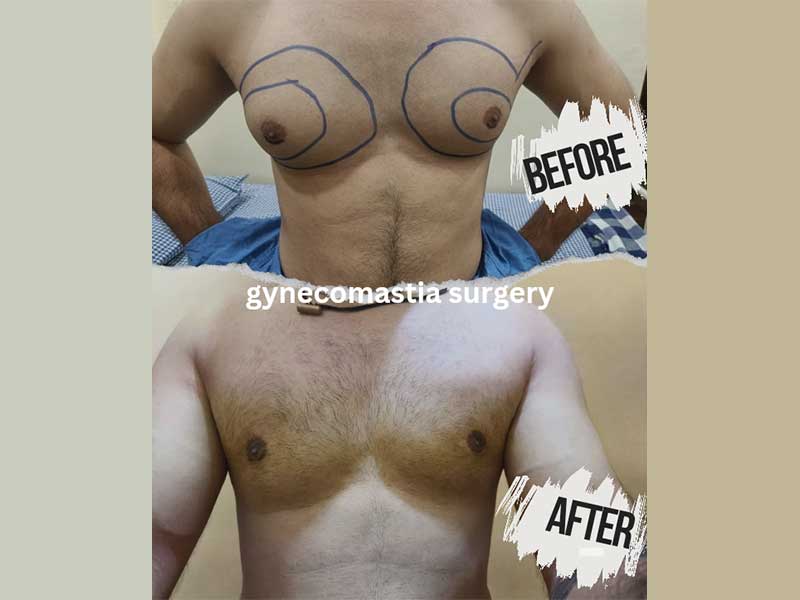
This is a very common situation.
The patient had been working out consistently for 5–6 years and had developed good muscle around the shoulders and trunk. But despite that effort, the chest never looked defined—it stayed soft and prominent.
That’s because in Grade 2 gynecomastia, the issue is not just fat. There is gland tissue, which does not respond to exercise.
In this case, the correction was done using VASER-assisted liposuction (Lipovase) along with gland excision, focusing on both reduction and shaping of the chest.
Recovery: Most patients are able to return to routine activities within a few days, with gradual return to workouts.
Outcome:
The chest contour becomes flatter and more defined, allowing the existing muscle development to finally show. Instead of looking “bulky,” the chest starts matching the rest of the athletic physique.What this means for you:
If you’ve built your body but your chest still doesn’t look right, it’s often not a training problem—it’s a structural one that requires the right correction.
For a complete overview of treatment approach, techniques, and recovery, see gynecomastia surgery in Nagpur.
Grade 3 Gynecomastia – Noticeable Chest Size with Early Skin Looseness
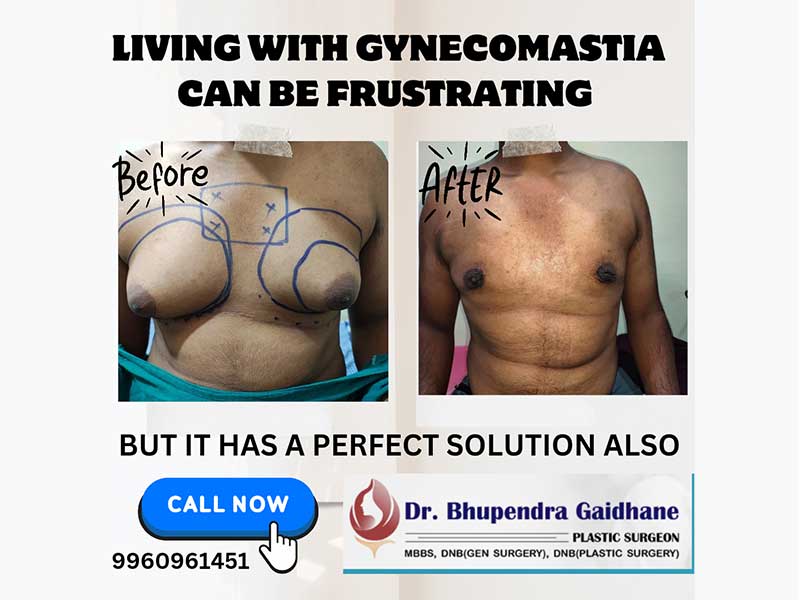
This is the stage where the chest becomes difficult to ignore.
Patients often say: “It’s visible even through regular clothes, and I’ve started avoiding certain outfits.”
In Grade 3 gynecomastia, there is increased volume along with early skin laxity. At this point, the focus is not just on removing tissue, but on reshaping the chest to achieve a balanced, natural contour.
In this case, correction was performed using liposuction combined with gland excision, without the use of VASER. The approach was tailored to reduce volume effectively while maintaining smooth contour transitions.
Recovery: Most patients are able to return to routine activities within 4–5 days, with gradual return to full physical activity.
Outcome: There is a significant reduction in chest size with improved contour. The chest appears flatter and more proportionate, with ongoing improvement as the skin adapts over time.
What this means for you: If your chest is clearly visible through clothing, this level of correction can make a noticeable difference—but in this grade, skin behavior plays a key role in the final outcome.
Grade 2 Gynecomastia – Moderate Chest Fullness
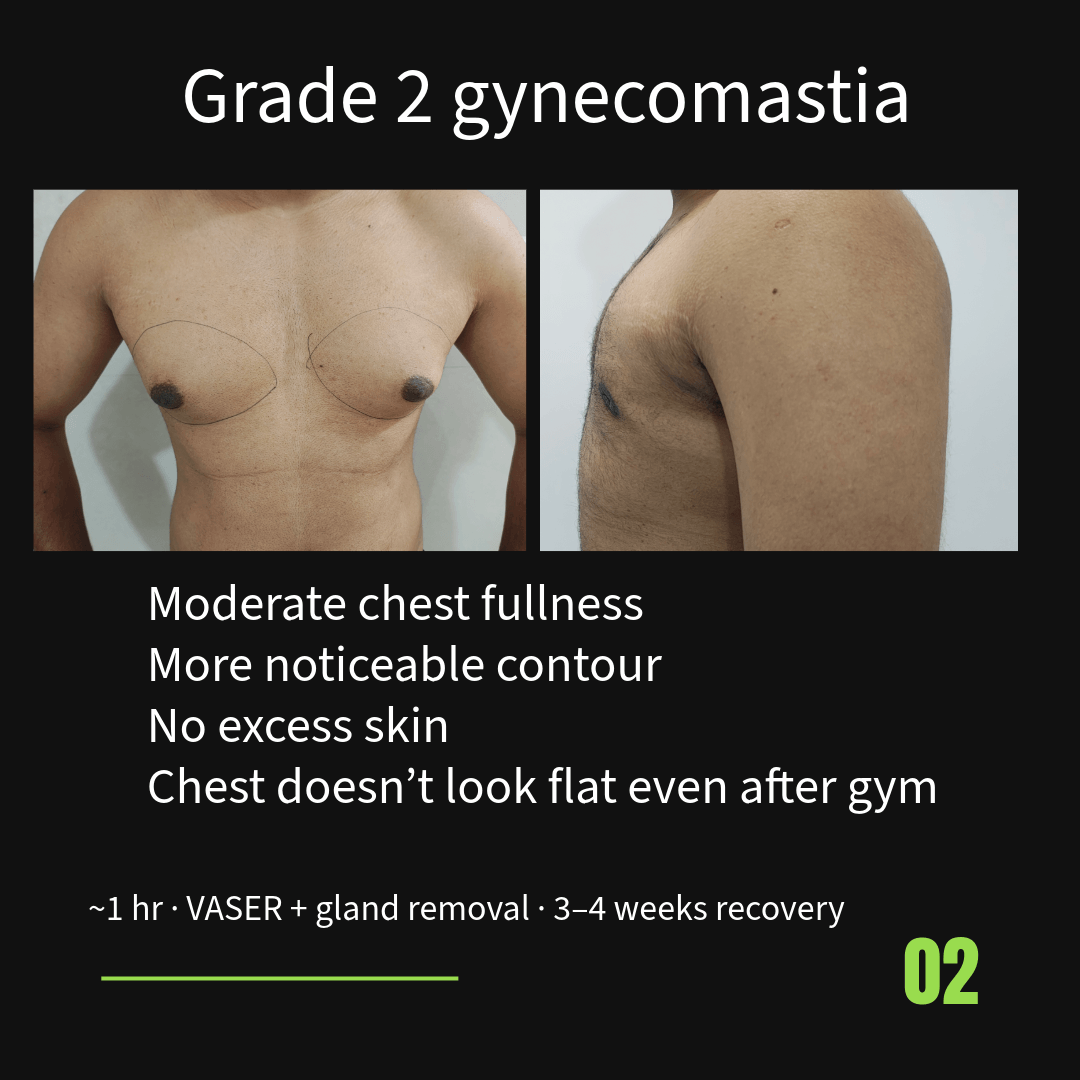
his is one of the most common situations we see.
Patients usually say:
“I work out regularly, but my chest still looks soft.”
In Grade 2 gynecomastia, there is a noticeable fullness in the chest, but the skin is still tight. This is important — because good skin means better shaping.
In this case, the correction involved removing both fat and gland tissue using a combination approach. The aim was not just to reduce size, but to create a flatter, more defined chest contour.
What this means for you:
If your chest looks similar, you can expect a significant improvement in shape, especially when wearing fitted clothes.
Grade 3 Gynecomastia – Larger Chest with Early Skin Looseness
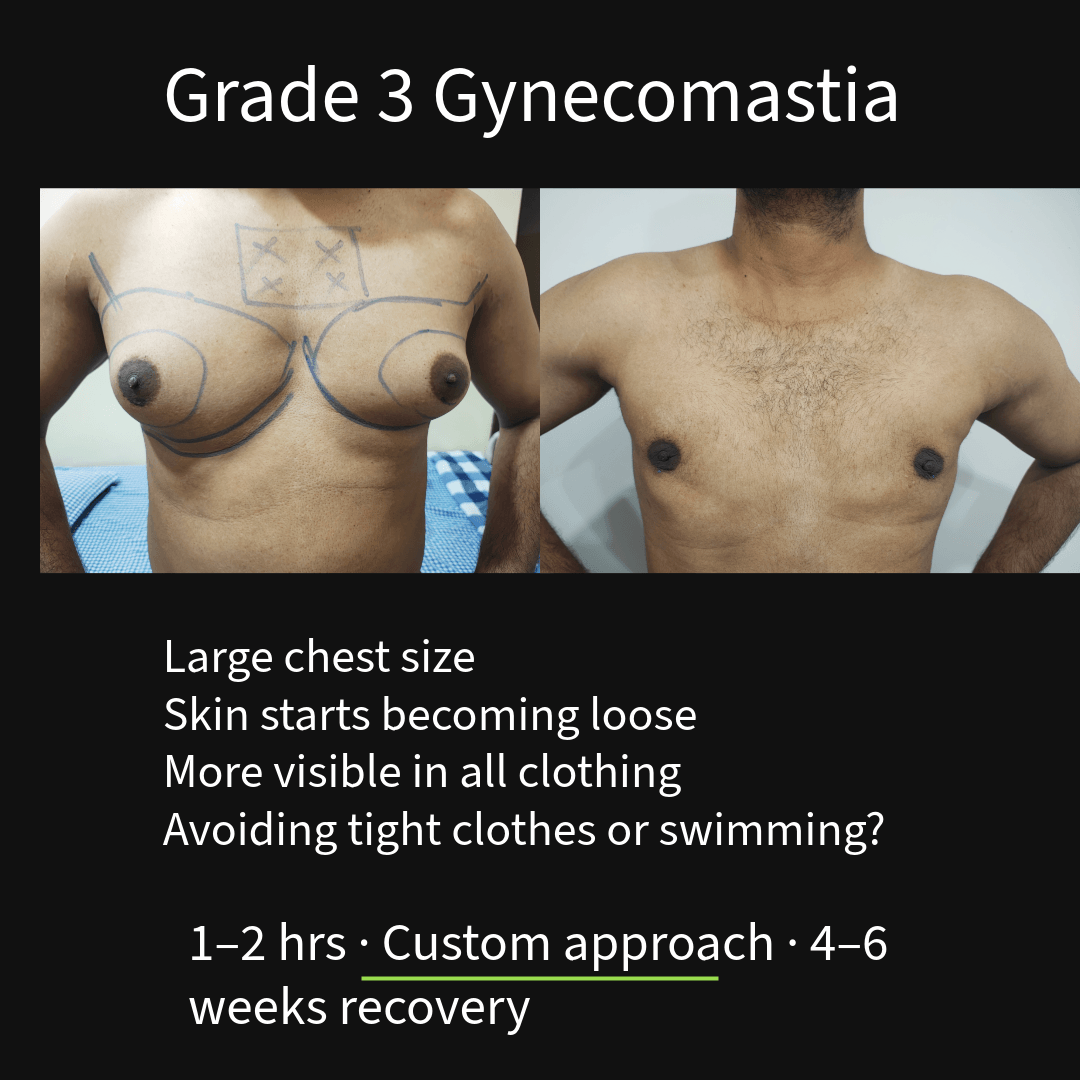
This is where things start becoming more visible — even through clothing.
Most patients at this stage say:
“I’ve started avoiding certain clothes.”
In Grade 3, the chest is larger and the skin begins to lose its tightness. That changes the surgical plan. It’s not just about removing tissue — it’s about reshaping the chest so it looks natural afterward.
This case required a more customized approach to balance reduction and contour.
What this means for you:
If you fall in this category, improvement is very noticeable — but the final result depends on how your skin adapts after surgery.
Grade 4 Gynecomastia – Young Patient with Good Skin (Skin Excision Avoided)
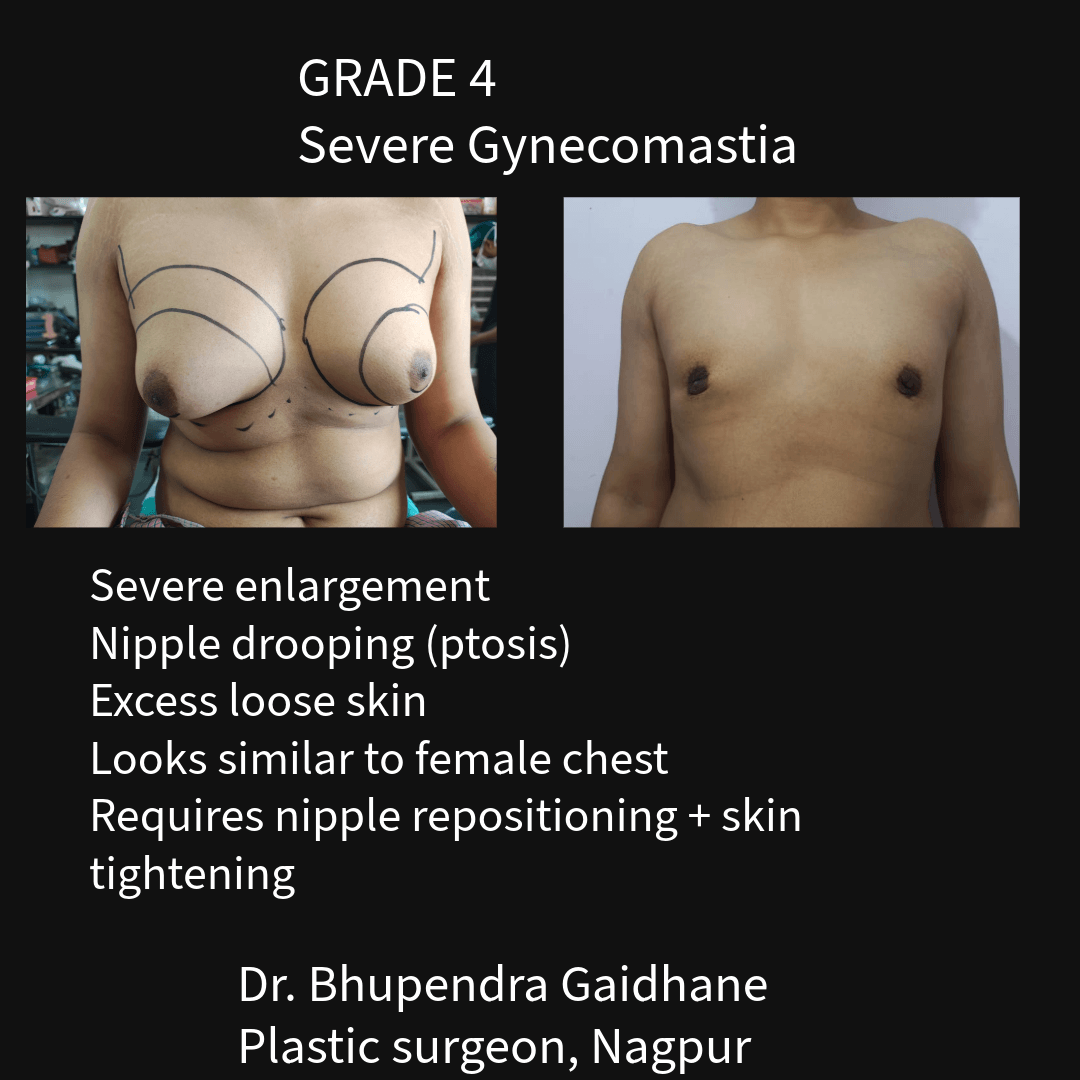
This case is a good example of how age and skin quality change the plan completely.
An 18-year-old patient with severe gynecomastia but firm, elastic skin and no major weight loss history. That matters.
Instead of jumping to skin removal, the approach focused on precise volume reduction and contouring using VASER-assisted liposuction with gland excision. The goal was to allow the skin to re-drape naturally over a flatter chest.
Why this approach worked:
- Younger skin has better recoil
- No significant stretch damage
- Controlled tissue removal avoids over-resection
What this means for you:
If your skin quality is good—even in higher grades—there are situations where visible scars can be avoided, and the chest can still settle into a natural shape over time.
Grade 4 Gynecomastia – Skin Laxity Requiring Excision & Nipple Lift
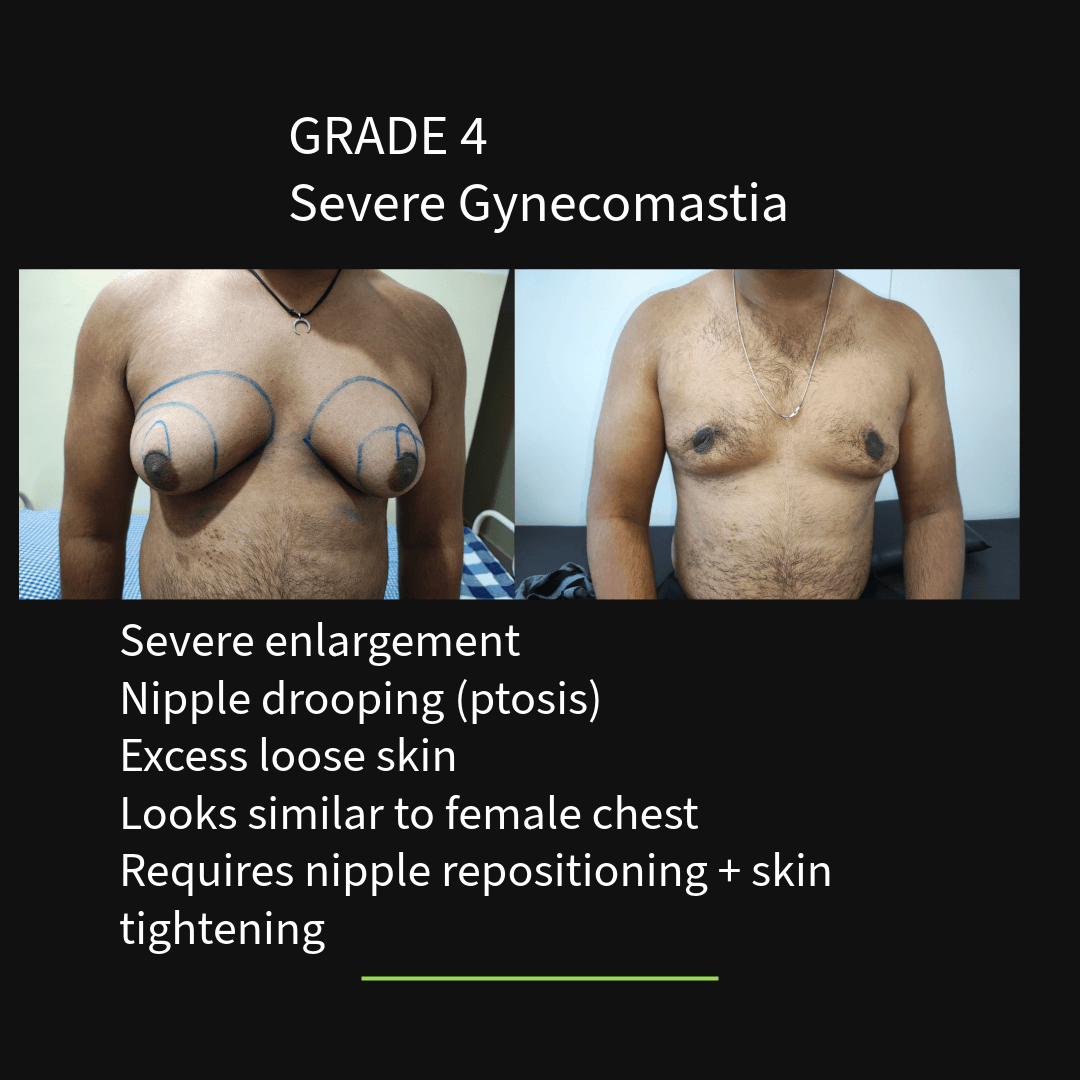
This case shows the other side of Grade 4—where skin becomes the main problem, not just tissue.
A 30-year-old patient with prior weight loss and reduced skin elasticity. In such cases, expecting the skin to shrink after liposuction alone is unrealistic.
Here, the plan included:
- Tissue reduction (fat + gland)
- Skin excision (inverted U pattern)
- Nipple repositioning for proper chest aesthetics
This is a more structured correction aimed at rebuilding the chest contour rather than just reducing size.
Why this approach was necessary:
- Skin would not contract predictably
- Risk of loose, hanging skin if not addressed
- Nipple position needed correction for a masculine chest shape
What this means for you:
In advanced cases with poor skin quality, accepting a scar is part of achieving a better overall chest shape. The trade-off is planned—not accidental.
Why Two Grade 4 Cases Can Look Completely Different
Not all Grade 4 gynecomastia is the same.
On paper, both cases fall into the same category — severe enlargement with loose skin.
In reality, the surgical plan and final outcome can be very different.
What actually changes the approach?
1. Skin quality (the biggest factor)
- Younger, elastic skin can shrink and adapt after tissue removal
- Stretched or damaged skin (often after weight loss) does not contract reliably
2. Age and tissue behavior
- Younger patients usually have better healing and skin recoil
- With age, skin becomes less predictable
3. History of weight change
- Stable weight → better skin response
- Significant weight loss → loose, redundant skin that needs removal
4. Nipple position
- If the nipple has dropped significantly, repositioning may be necessary
- If position is acceptable, it can often be preserved.
So what does this mean for results?
👉 In some patients, we can avoid skin excision and still achieve a good contour
👉 In others, skin removal and nipple repositioning are necessary to get a proper chest shape
Both are correct approaches — for different bodies.
The takeaway
Same grade does NOT mean same surgery.
The goal is not to follow a fixed technique —
it is to choose the approach that gives the most natural-looking, balanced result for that individual.
Is Your Concern Similar to One of These Cases?
If you recognized your chest in any of the cases above — the clothing avoidance, the lack of change despite exercise, the asymmetry — a clinical consultation can help confirm the grade and outline what correction would involve.
Dr. Bhupendra Gaidhane evaluates each patient individually. The grade, tissue type, and skin condition are assessed before any recommendation is made.
To schedule a consultation:
📍 Prime Polyclinic, Cabin No. 3, 1st Floor, Diamond One Building, Dhantoli, Nagpur – 440012 📞 +91 99609 61451
How Dr. Bhupendra Gaidhane Plans Each Case
No two gynecomastia cases have the same surgical plan — even when the grade is the same.
Before any decision is made, a clinical evaluation assesses three things:
1. Grade and tissue composition The proportion of fat to gland determines whether liposuction alone is sufficient, or whether gland excision is also needed. Fat responds to liposuction; gland does not — it must be removed directly.
2. Skin elasticity Young patients with firm skin often achieve a natural contour after tissue removal, as the skin adapts on its own. Patients with reduced skin elasticity — often following significant weight loss — may need skin excision to avoid residual looseness.
3. Nipple position If the nipple has drooped as a result of enlargement, its position is corrected as part of the procedure. If it is anatomically acceptable, it is preserved.
VASER (Lipovase) technology is used in most cases to liquefy fat before removal, which reduces trauma, improves precision, and supports faster recovery compared to traditional liposuction techniques.
A consultation at Prime Polyclinic, Dhantoli, Nagpur helps determine which approach is appropriate for your specific grade and tissue type.
Treatment planning depends on grade—understand classification here:
gynecomastia grades.
When Do Patients Usually Consider Surgery?
Patients often try gym and weight loss for years. Surgery is considered when the condition persists and affects confidence or comfort.
Recovery — What to Expect
Most patients return to work in 3–5 days. Compression garments are used for 4–6 weeks. Gym resumes around 6 weeks. Final results seen by 3 months.
Recovery varies by individual. For a detailed week-by-week guide:
gynecomastia surgery recovery timeline
Common Concerns Before Consultation
- Fat vs gland — requires clinical examination.
- Not sure if it’s fat or gland? Read the difference between chest fat and gynecomastia.
- Exercise limitations — gland tissue does not reduce with exercise.
- Recovery timeline — varies by individual.
If you’re comparing options, a detailed breakdown is available here:
gynecomastia surgery cost in Nagpur.
Book a Clinical Evaluation
A consultation helps determine the condition, grade, treatment plan, and expected recovery.
Location: Prime Polyclinic, Dhantoli, Nagpur