
One of the most common concerns patients have after liposuction is:
“Doctor, I still look swollen. Is something wrong?”
This blog explains a real recovery journey after 360° VASER liposuction involving the abdomen, flanks, and back. Through serial recovery photographs from Day 4 to Week 5, this article explains what swelling, fibrosis, skin tightening, and healing actually look like after surgery.
The goal is simple — to help patients understand what is normal, what improves gradually, and why post-operative care matters just as much as the surgery itself.
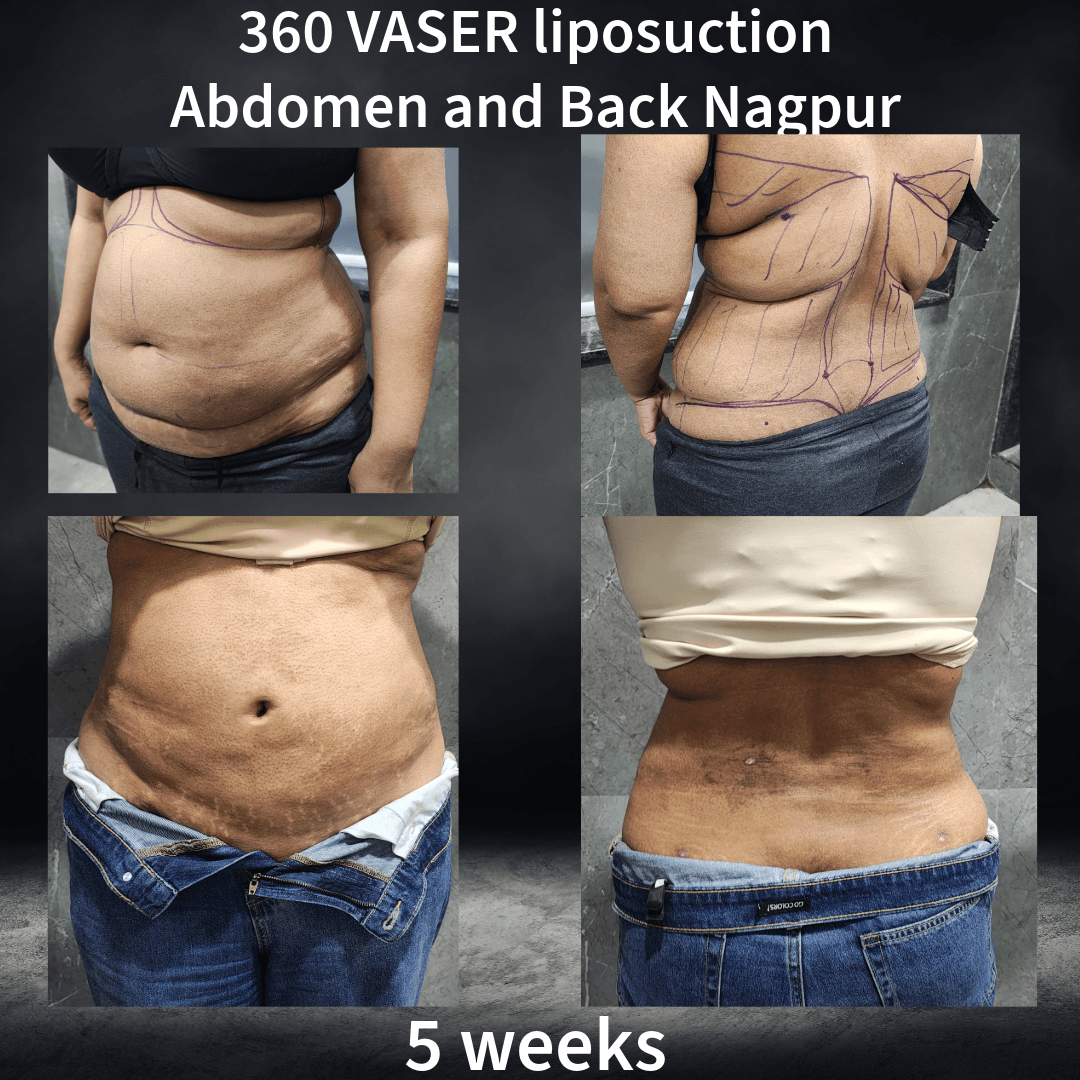
About This Case
Procedure: 360° VASER liposuction using Lipovase technology
Areas Treated: Abdomen, waist, flanks, and back
Fat Removed: Approximately 6.5 litres aspirate
Patient Profile: Good skin quality with stubborn fat deposits resistant to diet and exercise
Recovery Timeline Shared: Day 4, Day 11, Day 25, and Week 5
Important Note: These are not final results. Recovery and skin remodeling continue for several months after surgery.
“Liposuction recovery is not an overnight transformation. It is a gradual body remodeling process that unfolds over weeks and months.”
Before Surgery: Planning and Marking
Before surgery begins, careful body contour planning is done. The surgical markings help define the treatment zones, fat thickness, contour transitions, and areas requiring more aggressive reduction.
This was a 360-degree liposuction procedure, meaning the entire circumference of the torso was treated — not just the front abdomen. Treating the waist and back together helps create a more balanced body contour.
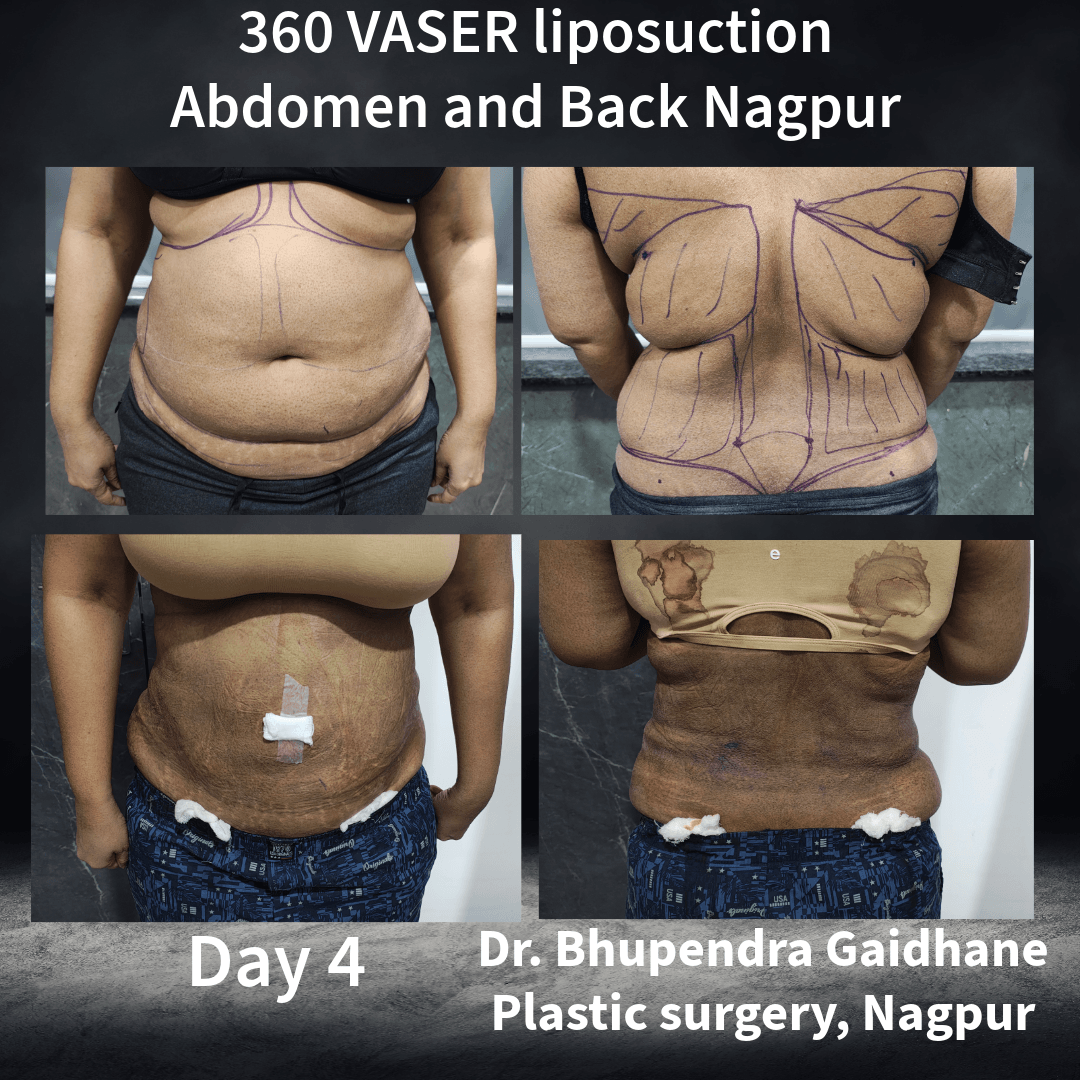
Day 4 After Liposuction: Early Swelling Phase
At this stage, the body is still reacting to surgical trauma and fluid shifts. Swelling can appear uneven, especially in the lower abdomen and waist.
Many patients become anxious during this period because they expect immediate tightening. In reality, the body is still inflamed internally.
Compression garments, lipo foam, hydration, walking, and lymphatic drainage support recovery during this phase.
Day 11 Recovery: Swelling Starts Settling
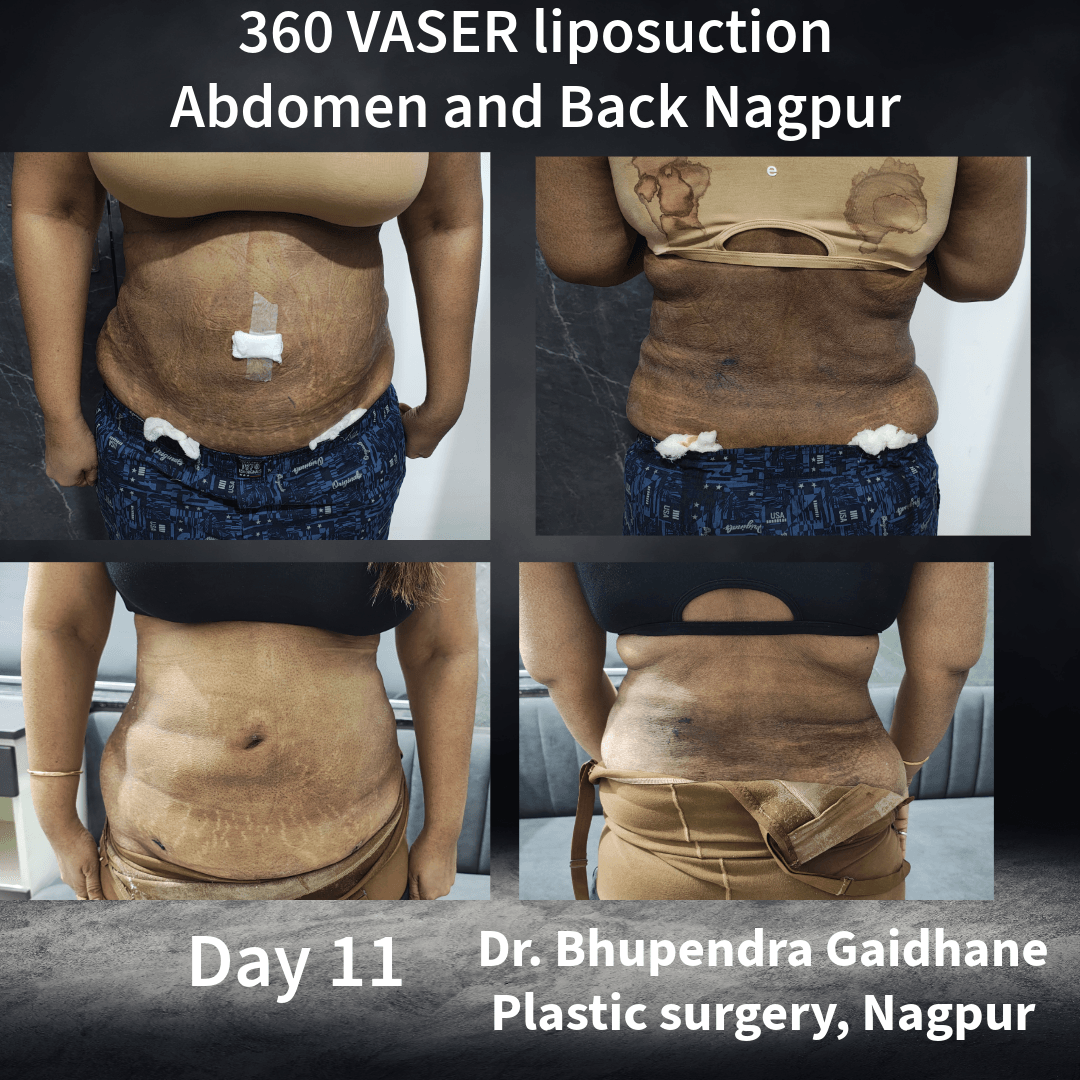
By the second week, some swelling begins reducing and the body contour starts appearing more defined. However, firmness and internal healing are still ongoing.
The lower abdomen typically heals slower due to gravity, lymphatic drainage patterns, and skin anatomy.
This phase often requires patience because visible improvement happens gradually rather than suddenly.
Day 25 Recovery: Transition Phase
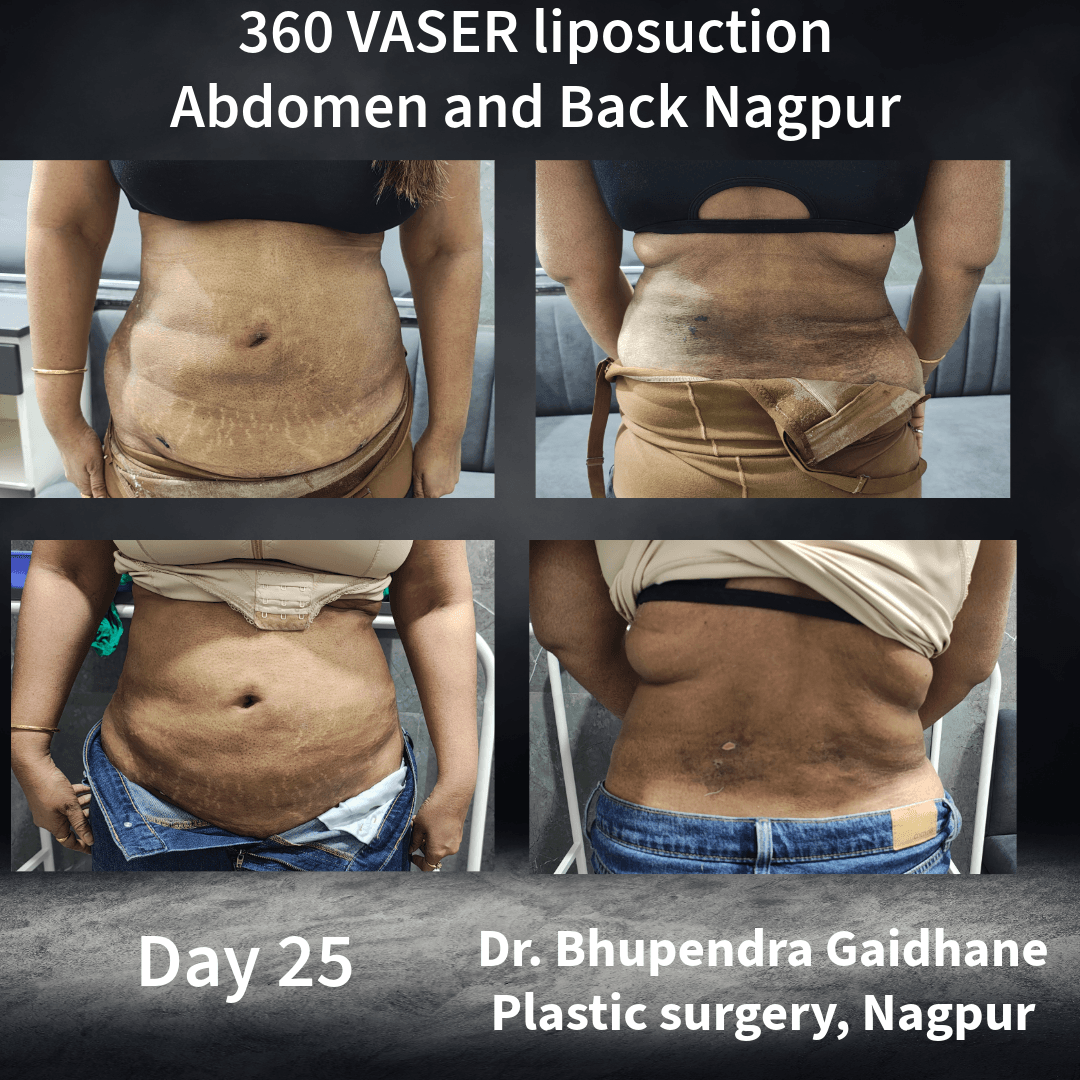
Around the third to fourth week, the body enters a transition phase. Swelling reduces further, mobility improves, and the waist contour starts becoming more visible.
Some areas may still feel firm or irregular because fibrosis and internal scar remodeling continue beneath the skin.
This is why post-operative care remains important even after the initial recovery period.
Week 5 Recovery: Visible Contour Improvement
By Week 5, swelling is significantly reduced compared to the early post-operative phase. The waist appears more defined and the abdominal contour becomes smoother.
However, this is still not the final result. Skin contraction, fibrosis softening, and tissue remodeling continue for several months after surgery.
Patients who remain consistent with compression garments, massage, hydration, nutrition, and activity usually continue seeing gradual improvement over time.
Related Procedures
VASER liposuction:
What Patients Feel During Recovery — And What Surgeons Actually See
One of the hardest parts of liposuction recovery is psychological.
Patients expect to feel excited after surgery. Instead, many feel confused during the first few weeks. The abdomen feels swollen, clothes may not fit properly yet, the lower abdomen looks puffy, and some areas may feel firm or uneven.
Many patients quietly wonder:
“Did the surgery fail?”
“Why do I still look swollen?”
“Why does the lower abdomen still stick out?”
But from a surgeon’s perspective, these early phases often look completely normal.
What patients interpret as a bad result is usually active healing — swelling, tissue fluid, internal inflammation, fibrosis, and skin remodeling. The body is recovering from a controlled surgical injury. Healing takes time.
This is why proper counseling before surgery matters. Recovery is not just physical. It is emotional too.
Why VASER Liposuction Changes Recovery and Contouring
In this case, VASER-assisted liposuction using Lipovase technology was used for body contouring.
VASER technology uses ultrasonic energy to selectively target and emulsify fat before removal. This allows smoother fat extraction, improved contour precision, and better preservation of surrounding tissues compared to more aggressive traditional techniques.
For areas like the waist, flanks, and back — where contour transitions matter significantly — precision becomes extremely important.
VASER also plays an important role in skin contraction and definition during healing. However, even with advanced technology, swelling and fibrosis are still part of normal recovery.
Technology improves precision. It does not eliminate biology.
Why Surgery Alone Does Not Create the Final Result
Many patients believe the result depends entirely on the surgery itself.
In reality, post-operative recovery protocol plays a major role in determining how smoothly healing progresses.
After large-volume liposuction, the body temporarily creates internal spaces where fat was removed. Swelling fluid, inflammation, and tissue stiffness naturally develop during healing.
This is why compression garments, lipo foam, abdominal binders, movement, hydration, and lymphatic drainage become important.
The goal is not simply “comfort.” The goal is controlled healing.
Compression Garments and Binders
Compression garments help reduce swelling, support the healing tissues, and improve skin redraping over the new contour.
Areas like the lower abdomen often swell longer because gravity naturally pulls fluid downward. Consistent compression helps control this prolonged edema.
Abdominal binders and strategically placed lipo foam can also help improve contour smoothness during early healing phases.
Patients who remain consistent with compression usually tolerate swelling better and often experience smoother recovery transitions.
Manual Lymphatic Drainage (MLD)
Manual lymphatic drainage is not simply a “spa massage.”
After liposuction, lymphatic channels temporarily struggle to clear swelling fluid efficiently. MLD helps stimulate lymphatic movement, reduce fluid retention, improve tissue softness, and decrease prolonged swelling.
In larger 360-degree liposuction cases, MLD often becomes particularly valuable because multiple body zones are healing simultaneously.
Patients frequently notice that areas feeling hard or heavy gradually become softer and more mobile over time with proper recovery care.
Understanding Fibrosis After Liposuction
Fibrosis is one of the most misunderstood parts of liposuction recovery.
Patients often describe it as:
– hardness
– lumpiness
– unevenness
– tight bands beneath the skin
This usually represents internal scar remodeling and tissue healing.
Fibrosis is more noticeable in areas with thicker fat layers, aggressive fat reduction, or prolonged swelling. The lower abdomen is especially prone to this because healing there is slower.
The important thing to understand is this:
Early fibrosis is not the final result.
Over time, the tissues soften, swelling improves, skin contracts further, and contour transitions become smoother.
Consultation for Liposuction in Nagpur
If you are considering liposuction and want a realistic understanding of recovery, body contouring, swelling, and expected healing timelines, consultation and proper planning are important.
Dr. Bhupendra Gaidhane is a plastic and cosmetic surgeon in Nagpur with experience in VASER liposuction and body contouring procedures.
Prime Polyclinic, Dhantoli, Nagpur
Call: 9960961451
Why the Lower Abdomen Improves Slower
Almost every patient focuses on the lower abdomen during recovery.
And almost every surgeon expects it to heal slower.
The lower abdomen consistently retains swelling longer because:
– gravity pulls fluid downward
– lymphatic drainage is slower
– skin mobility differs in this region
– sitting posture continuously folds the area
This is why patients often panic unnecessarily during the first few weeks.
In reality, the waist and upper abdomen usually show improvement earlier, while the lower abdomen gradually catches up over time.
The Problem With “Instant Result” Liposuction Content Online
Social media often shows liposuction as an instant transformation.
Most patients never see:
– swelling
– fibrosis
– compression garments
– drainage
– uneven healing phases
– emotional recovery
They only see polished “after” photos.
But honest recovery education creates better expectations and better patient experiences.
Real recovery is gradual. Real healing takes patience. And realistic expectations usually lead to happier long-term outcomes.
A Surgeon’s Perspective on Liposuction Recovery
One of the biggest shifts patients experience after proper education is this:
They stop obsessing over daily swelling changes and start understanding the long-term recovery process.
The body continues remodeling for months after surgery. Skin tightening improves gradually. Swelling fluctuates. Some areas soften faster than others.
Recovery is rarely linear.
The goal is not to chase perfection in the first few weeks. The goal is steady improvement, controlled healing, and long-term contour balance.
This case demonstrates something important:
Good outcomes are created not only in the operating room, but throughout the recovery journey that follows.
Frequently Asked Questions About Liposuction Recovery
How long does swelling last after liposuction?
Most noticeable swelling improves within 6–8 weeks. However, subtle swelling and tissue remodeling can continue for 3–6 months depending on the amount of fat removed, treatment area, skin quality, and post-operative care. Large-volume 360° VASER liposuction cases often take longer to fully settle compared to smaller procedures.
Is swelling normal after VASER liposuction?
Yes. Swelling is a normal and expected part of recovery after VASER liposuction. The body undergoes internal healing, inflammation, and fluid shifts after surgery. Early swelling does not mean the procedure failed or that the result is poor.
What is fibrosis after liposuction?
Fibrosis refers to temporary firmness, lumpiness, or tight areas that develop during internal healing after liposuction. It is caused by scar tissue formation and tissue remodeling beneath the skin. Fibrosis usually improves gradually over time with compression, massage, movement, and healing.
Why does the lower abdomen stay swollen longer?
The lower abdomen commonly heals slower because gravity pulls fluid downward and lymphatic drainage is naturally slower in this region. Sitting posture and skin anatomy also contribute to prolonged swelling in the lower abdominal area after liposuction.
Do compression garments really help after liposuction?
Yes. Compression garments help reduce swelling, support healing tissues, improve skin redraping, and reduce fluid accumulation during recovery. Consistent garment use is an important part of post-operative recovery after liposuction surgery.
What does manual lymphatic drainage (MLD) do after liposuction?
Manual lymphatic drainage helps stimulate lymphatic circulation, reduce swelling, improve tissue softness, and support recovery after liposuction. In larger 360-degree liposuction procedures, MLD may help patients recover more comfortably during the healing phase.
When are final liposuction results visible?
Most patients notice significant improvement within 2–3 months. However, final contour definition, skin tightening, and tissue remodeling may continue improving for 6 months or longer after surgery.
Is VASER liposuction better for body contouring?
VASER liposuction uses ultrasonic energy to emulsify fat before removal, allowing smoother fat extraction and improved contour precision. It is commonly used for areas requiring more refined contour transitions such as the waist, flanks, abdomen, and back.