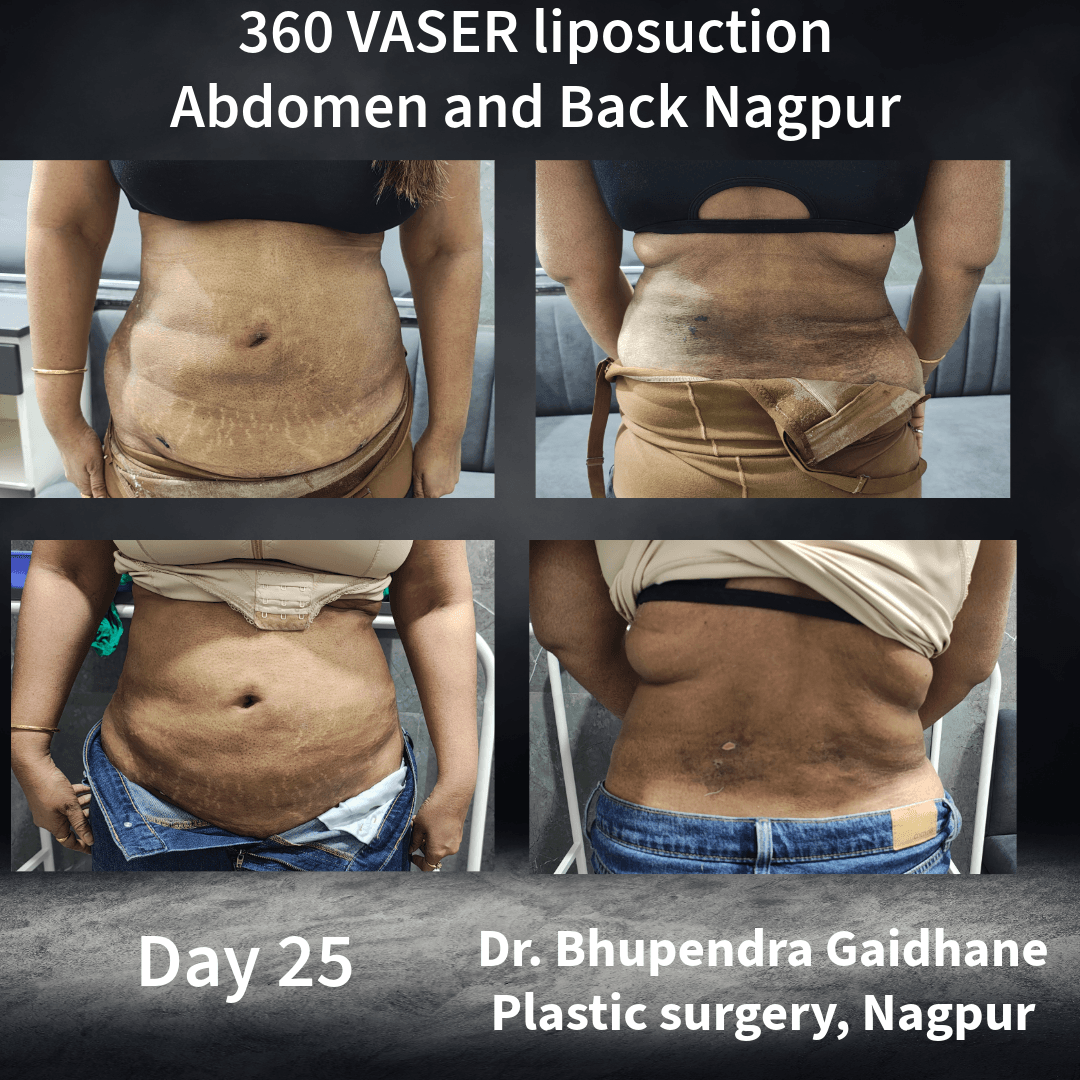
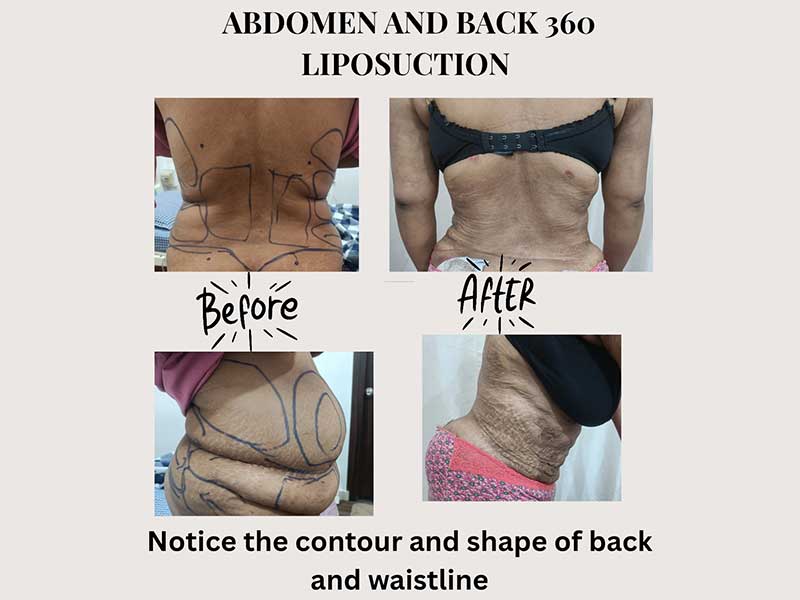
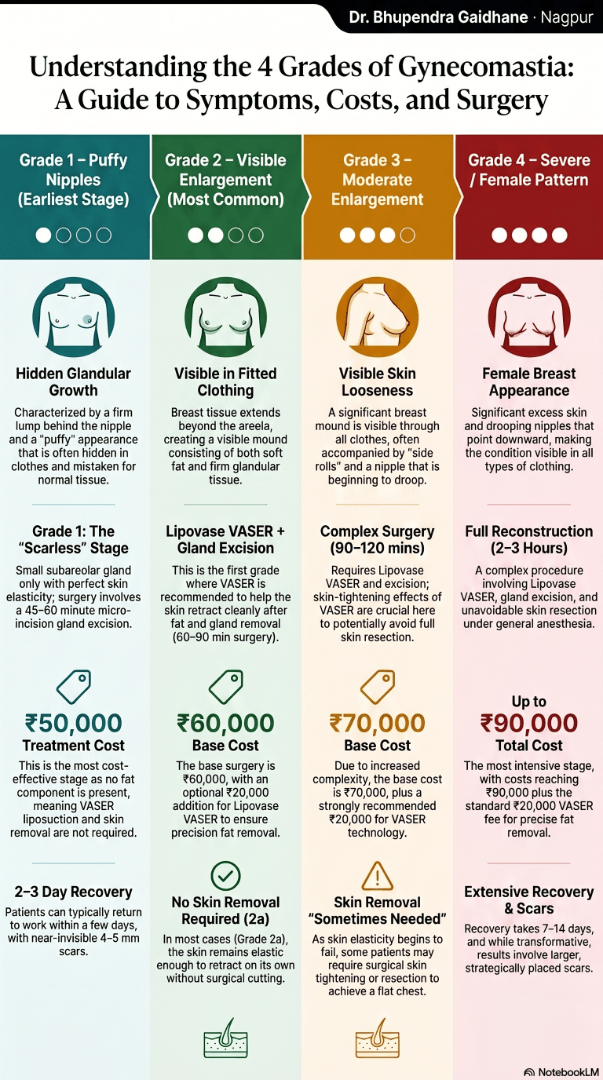
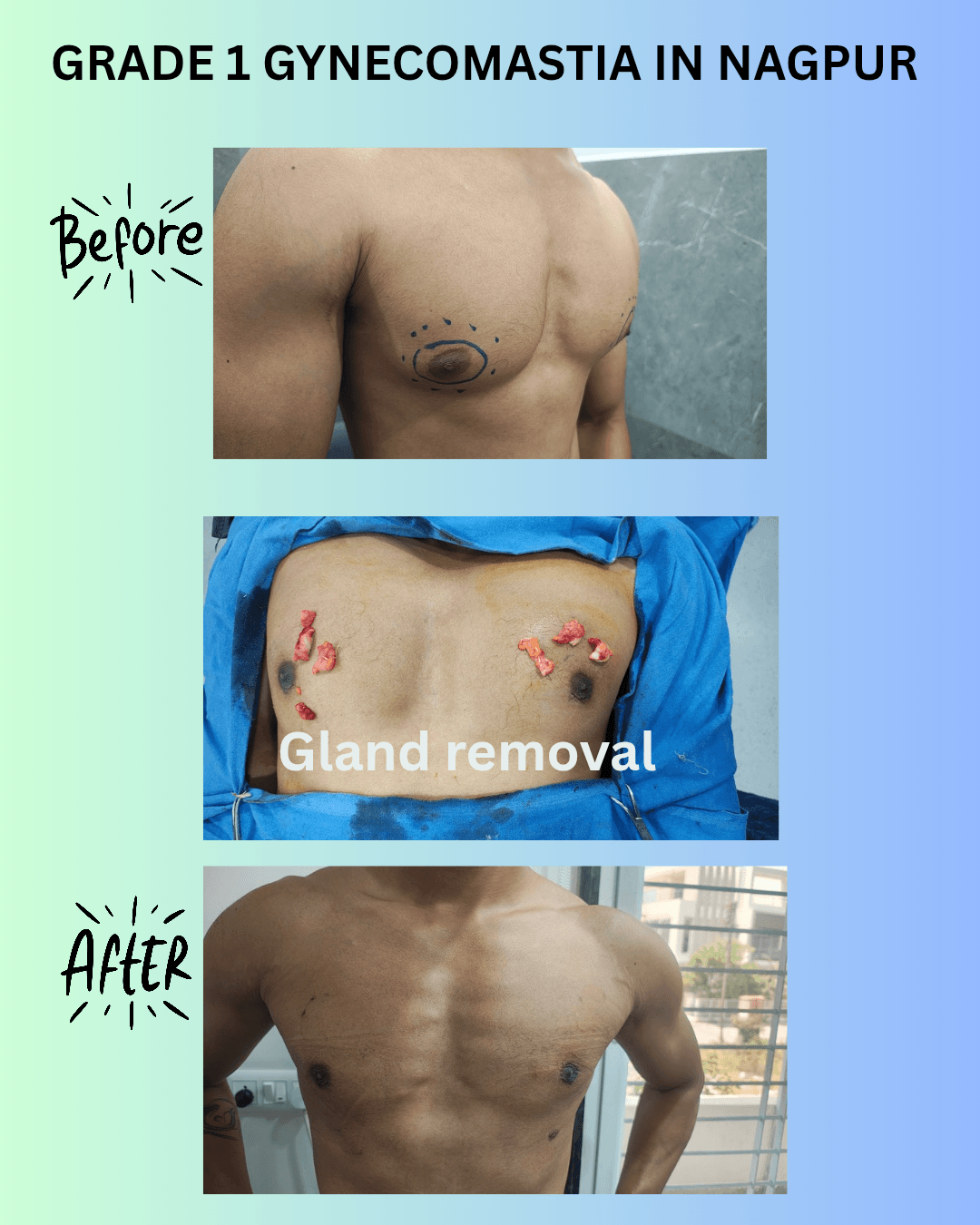
All posts by Dr Bhupendra Gaidhane

Liposuction Cost in Nagpur (2026) | Dr. Bhupendra Gaidhane

Liposuction Cost in Nagpur (2026) — Complete Package Pricing and What It Covers

The most common frustration patients report when researching liposuction costs online is discovering that the quoted price is only the beginning. Surgeon fee, operating theatre charges, anaesthesia fee, hospital stay, compression garments, post-operative appointments — these additions can significantly change the number between a first enquiry and a final invoice.

This page provides complete, transparent pricing for Lipovase VASER liposuction at our clinic in Nagpur — structured as all-inclusive packages by treatment area, with a clear statement of what is and is not covered.

How pricing is structured at our clinic

Liposuction costs at Prime Polyclinic are structured as procedure packages. Each package is area-specific — meaning the price corresponds to a defined anatomical region — and is designed to be all-inclusive within the surgical episode itself.

This approach eliminates the billing surprises that patients frequently encounter at facilities that separate out anaesthesia fees, operating room time, recovery room charges, and post-operative garment costs as individual line items.

What is included in every Lipovase package

✔ Operating theatre charges

✔ Inpatient room charges for the duration of the admission

✔ Anaesthesia — administered by a qualified anaesthesiologist

✔ All in-hospital medicines and IV fluids during admission

✔ Medical-grade compression pressure garment (worn post-operatively for 6–8 weeks as standard of care)

✔ Post-operative follow-up consultations at clinic

What is not included — stated clearly

Pre-operative workup — approximately ₹4,000–₹5,000. Includes complete blood count, blood glucose, coagulation profile (PT-INR), ECG, physician fitness certificate for general anaesthesia, and ultrasound abdomen to screen for occult hernia prior to abdominal liposuction. Conducted at an external pathology laboratory of your choice before admission.

VASER technology charge — ₹20,000 per case. The VASER ultrasound-assisted system requires specialised single-use probes and disposable components per procedure. This charge covers those consumables and is billed separately from the base package price.

Post-discharge medicines — typically a 5–7 day course of analgesics and antibiotics taken at home after discharge. Minor cost, dispensed at pharmacy of choice.

Recovery add-ons (optional, patient’s choice) — specialised lipofoams used during the compression garment phase and post-operative lymphatic drainage massage sessions. These are evidence-supported adjuncts to recovery that patients may choose to incorporate. They are not compulsory and are payable by the patient separately. See the recovery add-ons section below for clinical context.

The compression garment inclusion is clinically significant. A review published in Wounds (2020) and earlier data from Hanke CW et al. in Dermatologic Surgery (1995) document that post-liposuction compression reduces seroma formation, supports skin retraction, and minimises post-operative oedema. It is not an accessory — it is a medical device that directly affects the final contour. Including it in the surgical package reflects that clinical reality.

Package pricing by treatment area

The following prices reflect Lipovase VASER liposuction — our 4th-generation ultrasound-assisted protocol — for each anatomical region. Liposuction performed using traditional (non-VASER) suction-assisted technique is priced differently and is discussed below.

Treatment Area Starting From Notes
Bilateral arms ₹60,000 Both arms treated in single session
Abdomen 360° ₹1,20,000 Full circumferential — upper abdomen, lower abdomen, flanks
Thighs ₹1,00,000 Inner and/or outer thigh treatment
Axillary breast (liposuction) ₹50,000 – ₹60,000 Fat-predominant axillary breast tissue

These are base package starting prices. Add the VASER technology charge of ₹20,000 per case for Lipovase procedures. Pre-operative workup (₹4,000–₹5,000) is arranged separately before admission. The final package figure is individualised and confirmed in writing at consultation before any surgical commitment.

Patients travelling from Wardha, Amravati, Yavatmal, Chandrapur, and other Vidarbha districts to Nagpur for Lipovase will find the all-inclusive structure simplifies both budgeting and logistics — there are no separately billed surprises after the procedure.

Recovery add-ons — what the evidence says

Two recovery support options that patients frequently ask about are not included in the surgical package but are available as patient-elected add-ons: specialised lipofoams and lymphatic drainage massage.

Lipofoams are low-density foam inserts worn beneath the compression garment that distribute pressure more evenly across irregular subcutaneous surfaces, particularly in the abdominal region where anatomy is uneven post-liposuction. They reduce the risk of garment-related contour irregularities during the healing phase.

Manual lymphatic drainage (MLD) massage in the post-liposuction period has documented clinical support. Stutz JJ and Ackermann G, writing in the Journal of Aesthetic Surgery (2009), evaluated MLD in post-liposuction oedema management and found a significant reduction in post-operative swelling and subjective discomfort in patients who received MLD versus those who did not. The proposed mechanism is acceleration of lymphatic uptake of post-operative fluid and inflammatory byproducts from the treated area. Massage sessions are typically commenced after the first post-operative week once drainage is confirmed resolved, and continue for four to six weeks.

Neither lipofoams nor lymphatic massage are compulsory for a good surgical outcome. The core result is determined by the surgical technique, tumescent preparation, VASER protocol, and compression garment compliance. These adjuncts support comfort and swelling resolution during recovery — they are not substitutes for any of the above. Patients who wish to incorporate them are advised to do so with realistic expectations about the incremental benefit.

Why VASER liposuction costs more than traditional liposuction

This is a reasonable question and deserves a direct answer grounded in what the technology actually changes.

Traditional suction-assisted liposuction (SAL) removes fat through mechanical disruption — a cannula is moved back and forth to physically break up and aspirate fat cells. VASER ultrasound-assisted liposuction adds an emulsification step: ultrasound energy is delivered into the subcutaneous tissue first, selectively disrupting fat cells before they are aspirated. Surrounding structures — nerves, blood vessels, connective tissue — are largely spared because they have different acoustic properties from fat.

Jewell ML et al., publishing in the Aesthetic Surgery Journal (2011) in a multi-centre clinical study of VASER liposuction, documented significantly reduced blood loss compared to traditional suction-assisted techniques, more consistent fat extraction, and improved skin retraction outcomes. Reduced intraoperative blood loss is not merely a technical metric — it translates to faster post-operative recovery, reduced anaemia risk, and less post-operative bruising and swelling for the patient.

The ASPS safety guidelines for liposuction (published and updated through 2019) identify blood loss management as a critical component of liposuction safety, particularly for higher-volume cases. Published data (Rohrich RJ et al., Plastic and Reconstructive Surgery) documents that traditional suction-assisted liposuction is associated with blood loss representing 20–45% of the total aspirate volume. Ultrasound-assisted techniques consistently reduce this figure, a finding replicated across multiple published series.

The VASER system also requires significantly more expensive disposable components per case and a higher capital investment in equipment. These costs form part of the price difference versus traditional liposuction — but the clinical trade-off is measurable and documented in the surgical literature.

The Lipovase protocol — what makes it a 4th-generation approach

At our clinic, VASER liposuction is performed using what we call the Lipovase protocol — a structured approach to patient selection, pre-operative marking, tumescent infiltration, VASER emulsification, and aspiration that we have refined across more than 200 body contouring cases.

The term “4th generation” refers to the evolution of ultrasound-assisted liposuction technology: 1st generation (early UAL with heat-related complications), 2nd generation (improved probes, pulsed delivery), 3rd generation (current VASER system), 4th generation (refined protocol integrating VASER with precise anatomical planning, layered fat removal, and structured compression management). The technology itself is the VASER system; the protocol around it is what Lipovase refers to.

This distinction matters for patients comparing costs across clinics. VASER equipment availability does not equate to VASER expertise. The same instrument in different hands produces different outcomes — a principle documented in surgical literature on procedural volume and outcomes across multiple specialties.

What determines whether your cost is at the lower or higher end of the range

Several specific clinical factors move the final package cost within the stated range for each area.

The volume of fat to be addressed is the primary variable — larger volume cases require more operating time, more tumescent fluid preparation, and a more extended post-operative admission. The number of sub-zones within a treatment area matters — 360° abdomen treatment covering upper abdomen, lower abdomen, and both flanks is more extensive than isolated lower abdominal treatment. Patient body habitus affects anaesthesia planning, which adds complexity in some cases. The need for simultaneous procedures — such as combining axillary breast liposuction with gynecomastia surgery — creates a combined package rather than separate single-area pricing.

All of these variables are assessed at pre-operative consultation, and the final package price is communicated clearly before any surgical commitment is made.

How Lipovase pricing compares with other cities

ISAPS Global Statistics and published Indian market data consistently show that liposuction costs in metropolitan cities such as Mumbai, Delhi, and Pune run 1.5 to 2.5 times higher than equivalent procedures in Tier 2 cities — for comparable technology and surgical expertise. A 360° VASER abdominoplasty in a Mumbai accredited surgical facility typically starts at ₹2,00,000–₹2,50,000 at comparable quality standards.

The Nagpur pricing for Lipovase reflects this geography — and the all-inclusive package structure means the final cost is genuinely comparable, without the addition of separately billed line items that metro facilities routinely charge.

Patients often ask if a lower price means a different standard of care. The honest answer is: it depends entirely on what drives the lower price. In our case, the difference is geography and operational cost structure, not technology or training compromise. The VASER system is the same. The DNB qualification is the same. The OT standards are the same. The compression garment is the same — and it is included. What is lower is the cost of running a surgical facility in Nagpur versus Mumbai, and that saving passes directly to the patient.

— Dr. Bhupendra Gaidhane, DNB Plastic Surgery | Prime Polyclinic, Dhantoli, Nagpur

Frequently asked questions

Is the quoted price final, or are there charges I haven’t been told about?

The base package price covers OT, anaesthesia, room, in-hospital medicines, and one set of compression garment. Three additional charges apply to Lipovase cases and are communicated at consultation: VASER technology charge (₹20,000 per case), pre-operative workup (approximately ₹4,000–₹5,000), and post-discharge medicines (minor cost). Optional recovery add-ons — lipofoams and lymphatic massage sessions — are patient-elected and payable separately if chosen. There are no undisclosed billing additions beyond these.

Why is the compression garment included in the package?

Compression garment use for six to eight weeks post-operatively is a standard-of-care requirement after liposuction, supported by published clinical evidence showing reduced seroma risk and improved skin retraction outcomes. It is included because it is a non-negotiable part of the procedure — not because it is a commercial add-on.

Can I combine multiple areas to reduce per-area cost?

Combination procedures are common — for example, abdomen 360° with thighs, or arms with axillary liposuction in the same session. Combined procedures are priced with a consultation discussion — there is usually a combined efficiency since OT time, anaesthesia setup, and admission overhead are shared. Safe fat removal limits (ASPS recommends ≤5 litres total aspirate in outpatient settings) govern how many areas can be addressed in a single session.

What does the pre-operative workup involve and what does it cost?

Pre-operative workup for Lipovase liposuction includes complete blood count, blood glucose, coagulation profile (PT-INR), ECG, physician fitness clearance for general anaesthesia, and ultrasound of the abdomen to screen for an occult hernia — particularly relevant before abdominal liposuction, as an undiagnosed hernia is a surgical contraindication. Any additional investigations directed by the physician based on individual medical history are also included in this workup. Total cost is approximately ₹4,000–₹5,000, arranged at an external pathology provider before admission. The USG abdomen for occult hernia screening is a standard precaution that reduces surgical risk and is part of responsible pre-operative planning.

How long is the hospital stay included in the package?

Most Lipovase procedures involve a day surgery to overnight admission — typically 12 to 24 hours. The package covers this standard admission duration. Prolonged stay beyond clinical discharge criteria is uncommon and would be discussed individually.

Is EMI or finance available for liposuction?

Please enquire at consultation regarding available payment arrangement options. This is handled on an individual basis.

Does the cost differ for VASER versus traditional liposuction?

Yes. Traditional suction-assisted liposuction is less expensive per area due to lower consumable and equipment costs. At consultation, the appropriate technique for your anatomy and goals is discussed, along with the corresponding pricing.

Are outstation patients charged differently?

No. Package pricing is the same regardless of where the patient travels from. Outstation patients typically require an additional day or two in Nagpur for pre-operative assessment and initial post-operative observation before travel. Our outstation patient guide covers logistics in detail.

Is a consultation charge applied before surgery?

Initial consultation charges apply and are discussed at time of appointment booking. These are separate from the surgical package.

Are lipofoams and lymphatic massage necessary after liposuction?

Neither is compulsory, but both have clinical support as recovery adjuncts. Lipofoams help distribute compression garment pressure evenly over post-operative contour irregularities, reducing the risk of uneven healing during the initial weeks. Manual lymphatic drainage massage, evaluated in post-liposuction oedema studies (Stutz JJ and Ackermann G, Journal of Aesthetic Surgery, 2009), is associated with faster reduction in post-operative swelling and reduced subjective discomfort. Both are patient-elected add-ons payable separately — they are not included in the base package because they are optional rather than essential to a good surgical outcome.

How do I get an exact quote for my specific case?

An exact package price can only be confirmed at in-person consultation, following fat distribution assessment, skin elasticity evaluation, BMI review, and treatment area planning. Starting prices on this page are an honest guide to budget planning — the final figure is individualised and confirmed in writing before any surgical commitment. Patients from across Vidarbha — including Wardha, Amravati, Yavatmal, and Chandrapur — are welcome to book an initial consultation at Prime Polyclinic, Dhantoli, Nagpur before committing to surgery.

Find out your exact Lipovase package price based on your treatment areas and individual anatomy.

Dr. Bhupendra Gaidhane — DNB (Gen Surgery), DNB (Plastic Surgery) — Prime Polyclinic, Dhantoli, Nagpur. Serving patients from across Nagpur, Wardha, Amravati, Yavatmal, Chandrapur, and Vidarbha.

Enquire via WhatsApp

VASER Liposuction in Nagpur (Lipovase) — procedure overview →
Am I a candidate for liposuction? →
href=”https://www.drbhupendraplasticsurgeon.com/blog/vaser-liposuction-vs-traditional-liposuction/”>VASER vs traditional liposuction — a surgeon’s comparison

Am I a Good Candidate for Liposuction? A Surgeon’s Honest Assessment

Am I a Good Candidate for Liposuction? A Surgeon’s Honest Assessment

This is often the first question patients want answered — and it is also the question most clinics rush past in order to get to pricing and booking.

The straightforward answer is: not everyone who wants liposuction is the right candidate for it. And understanding the specific reasons why — based on your body, your fat distribution, your skin, and your goals — is more useful than being told yes simply because you booked a consultation.

This page lays out the clinical criteria used at our clinic in Nagpur to evaluate liposuction candidacy — including the factors that make someone an ideal patient, the factors that argue against surgery, and what the assessment process actually involves.

What liposuction actually removes — and what it cannot

Before evaluating candidacy, it is worth being precise about what liposuction does and does not address.

Liposuction removes subcutaneous fat — the layer of adipose tissue located beneath the skin and above the muscle fascia. This is the fat that causes visible bulging in areas like the abdomen, flanks, thighs, arms, and chest.

It does not remove visceral fat — the fat stored inside the abdominal cavity around the organs. Visceral fat is not accessible to any liposuction technique and cannot be safely removed surgically. Research published in Nature (Després JP and Lemieux I, 2006) confirms that visceral adiposity is a distinct metabolic tissue with a separate anatomical location, entirely separate from the subcutaneous fat layer that liposuction targets.

This distinction matters practically. A patient with a firm, protruding lower abdomen — often caused by visceral fat accumulation — may not achieve the result they expect from liposuction. A patient with a soft, pinchable lower abdominal fold is a different clinical picture entirely.

The adipocytes (fat cells) removed by liposuction do not regenerate. Research consistently documents that the number of fat cells in adults remains relatively stable, with individual adipocytes enlarging or shrinking based on caloric intake rather than new cells being created. Liposuction permanently reduces cell count in treated areas. However, remaining fat cells elsewhere in the body can enlarge with significant weight gain after surgery — which is why weight stability before and after surgery is a foundational candidacy criterion.

The five clinical criteria for an ideal liposuction candidate

At our clinic, candidacy assessment uses five core criteria derived from published guidelines and surgical evidence.

1. Weight stability for at least six months

The American Society of Plastic Surgeons (ASPS) guidelines recommend that candidates be at a stable weight for a minimum of six months before liposuction. Significant weight fluctuation before surgery complicates surgical planning and can compromise the final contour. The goal of liposuction is proportional reshaping — not weight reduction — and this is best achieved when baseline measurements are stable.

2. Body mass index preferably below 30

Liposuction is not a weight loss procedure. It is a body contouring procedure. Published surgical literature, including position statements from the ASPS, consistently identifies BMI as a key risk stratification tool. Candidates with a BMI below 30 generally have better skin retraction, lower anaesthesia risk, and more predictable contouring outcomes. Candidates with BMI between 30 and 35 require careful individual assessment. BMI above 35 significantly increases both surgical and anaesthetic complication risk.

3. Skin elasticity adequate for retraction

After fat is removed from a given area, the overlying skin must retract to conform to the new contour. This retraction depends on the quality of the dermis — specifically its collagen and elastin content. Rohrich RJ and Broughton G, writing in Plastic and Reconstructive Surgery (2003), identify skin elasticity as one of the most clinically significant variables in predicting liposuction outcomes. Younger patients and patients who have not experienced significant weight loss or pregnancy typically have better elasticity. Poor elasticity means the skin may appear loose or wrinkled after fat removal, which can require additional skin excision procedures to correct.

4. Localized fat deposits not responding to diet and exercise

Liposuction is most clinically appropriate for patients who have achieved a reasonable level of physical fitness but retain stubborn, disproportionate fat deposits in specific areas. Genetic fat distribution patterns — commonly the lower abdomen in women and the flanks and chest in men — are often resistant to reduction through caloric restriction or exercise alone. These localized, subcutaneous deposits are the primary indication for liposuction.

5. Realistic and specific expectations

Research published in Clinical Psychology Review (Sarwer DB, Wadden TA, et al., 1998) established the importance of psychological evaluation in cosmetic surgery candidacy assessment. Patients who understand that liposuction reshapes proportion — rather than transforming body type or resolving weight-related health issues — consistently report higher satisfaction with surgical outcomes. Unrealistic expectations are a recognised contraindication to proceeding with elective cosmetic surgery.

A simple self-assessment: the pinch test

Before any formal consultation, a basic self-assessment can give you a preliminary indication of whether the fat in a given area is subcutaneous and therefore potentially addressable by liposuction.

The pinch test involves grasping the skin and underlying tissue between your thumb and forefinger in the area of concern. If you can comfortably pinch two centimetres or more of tissue, this suggests the presence of subcutaneous fat. A firm abdomen that does not allow this pinching — where the resistance is from within the abdominal cavity rather than the skin layer — is more consistent with visceral fat accumulation.

This test is a rough initial guide only. Clinical assessment during consultation provides a far more accurate picture.

Who is not an appropriate candidate for liposuction

Clarity about contraindications is equally important as understanding ideal criteria.

Liposuction is generally not appropriate for patients with significant skin laxity without redundancy in specific areas — such as after major weight loss — where skin excision procedures (abdominoplasty, brachioplasty, thigh lift) may be more appropriate than liposuction alone. It is not appropriate as a primary treatment for obesity. It does not address visceral fat. It is contraindicated in patients with bleeding disorders or those on anticoagulant therapy, patients with poorly controlled diabetes due to impaired wound healing, active smokers (smoking compromises wound healing and significantly increases anaesthetic risk), and patients who are pregnant or breastfeeding.

Patients with body dysmorphic disorder — a condition involving excessive preoccupation with perceived physical flaws — require specialist psychological support before any cosmetic surgical intervention is considered.

How much fat can be safely removed in one session?

Safe fat removal limits are an established part of liposuction practice guidelines. The ASPS recommends that total aspirate volume in an outpatient or ambulatory surgical setting not exceed five litres. Beyond five litres, the procedure should be performed in a hospital inpatient setting with appropriate monitoring. Rohrich RJ et al., publishing in Plastic and Reconstructive Surgery, documented that traditional liposuction is associated with blood loss averaging 20–45% of the aspirate volume — a figure significantly reduced with ultrasound-assisted techniques such as VASER.

In practice, most body contouring procedures targeting one to three areas fall comfortably within safe limits. Total aspirate volume is planned during pre-operative assessment based on the areas treated and individual patient measurements.

The Lipovase assessment: what we evaluate at consultation

At our clinic in Nagpur, candidacy assessment during consultation involves a structured evaluation covering the following areas.

Fat distribution mapping identifies which areas contain subcutaneous fat amenable to liposuction and which areas have characteristics that may need a different approach. Skin elasticity is assessed clinically in each proposed treatment area. BMI, weight history, and weight trajectory over the preceding twelve months are reviewed. Medical history screening covers clotting disorders, diabetes, cardiovascular conditions, and current medications. Photographs are taken for surgical planning and to establish a clear baseline for comparison. Goals are discussed specifically — the patient describes what outcome matters to them, which allows realistic planning rather than generic expectations.

This process takes time, and it is intentional. A consultation that ends too quickly — without these assessments — cannot produce reliable surgical recommendations.

Areas commonly addressed with Lipovase VASER liposuction in Nagpur

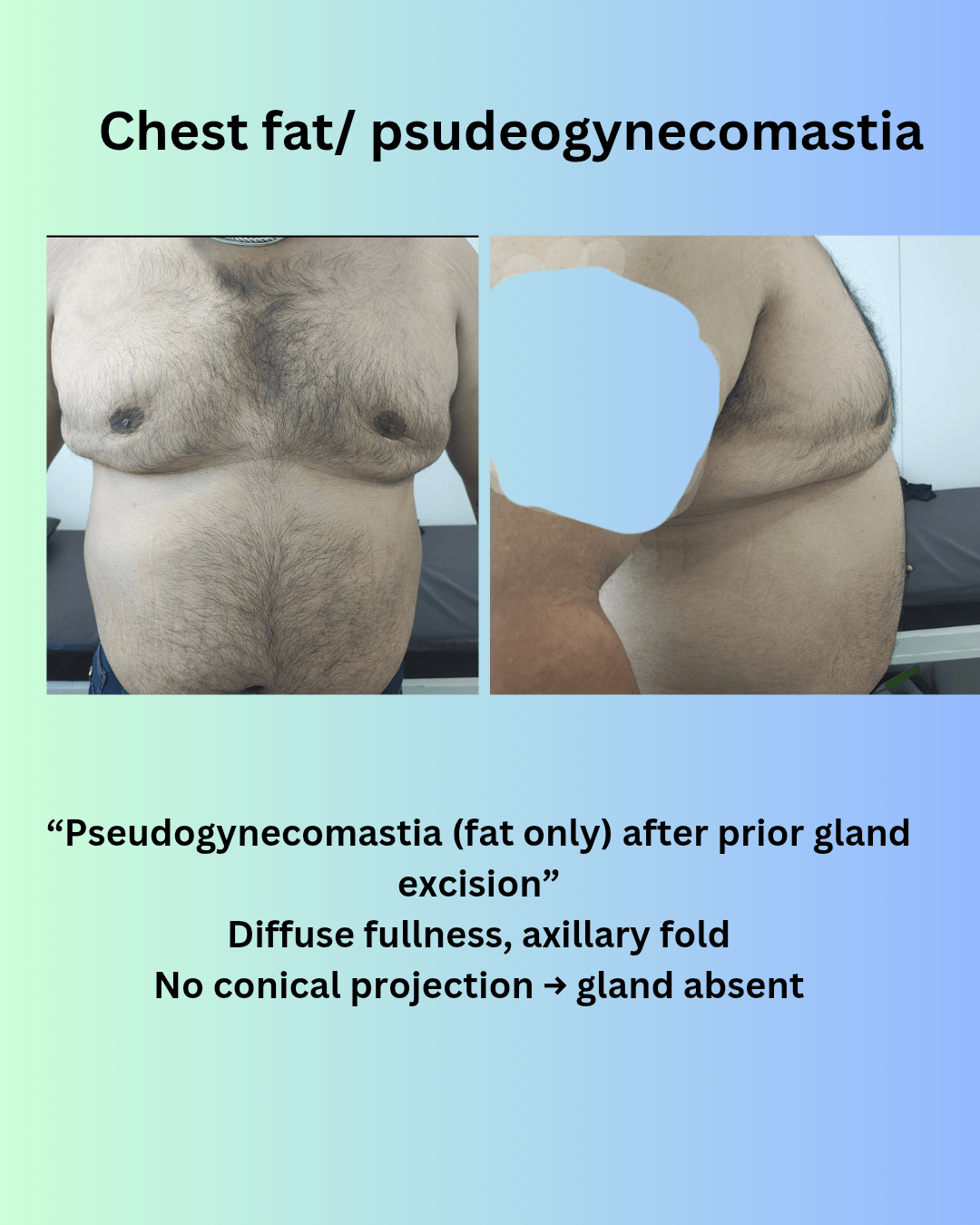
For appropriately selected candidates, Lipovase (our 4th-generation VASER protocol) can address localised fat deposits across multiple body areas in a single session. The most commonly treated areas at our clinic include the abdomen — upper and lower — the flanks and love handles, the back (bra roll and upper back), the arms, the thighs, the male chest in cases of pseudogynecomastia (fat-predominant chest fullness without glandular tissue), and the submental area under the chin.

Treatment area selection and combination are determined individually. Not all areas need to be treated simultaneously, and overtreatment in a single session carries risks that appropriate planning avoids.

The most common question I am asked by patients is whether they are “too big” or “too small” for liposuction. The honest answer is that neither extreme is the right framing. What matters is the character of the fat, the quality of the skin above it, and whether the patient’s goal is proportional reshaping rather than weight reduction. These questions have answers — but they require an in-person assessment, not a checklist.

— Dr. Bhupendra Gaidhane, DNB Plastic Surgery | Prime Polyclinic, Dhantoli, Nagpur

Frequently asked questions

Can liposuction help me lose weight?

Liposuction is a body contouring procedure, not a weight loss treatment. The amount of fat removed — typically one to four litres — does not produce meaningful scale weight reduction. Patients may lose two to four kilograms on average. The meaningful change is proportional — the shape and distribution of the body, not total mass.

What BMI is considered safe for liposuction?

ASPS guidelines recommend BMI below 30 as the preferred range for outpatient liposuction. Patients between 30 and 35 require individual assessment. BMI above 35 significantly increases both procedural and anaesthetic risk and is generally a contraindication to outpatient liposuction.

Will the fat come back after liposuction?

The fat cells removed by liposuction do not return. However, remaining fat cells throughout the body can enlarge with significant weight gain. Maintaining stable weight after surgery preserves the result long-term.

I have loose skin in the area — am I still a candidate?

It depends on the degree of laxity. Mild laxity with good underlying elasticity often resolves with skin retraction after fat removal. Significant loose skin — particularly after major weight loss — may require a skin excision procedure in addition to or instead of liposuction. This is assessed individually at consultation.

Is VASER liposuction better for patients with more fat to remove?

VASER ultrasound-assisted liposuction (our Lipovase protocol) selectively emulsifies fat before removal, which allows more precise extraction with less trauma to surrounding tissues. Published data in the Aesthetic Surgery Journal (Jewell ML et al., 2011) documents reduced blood loss, faster recovery, and improved skin retraction with VASER compared to traditional techniques — benefits particularly relevant for patients with larger volume requirements.

Can liposuction remove belly fat?

Liposuction removes subcutaneous belly fat — the soft, pinchable layer beneath the skin. It cannot remove visceral fat — the deep abdominal fat around the organs. Patients with hard, protuberant abdomens consistent with visceral fat are not appropriate candidates for liposuction of the abdomen.

What is the minimum age for liposuction?

In India, elective cosmetic surgery requires the patient to be 18 years or older and to provide independent informed consent. There is no specific upper age limit, though older patients require more careful cardiac and anaesthetic risk assessment.

How much fat can be removed safely in one session?

ASPS guidelines recommend a maximum total aspirate of five litres in outpatient settings. Procedures exceeding this volume are performed in a hospital inpatient setting. Exact volumes are planned pre-operatively based on the areas treated and individual measurements.

How long does it take to see the final result after liposuction?

Initial swelling resolves within four to six weeks. Full skin retraction and final contour definition take three to six months in most patients. Compression garment use during this period supports the result.

What happens at the consultation before liposuction?

Consultation includes fat distribution assessment, skin elasticity evaluation, BMI and weight history review, medical history screening, photograph documentation, and a detailed goal discussion. A realistic surgical plan is prepared based on these findings — not on what the patient hoped to hear before walking in.

Find out whether liposuction is appropriate for you — based on your actual anatomy and goals, not assumptions.

Dr. Bhupendra Gaidhane, DNB Plastic Surgery, conducts structured candidacy assessments at Prime Polyclinic, Dhantoli, Nagpur.

Book a Consultation on WhatsApp

VASER Liposuction in Nagpur (Lipovase) →
Liposuction cost in Nagpur →
“https://www.drbhupendraplasticsurgeon.com/blog/vaser-liposuction-vs-traditional-liposuction/”>VASER vs traditional liposuction — what changes →

Outstation Patients Guide – Travelling to Nagpur for Plastic Surgery


Outstation Patients Guide – Travelling to Nagpur for Plastic Surgery | Dr. Bhupendra Gaidhane


Patient Information Guide

Travelling to Nagpur for Plastic Surgery: A Practical Guide for Outstation Patients

For patients visiting from Chhindwara, Seoni, Betul, Balaghat, Raipur, Amravati, Akola, Chandrapur, Yavatmal, and across Vidarbha and Central India.

BG
Dr. Bhupendra Gaidhane
DNB – Plastic, Reconstructive & Cosmetic Surgery · Prime Polyclinic, Dhantoli, Nagpur

Many patients who come to us for gynecomastia correction, liposuction, or other cosmetic procedures travel from cities and towns that are a few hours from Nagpur. For most of them, the clinical concern is not the surgery itself — it is the question of logistics.

This guide addresses that question directly. It explains what the process looks like before your visit, on the day of surgery, in the immediate postoperative period, and after you return home.

The process is well established and has been followed by patients travelling from Chhindwara, Seoni, Betul, Balaghat, and several other cities in Madhya Pradesh, as well as from Raipur and across Vidarbha.

“If I get surgery in Nagpur, how will my follow-up happen? How many days do I need to stay?”

This is one of the most common questions we receive from patients who are not based in Nagpur. The answer depends on the procedure performed, but for most body contouring and cosmetic procedures, the stay is shorter than most patients expect.

Before, During & After Surgery

1

Before Your Visit

An in-person consultation is the preferred starting point. This allows a proper clinical examination, which is necessary to determine the appropriate treatment plan — particularly for gynecomastia, where gland assessment and grading guides the surgical approach.

For patients travelling from a significant distance, an initial discussion, review of photographs, and preliminary planning may take place through WhatsApp before scheduling your visit. This allows us to give you a clearer picture of what to expect before you travel.

Note: Clinical examination cannot be fully replaced by photographs for all procedures. Final surgical planning is confirmed at the in-person consultation.

2

Day of Surgery

The procedure is performed at an accredited surgical facility in Nagpur. Most cosmetic and body contouring procedures are planned as day-care or short-stay surgeries. After the procedure, depending on what was performed and your individual recovery:

  • You may be discharged the same evening if recovery is smooth and the procedure was day-care in nature.
  • You may require an overnight stay at the facility, based on the surgeon’s assessment.
  • Patients with family or relatives in Nagpur often stay with them for the first night or two. A nearby hotel or guest house is a practical option for others.

The decision is made individually and depends on the procedure performed, anaesthesia used, and your recovery status.

3

First Dressing Review (Around Day 3)

For most procedures, the first postoperative review is scheduled approximately three days after surgery. This visit allows us to:

  • Examine the wound and assess initial healing
  • Review the degree of swelling and evaluate recovery progress
  • Reinforce postoperative care instructions specific to your procedure
  • Confirm that you are comfortable for travel back to your home city

This review is an important step. We advise patients to plan their Nagpur stay to include this visit before returning home.

4

Returning Home

After the initial postoperative review, most patients are able to travel back to their home city by car, bus, or train. Travel recommendations are individualised based on what was performed and how your recovery has progressed.

For gynecomastia correction and most liposuction procedures, patients travelling distances of three to five hours by road are typically able to make the journey comfortably after the Day 3 review.

Note: Air travel is generally not necessary for this distance, but if relevant to your situation, advice will be given at the time of your review.

5

Follow-Up After Returning Home

Modern follow-up does not always require repeated long-distance travel. After the Day 3 in-person review, routine follow-up can often be managed through:

📱

WhatsApp photographs

Wound and recovery progress can be assessed visually. Patients are asked to share images at defined intervals.

📹

Video calls

For assessment of movement, swelling, or concerns that require real-time interaction.

💬

Direct communication

Queries are addressed directly, without the need to travel for minor concerns.

An in-person visit is recommended whenever the situation requires a physical examination. This is determined on a case-by-case basis and communicated clearly at each stage of follow-up.

Cities and Regions Our Patients Travel From

Patients regularly visit our clinic from the following areas. If your city is not listed, you are welcome to reach out directly.

Vidarbha – Maharashtra

Nagpur · Wardha · Amravati · Akola · Yavatmal · Chandrapur · Bhandara · Gondia · Gadchiroli

Madhya Pradesh

Chhindwara · Seoni · Balaghat · Betul · Multai · Pandhurna · Narsinghpur · Mandla

Chhattisgarh

Raipur · Rajnandgaon and surrounding districts of western Chhattisgarh

Procedures Performed for Outstation Patients

The following procedures are commonly performed for patients travelling from outside Nagpur. Each has a specific protocol for outstation planning and follow-up.

Questions Outstation Patients Often Ask

How many days do I need to stay in Nagpur after gynecomastia surgery?
For most gynecomastia correction procedures, patients stay in Nagpur for approximately three to four days. The Day 3 dressing review is the most important milestone before travel. After this review, if recovery is progressing as expected, most patients are comfortable travelling back.

Can I get a preliminary consultation on WhatsApp before travelling to Nagpur?
For outstation patients, an initial discussion and review of clinical photographs may be possible through WhatsApp before your visit. This gives you a realistic understanding of the planned approach and expected outcomes before committing to travel. However, a formal in-person consultation is required before any surgical procedure is scheduled.

Is there accommodation available near the clinic for patients without family in Nagpur?
Several hotels and guest houses are available in proximity to our clinic at Dhantoli, Nagpur. We can provide general guidance on options when you confirm your surgery date. We recommend choosing accommodation within a short distance of the clinic for the first few days after surgery.

How is follow-up managed after I return to Chhindwara, Seoni, or another city?
After the initial in-person review, routine follow-up is managed through WhatsApp photographs and video calls where required. You will receive clear instructions on what to monitor and at what intervals to share updates. An in-person visit is requested only when the clinical situation requires it.

Is it safe to travel by car a few days after liposuction or gynecomastia surgery?
Travel comfort after surgery depends on the procedure performed and individual recovery. For most body contouring procedures, short to medium-distance travel by car — typically up to four or five hours — is manageable by Day 3 or 4, once the initial review has confirmed satisfactory healing. Specific guidance will be given at your postoperative review before departure.

Do I need to come back to Nagpur for suture removal or the next dressing?
This depends on the procedure and the type of closure used. In many cases, sutures are absorbable and do not require removal. Where a physical visit is required, it will be communicated clearly, and the timing is planned to minimise travel inconvenience for outstation patients.

I am from Raipur. Is it practical to travel to Nagpur for surgery?
Raipur is approximately four to five hours from Nagpur by road and well-connected by train. We have patients who have travelled from Raipur for gynecomastia correction and liposuction procedures. The logistics are manageable, and the process described in this guide applies equally to patients from Chhattisgarh.

What if I have a concern or complication after returning home?
Patients are given direct contact details and are encouraged to reach out without hesitation if they notice any unexpected change in wound appearance, unusual pain, or other concerns. Photographs shared promptly help assess the situation quickly. If an in-person evaluation is deemed necessary, you will be advised accordingly.

Can the entire consultation and surgical planning process happen in a single trip to Nagpur?
In selected cases, where an initial preliminary discussion has taken place and the clinical picture is clear from photographs and history, the consultation and surgery can be planned within the same visit. This is assessed on an individual basis. Please contact us to discuss your specific situation before planning your travel.

Does the clinic charge for WhatsApp-based follow-up consultations after surgery?
Postoperative follow-up communication — including photograph review and responses to queries — is part of your surgical care and is not charged separately for the period covered under your surgical package. This is to ensure that outstation patients are not disadvantaged by their distance from Nagpur.

Every Case Is Planned Individually

The information in this guide reflects the general process followed for most outstation patients. The specifics — duration of stay, follow-up frequency, travel clearance — are always determined based on the procedure performed, the individual’s recovery, and the clinical findings at each review.

If you have questions about your specific situation, please contact the clinic directly. We are happy to discuss your case and help you plan your visit in a way that is practical for you.

Planning to Visit from Outside Nagpur?

Contact the clinic to discuss your procedure and plan your visit. Preliminary discussion is possible before you travel.

Get in Touch


How Far Is Nagpur From Chhindwara, Seoni, Betul, Balaghat and Raipur?

Many patients who visit our practice for gynecomastia surgery, VASER liposuction, breast implant surgery, lipoma removal, and other plastic surgery procedures travel from neighboring districts of Madhya Pradesh, Chhattisgarh, and across Vidarbha. One of the most common questions we receive is whether treatment in Nagpur is practical for someone living outside the city.

Nagpur is well connected by road, rail, and air, making it a convenient treatment destination for patients from Central India.

  • Chhindwara → Nagpur: Approximately 2.5–3 hours by road (125 km)
  • Seoni → Nagpur: Approximately 2.5–3 hours by road (140 km)
  • Betul → Nagpur: Approximately 4–5 hours by road or train (180 km)
  • Balaghat → Nagpur: Approximately 3–4 hours by road (165 km)
  • Pandhurna → Nagpur: Approximately 1.5–2 hours by road (75 km)
  • Multai → Nagpur: Approximately 2.5–3 hours by road (120 km)
  • Raipur → Nagpur: Approximately 5–6 hours by road or overnight train (285 km)

For most cosmetic and body contouring procedures, patients typically stay in Nagpur for a short period after surgery. Depending on the procedure and recovery progress, many patients either stay overnight in the hospital or with friends, relatives, or at a nearby hotel.

A postoperative review is usually performed before travelling home. Thereafter, much of the routine follow-up can often be coordinated through WhatsApp photographs, video consultations when required, and direct communication with our team. Physical follow-up visits are advised whenever an in-person examination is necessary.

This streamlined process allows many patients from Chhindwara, Seoni, Betul, Balaghat, Raipur, and across Vidarbha to undergo treatment in Nagpur while minimizing the number of long-distance follow-up visits required.


Types of Breast Implants in Nagpur — Silicone, Gummy Bear, and What Actually Suits Your Body

The question that comes before everything else

Choosing the right breast implant is not just about size. Understanding the different Types of Breast Implants in Nagpur is important because the implant type affects how natural the result feels, how the implant behaves over time, the kind of monitoring required years later, and even how revision surgery is approached if it is ever needed.

Most patients research this online before their first consultation and end up more confused than when they started. The information is scattered, often American in context, and rarely speaks to what is actually used and available in India.

This guide explains the major breast implant types used in modern breast augmentation surgery in Nagpur — including silicone gel implants, saline implants, and highly cohesive gummy bear implants — in practical, patient-friendly terms.

The goal is not to overwhelm you with technical detail but to give you enough clarity to have a meaningful conversation with your surgeon.

Many patients from Wardha, Amravati, Chandrapur, Bhandara, and nearby regions visit Nagpur for breast augmentation consultation and surgery because it offers access to specialised plastic surgery care without the need to travel to larger metropolitan cities. At our clinic in Dhantoli, Nagpur, consultations focus on detailed implant planning, body proportion assessment, implant sizing, and long-term aesthetic considerations so patients can make informed decisions with clarity and realistic expectations.

Quick Summary

• Silicone gel implants are the most commonly chosen implants in India
• Gummy bear implants offer greater shape stability and structure
• Saline implants allow immediate rupture detection but feel firmer
• Thin patients usually benefit more from silicone or cohesive gel implants
• Implant choice depends on anatomy, lifestyle, skin quality, and long-term goals
• Keller Funnel insertion helps reduce contamination and capsular contracture risk

What all breast implants have in common — and where they differ

Every breast implant, regardless of type, shares the same basic anatomy: a solid silicone outer shell surrounding a fill material.

The shell is largely the same across all implant categories.

What changes is what is inside — and that difference changes almost everything about:

• how the implant feels
• how natural it looks
• how it behaves if damaged
• how rupture is detected
• what kind of long-term monitoring is needed

Think of the outer shell as the constant.

The fill material is the variable.

And that fill material is what ultimately determines how the implant behaves inside the body over the next 10–20 years.

Saline implants

Saline implants are filled with sterile saltwater.

The shell is inserted empty through a smaller incision and filled during surgery once positioned correctly.

This allows shorter incision length compared to pre-filled implants.

In terms of feel, saline implants are firmer than silicone options.

In patients with moderate natural breast tissue, this may not be particularly noticeable.

In thinner patients with minimal existing tissue — which is common in many patients we see in Nagpur — the firmer feel and visible rippling may become more obvious.

The main advantage of saline implants is rupture detection.

If the shell breaks, the sterile saltwater is safely absorbed by the body and the breast visibly deflates. There is no silent rupture.

Because the rupture becomes immediately obvious, routine imaging is generally not required.

Saline implants are usually best suited for:

• patients with adequate natural tissue
• patients prioritising simpler rupture detection
• patients wanting smaller incisions

They are generally less ideal for very thin patients seeking the softest and most natural feel.

Silicone gel implants — the most widely used in India

Silicone gel implants are pre-filled with a soft cohesive silicone gel designed to closely mimic natural breast tissue.

They are the most commonly used breast implants worldwide and remain the preferred choice for most cosmetic breast augmentation patients at our clinic in Nagpur.

The biggest advantage is feel.

Well-placed silicone implants often feel extremely natural, particularly in thin patients where the implant sits closer to the skin surface.

The trade-off is rupture detection.

If the implant shell cracks, the silicone gel usually remains trapped inside the surrounding tissue capsule.

This is called a silent rupture because there may be no visible change in breast shape.

For this reason, periodic imaging — usually ultrasound every 2–3 years — is recommended.

Silicone implants are available in:

• round implants
• anatomical (teardrop) implants

Round implants remain the most commonly selected option for cosmetic augmentation.

Silicone implants are particularly suitable for:

• thin patients
• patients prioritising natural feel
• patients wanting softer movement and contour
• most primary breast augmentation cases

Gummy bear implants — structure, stability, and what the name actually means

Gummy bear implants are a newer generation of highly cohesive silicone implants.

The nickname comes from the gel behaviour.

Even if the implant is cut, the gel largely holds its shape rather than dispersing.

This highly cohesive structure creates:

• greater shape stability
• firmer upper pole support
• more consistent long-term projection
• lower rippling risk

Many gummy bear implants are anatomical (teardrop-shaped), creating a more natural lower fullness and softer upper slope.

In the event of rupture, the cohesive gel tends to remain contained within the implant shell and surrounding capsule.

One important consideration is implant rotation.

Because anatomical implants have a defined top and bottom, rotation can create visible asymmetry that may require revision surgery.

This makes surgical precision extremely important.

Gummy bear implants are often best suited for:

• patients wanting structured projection
• thin patients requiring better shape control
• patients wanting long-term contour stability
• revision augmentation cases

They are usually more expensive than standard silicone implants because of manufacturing complexity and surgical precision requirements.

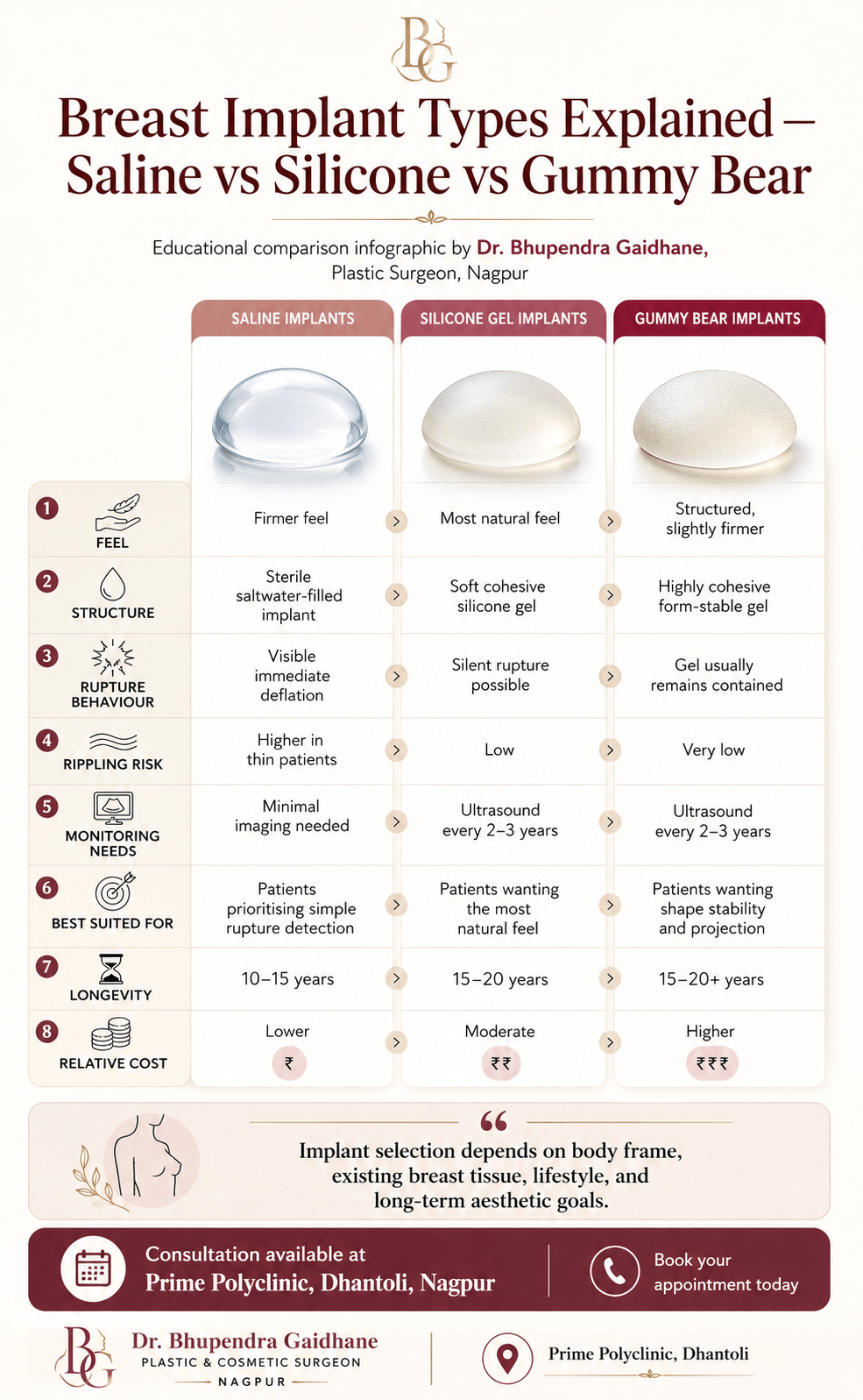
Breast Implant Types Explained — Saline vs Silicone vs Gummy Bear

Comparison infographic explaining saline, silicone gel and gummy bear breast implants including feel, rupture behaviour, monitoring, longevity and ideal patient suitability.
Educational infographic comparing saline, silicone gel and gummy bear breast implants by Dr. Bhupendra Gaidhane, Plastic Surgeon in Nagpur.

Side-by-side comparison

Feature Saline Silicone Gel Gummy Bear
Fill material Sterile saltwater Soft silicone gel Highly cohesive silicone gel
Natural feel Moderate Most natural Structured, slightly firmer
Shape options Round Round + anatomical Round + anatomical
Rupture detection Immediately visible Silent rupture possible Gel usually remains contained
Monitoring needed Minimal Ultrasound every 2–3 years Ultrasound every 2–3 years
Suitable for thin patients Less ideal Yes Yes
Rippling risk Higher Low Very low
Rotation risk None Low Exists in anatomical implants
Longevity 10–15 years 15–20 years 15–20+ years
Relative cost Lower Moderate Higher

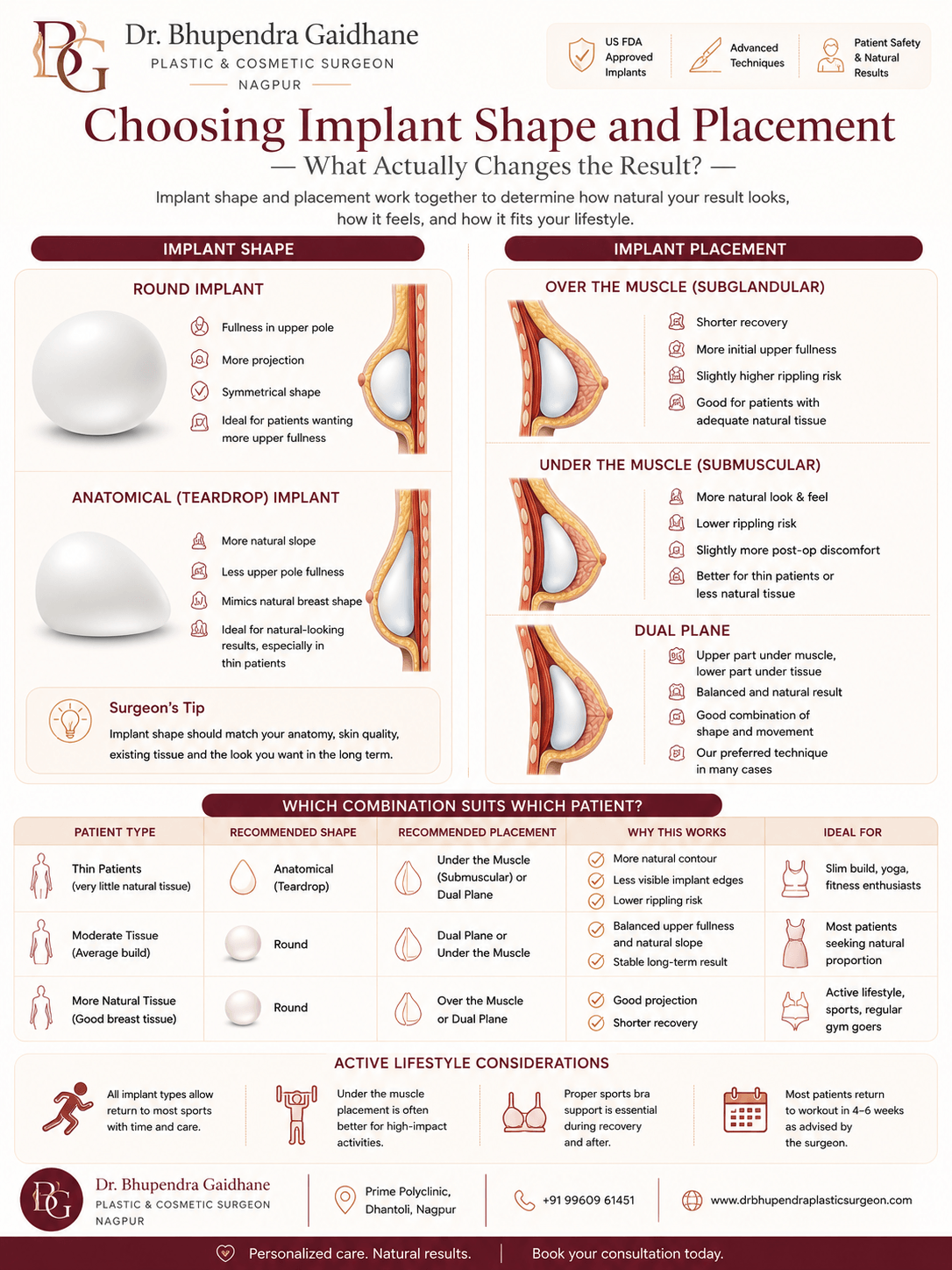
Choosing Implant Shape and Placement — What Actually Changes the Result?

Breast implant shape and placement infographic showing round vs anatomical implants and over muscle vs under muscle vs dual plane placement options.
Infographic explaining breast implant shape options and implant placement techniques by Dr. Bhupendra Gaidhane in Nagpur.


The Keller Funnel technique — why the “no-touch” approach matters

The technique used to insert a breast implant matters just as much as the implant itself.

At our clinic in Nagpur, breast implants are inserted using the Keller Funnel — a sterile, single-use device designed to allow “no-touch” implant placement.

Instead of the implant being handled directly and manually pushed through the incision, the implant is introduced into the breast pocket through the funnel in a controlled and sterile manner.

This offers several important advantages.

Reduced implant handling

The “no-touch” technique reduces direct contact between the implant and the skin surface during insertion. This helps minimise bacterial contamination, which is believed to play an important role in the development of capsular contracture — one of the most common long-term complications associated with breast implants.

Smaller incision length

Because the implant is delivered through the funnel in a compressed and controlled manner, implants can often be inserted through smaller incisions compared to traditional insertion techniques.

Smaller incisions may contribute to:

  • less tissue trauma
  • more refined scar placement
  • improved cosmetic appearance of scars

Reduced stress on the implant shell

The Keller Funnel also reduces friction and mechanical stress during insertion, helping protect implant integrity during placement.

More comfortable early recovery

While recovery depends on multiple factors including implant placement and individual healing response, reduced tissue handling during surgery may contribute to:

  • less swelling
  • reduced discomfort
  • smoother early recovery in some patients

At our clinic in Dhantoli, Nagpur, the Keller Funnel technique is routinely used for breast augmentation procedures as part of a precision-focused and sterility-conscious surgical approach.

Which implant type suits which patient — a practical guide

If you have very little natural breast tissue

Silicone gel or gummy bear implants placed beneath the chest muscle usually produce the most natural-looking result.

Saline implants in very thin patients are more likely to show visible edges and rippling.

If natural feel matters most to you

Standard silicone gel implants remain the closest option to natural breast tissue in both movement and softness.

This is why they remain the most commonly chosen implant type at our clinic.

If you want a more structured, sculpted result

Anatomical gummy bear implants create greater shape stability and a more defined lower pole contour.

These are useful in patients wanting stronger projection or long-term shape consistency.

If monitoring simplicity is important

Saline implants offer immediate visible rupture detection.

The trade-off is a slightly firmer feel and higher rippling risk.

If you are physically active

All implant types are compatible with sports and exercise.

Implant placement often matters more than implant type itself.

Dual plane or under-muscle placement may feel more comfortable long-term in some athletic patients.


Related reading

• Cost of breast implant surgery in Nagpur
• Recovery after breast augmentation surgery
• Breast augmentation in Nagpur


Implant brands used at our clinic — and why it matters

Not all breast implants are manufactured to the same standard.

At our clinic in Nagpur, we use Motiva implants and GC implants — both US FDA approved and backed by internationally recognised safety data and manufacturer warranty systems.

The advantage of certified implants is not just branding.

It includes:

• consistency in shell quality
• predictable gel cohesivity
• long-term safety data
• dimensional precision
• documented clinical performance

Patients should always feel comfortable asking:

• which implant brand is being used
• whether the implant is FDA approved
• what long-term monitoring is recommended

These questions matter.

Combining implants with fat grafting — when implants alone are not enough

Not every patient seeking breast augmentation wants a dramatically augmented appearance.

Some patients want:

  • softer upper pole transition
  • gentler cleavage contour
  • less visible implant edges
  • a more blended result in thin body types

In these situations, implants alone may not always create the most natural transition between the implant and the surrounding chest tissue.

This is where autologous fat grafting can become valuable.

A small amount of fat is harvested from areas such as:

  • abdomen
  • flanks
  • thighs

…using VASER-assisted liposuction (Lipovase technology), purified carefully, and strategically placed around specific implant edges.

The goal is not additional volume.

The goal is refinement.

Fat grafting is especially useful in:

  • very thin patients
  • patients with visible upper implant edges
  • revision breast augmentation
  • patients seeking softer cleavage transitions

Not every patient requires this combination, but when selected appropriately, it can significantly improve how natural the final result appears and feels.

Learn more about VASER liposuction in Nagpur →

What happens during implant selection at consultation?

One of the biggest misconceptions about breast implants is that patients are expected to choose a cup size before consultation.

That is not how modern breast augmentation planning works.

At consultation, implant selection begins with measurements.

These include:

  • chest width
  • nipple position
  • breast base diameter
  • skin elasticity
  • existing breast tissue thickness
  • body proportions

Only after these measurements are taken does implant sizing begin.

Patients are also able to try physical sizer implants inside a bra during consultation to understand how different implant volumes look on their own body frame and clothing.

This process matters because:

  • the same implant looks different on different body types
  • cup size is not standardized
  • oversizing creates long-term tissue stretching risks
  • implant width must match chest dimensions

The goal is not simply to create larger breasts.

The goal is to create proportion, balance, and long-term aesthetic stability.

Common myths about breast implants

Breast implants must be replaced every 10 years

Not necessarily.

Modern implants are designed to remain stable for 15–20 years or longer. Replacement is only necessary if:

  • rupture occurs
  • capsular contracture develops
  • the patient wishes to change size or implant type

“Silicone implants leak throughout the body”

Modern cohesive silicone implants behave very differently from older-generation liquid silicone implants.

Even in the event of rupture, the gel usually remains contained within the surrounding capsule.

“Breast implants prevent breastfeeding”

Most women with implants are able to breastfeed normally.

Implants are positioned either beneath the breast tissue or beneath the chest muscle without directly affecting milk production structures.

Future pregnancy and breastfeeding plans are discussed during consultation while planning incision placement.

“Gummy bear implants are permanent”

No implant is considered lifetime permanent.

Gummy bear implants are highly durable and shape-stable, but they still require long-term monitoring like all breast implants.

A note from Dr. Bhupendra Gaidhane

Patients often ask me:
“Which implant do you personally recommend?”

My answer is always the same:
There is no universally “best” implant.

There is only the implant that best suits the patient sitting in front of me.

The correct implant depends on:

  • anatomy
  • skin quality
  • lifestyle
  • activity level
  • existing breast tissue
  • long-term goals
  • how natural or structured the patient wants the result to appear

What I believe strongly is this:
Implant selection should never be rushed.

Photographs online are taken:

  • under controlled lighting
  • on specific body types
  • at flattering angles

What matters more is how the result looks and feels in normal daily life over the next 15 years.

That is why consultation at our clinic is structured carefully around planning, sizing, and long-term expectations — not simply choosing a volume number.

— Dr. Bhupendra Gaidhane
DNB Plastic Surgery
Prime Polyclinic, Dhantoli, Nagpur

Frequently asked questions

Which breast implant feels the most natural?

Silicone gel implants generally provide the softest and most natural feel, especially in thin patients with minimal natural breast tissue.

What is a silent rupture?

A silent rupture occurs when the shell of a silicone implant breaks but the gel remains contained inside the surrounding capsule without visible change in breast shape.

This is why periodic ultrasound monitoring is recommended.

Which implant is best for thin women?

Silicone gel or gummy bear implants placed beneath the chest muscle usually produce the most natural result in thin patients.

Can implants affect breastfeeding?

Most women with implants can breastfeed normally after surgery.

Future pregnancy and breastfeeding plans are discussed before surgery planning.

How long do breast implants last?

Modern implants commonly remain stable for 15–20 years or longer, although periodic monitoring is recommended.

Choosing your implant type in Nagpur — what to expect at consultation

You do not need to decide your implant type before your first consultation.

At our clinic in Dhantoli, Nagpur, consultation includes:

  • body frame assessment
  • implant sizing discussion
  • tissue evaluation
  • implant feel comparison
  • shape and placement planning
  • long-term expectation discussion

Physical sizer implants are also used during consultation so you can understand how different implant volumes look before surgery.

WhatsApp Appointment

Medically reviewed and written by

Dr. Bhupendra Gaidhane
DNB Plastic Surgery
Prime Polyclinic, Dhantoli, Nagpur

Breast Implant Surgery Recovery Timeline in Nagpur: Week-by-Week Healing Guide After Breast Augmentation

Why patients choose breast augmentation surgery in Nagpur

Patients considering breast implant surgery today are usually looking for more than simply an increase in size.

Many patients want:

  • natural body proportion
  • predictable recovery guidance
  • discreet treatment experience
  • long-term follow-up
  • balanced body contour
  • clear communication before surgery

At our clinic in Dhantoli, Nagpur, consultations focus not only on implant size selection, but also on:

  • implant positioning
  • body proportions
  • scar placement
  • recovery planning
  • long-term expectations

Some patients also combine breast augmentation with:

  • breast lift procedures
  • liposuction body contouring
  • post-pregnancy contour correction

Careful planning helps achieve results that fit naturally with the patient’s body structure and lifestyle.

Before and after breast augmentation surgery in Nagpur by Dr. Bhupendra Gaidhane. Enhanced breast shape and volume through advanced surgical techniques
Before and after transformation of breast augmentation surgery in Nagpur by Dr. Bhupendra Gaidhane. Specializing in breast implants, augmentation, and cosmetic enhancements.

Patients considering breast augmentation surgery often want results that look balanced, proportionate, and natural rather than excessively artificial or overdone. Before-and-after photographs help patients understand how implant size, body proportions, skin characteristics, and implant positioning influence the final outcome after breast implant surgery. In his Nagpur practice, Dr. Bhupendra Gaidhane focuses on individualized surgical planning so that breast augmentation results align naturally with each patient’s body structure, lifestyle, and long-term aesthetic goals.

Breast Implant Surgery Recovery Timeline — What to Expect Week by Week

By Dr. Bhupendra Gaidhane | Plastic & Cosmetic Surgeon, Nagpur

Understanding recovery before surgery helps reduce anxiety, improves preparation, and allows patients to return to daily life with more confidence. This detailed guide explains what most patients experience after breast augmentation surgery — from the first 24 hours to the final settling phase over the next few months.

For most women considering breast implant surgery, the biggest fear is not the operation itself — it is the recovery afterwards.

Questions like:

  • “How painful will recovery be?”
  • “When will I look normal again?”
  • “Will people notice immediately?”
  • “How long before I can return to work or exercise?”
  • “Will implants always feel tight or unnatural?”

are often more stressful than the surgery itself.

The reality is that breast augmentation recovery happens in stages. Understanding those stages beforehand removes uncertainty and helps patients prepare practically — for rest, for work, for family responsibilities, and for their body’s healing process.

This guide reflects what patients commonly experience after breast implant surgery performed by Dr. Bhupendra Gaidhane in Nagpur. Every recovery is individual, but the overall healing pattern is usually very predictable.

Before we begin — what kind of recovery are we talking about?

Breast augmentation is typically performed under general anaesthesia and usually takes around 60–90 minutes. Most patients are discharged the same day or the next morning depending on the procedure, implant type, and recovery condition.

Recovery after breast implant surgery has two broad phases:

1. Active recovery phase (Weeks 1–4)

This is when:

  • swelling is most noticeable
  • chest tightness is highest
  • activity restrictions are important
  • the body focuses on incision and pocket healing

This is the phase patients usually worry about the most.

2. Settling phase (Weeks 5–16)

This is when:

  • implants gradually soften
  • swelling continues to improve
  • implants descend into a more natural position
  • the breast begins to look and feel more natural

Understanding both phases is important because the result seen at 2–3 weeks is not the final result.

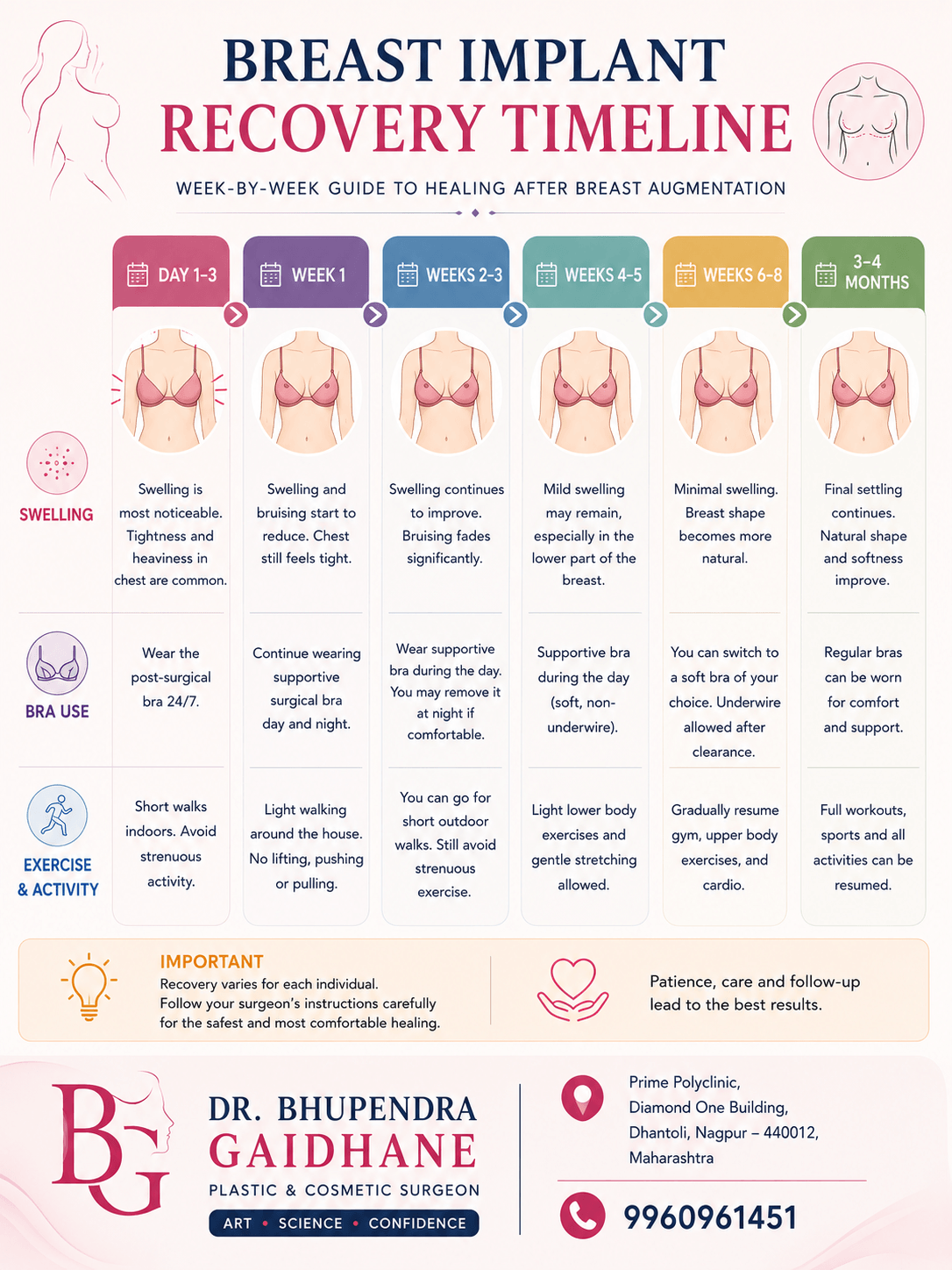
Breast implant recovery timeline week by week after breast augmentation surgery in Nagpur
Week-by-week breast augmentation recovery guide by Dr. Bhupendra Gaidhane, plastic surgeon in Nagpur.

Understanding the breast implant recovery timeline visually often makes the healing process feel far less overwhelming for patients. While every individual heals differently, most women experience a gradual progression from swelling and tightness in the early weeks to softer, more natural implant settling over the following months. During consultations in Nagpur, Dr. Bhupendra Gaidhane explains recovery expectations in detail so patients understand not only the surgery itself, but also the healing process that follows breast augmentation.

Breast augmentation surgery page

My approach to breast implant recovery planning

In my practice, recovery planning starts before surgery itself.

Implant size, implant profile, skin elasticity, existing breast tissue, muscle tightness, lifestyle, exercise habits, and future pregnancy plans all influence recovery and long-term outcomes.

Patients are guided regarding:

  • implant selection
  • bra support
  • sleeping positions
  • activity progression
  • scar care
  • exercise restrictions
  • expected implant settling timelines

The goal is not only achieving an aesthetic result, but also helping patients recover in a way that feels structured, predictable, and safe.

Day of surgery and discharge

You will usually leave the clinic wearing a soft post-surgical bra or compression garment over the chest. There will be some tightness — not sharp pain. Most patients describe the sensation as pressure or heaviness across the chest, similar to a very firm stretch or tight gym soreness.

You will need someone to drive you home and ideally stay with you during the first 24 hours after surgery.

What you will have after surgery

  • a post-surgical bra
  • prescribed medications
  • dressing instructions
  • sleeping position guidance
  • activity restrictions

Following these instructions carefully helps reduce swelling and supports smoother healing.

Sleeping position after surgery

For the first 2–3 weeks, patients are usually advised to sleep on their back with the upper body slightly elevated using pillows or a recliner position. This helps reduce swelling and avoids pressure on the chest.

Is breast implant recovery very painful?

Most patients are surprised that breast implant recovery is more manageable than they expected.

The most common sensation during the first few days is usually:

  • chest tightness
  • heaviness
  • pressure across the chest

rather than severe sharp pain.

Patients with implants placed beneath the chest muscle may experience slightly more tightness during the first 1–2 weeks because the muscle has to adapt to the implant position.

Pain generally improves steadily over the first week, and many patients shift to mild pain medication within a few days.

Week 1 — The most important healing phase

This is when the body performs the heaviest healing work. It is also when patients feel the most physically restricted.

What patients commonly experience

  • chest tightness
  • swelling and bruising
  • fatigue
  • limited arm movement
  • discomfort while changing position
  • temporary numbness or increased nipple sensitivity

These symptoms are expected and gradually improve.

What you can do during week 1

  • gentle walking inside the house
  • short periods of movement to improve circulation
  • regular hydration
  • medication as prescribed
  • light daily activity without strain

Most patients begin feeling significantly more comfortable by day 4–5.

What should be avoided

  • lifting heavy objects
  • reaching overhead
  • gym activity
  • sleeping on the side or stomach
  • pushing or pulling movements
  • underwire bras

Returning to work

Patients with desk-based jobs may sometimes return to work-from-home activity within 5–7 days.

Physically demanding work usually requires longer recovery.

Why do breast implants look high immediately after surgery?

One of the most common causes of anxiety after breast augmentation is implants appearing “too high” during the first few weeks.

This is completely expected.

Immediately after surgery:

  • the chest muscle is tight
  • swelling is present
  • tissues are firm
  • the implant pocket has not yet relaxed

As healing progresses, the implants gradually descend into a more natural position. This process is commonly called “drop and fluff.”

For some patients, noticeable settling occurs within 4–6 weeks. For others, the process continues gradually for several months.

Early appearance should never be judged as the final result.

Weeks 2–3 — Recovery becomes easier

This is the phase when most patients begin feeling noticeably better.

Common changes during this stage

  • swelling gradually reduces
  • bruising fades
  • chest tightness improves
  • energy levels return
  • movement becomes easier
  • implants still appear slightly firm or elevated

Patients often become more confident during this stage because daily activities begin feeling normal again.

What patients can usually resume

  • light office work
  • short outdoor walks
  • gentle routine activity
  • driving after surgeon clearance
  • side sleeping if comfortable

Activities still avoided

  • gym workouts
  • upper body exercise
  • chest-focused movement
  • swimming
  • lifting heavier weights

Scar therapy is often started during this period once incisions are fully healed.

Can breast implant surgery be hidden from work or family?

Many patients plan breast augmentation surgery around work schedules, travel, social events, or family responsibilities.

In most cases:

  • visible bruising improves significantly within 2–3 weeks
  • loose clothing conceals swelling relatively well
  • desk work is often resumed within a week
  • routine social interaction becomes comfortable early in recovery

However, internal healing still continues even when patients externally appear normal.

Planning recovery properly beforehand usually makes the process significantly less stressful.

Weeks 4–5 — Returning to normal daily life

By this stage, most patients feel significantly more comfortable in daily activities.

What commonly improves

  • swelling becomes much less noticeable
  • implants begin softening
  • breast shape appears more natural
  • nipple sensitivity starts normalising
  • mobility improves substantially

Activities usually resumed

  • routine office work
  • lower body exercise
  • walking
  • light cycling
  • routine social activity

Activities still approached cautiously

  • chest workouts
  • push-ups
  • heavy upper body lifting
  • intense gym training

Scars may still appear pink or firm at this stage. Scar maturation continues for several months.

Weeks 6–8 — Full activity phase

By week 6, many patients are gradually cleared for most normal activities including gym exercise and sports depending on healing progress.

Common improvements

  • implants feel softer
  • movement feels more natural
  • residual swelling improves further
  • breast shape settles more naturally

Activities usually resumed

  • swimming
  • gym training
  • upper body exercise
  • travel
  • underwire bras after clearance
  • unrestricted routine activity

Chest exercises should still be restarted gradually with lower weight initially.

Understanding “drop and fluff” after breast augmentation

The breast shape seen during the first few weeks after surgery is not the final result.

Immediately after surgery:

  • implants sit higher
  • tissues feel tighter
  • the lower breast appears less full

Over the following weeks and months:

  • implants descend gradually
  • tissues soften
  • the lower breast gains more natural fullness
  • movement becomes more natural

This process is known as “drop and fluff.”

Some patients experience faster settling while others may continue seeing subtle changes for 3–4 months.

Patience during this phase is extremely important.

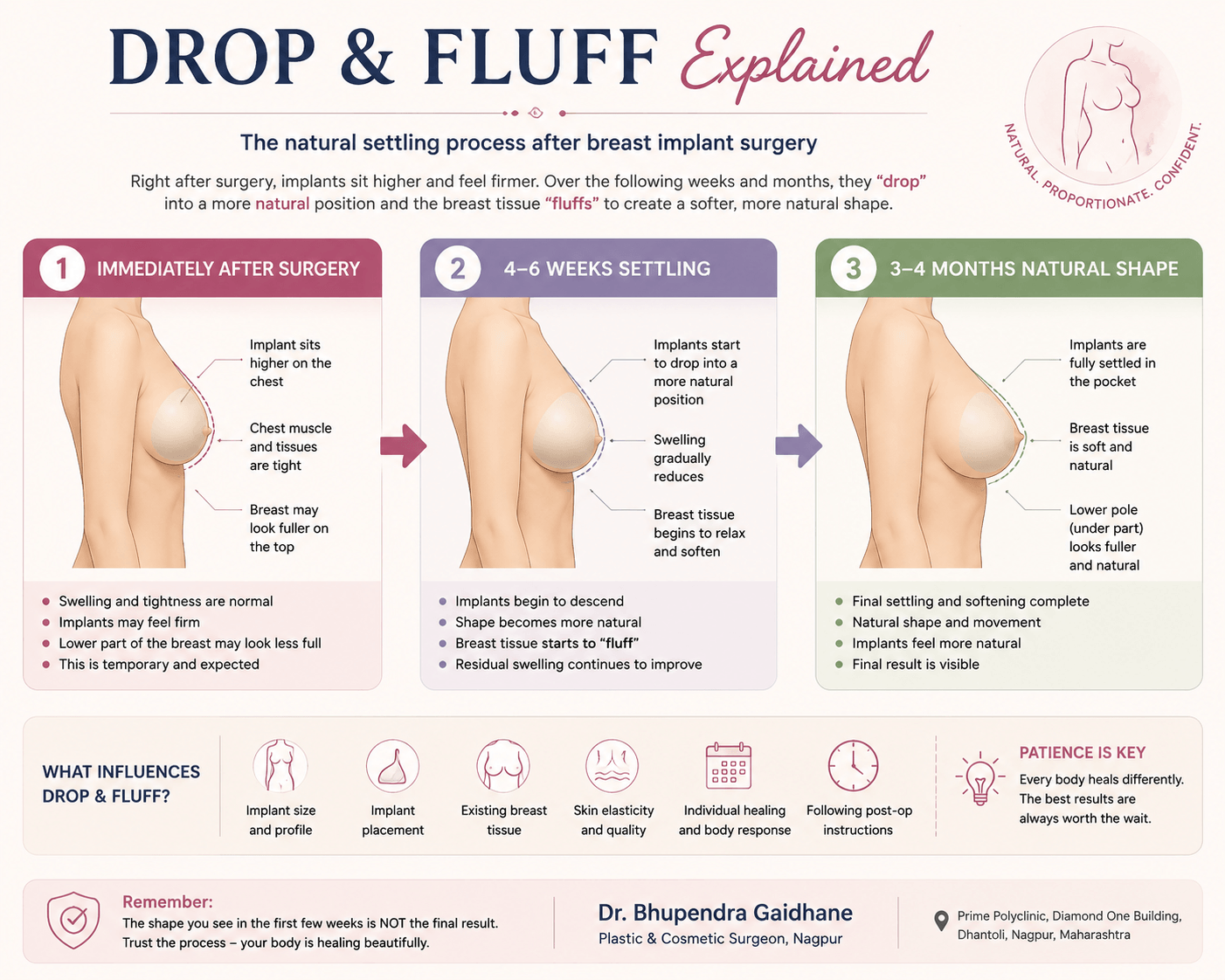
Drop and fluff process after breast implant surgery explained visually
Understanding how breast implants gradually settle into a softer and more natural position after surgery.

The “drop and fluff” process is one of the most commonly misunderstood stages of breast implant recovery. Immediately after surgery, implants often appear higher, firmer, and less natural due to swelling and tissue tightness. Over time, the implants gradually settle into a softer and more proportionate position. Dr. Bhupendra Gaidhane focuses heavily on educating patients about this normal healing phase during breast augmentation consultations in Nagpur so that temporary early changes are not mistaken for final results.

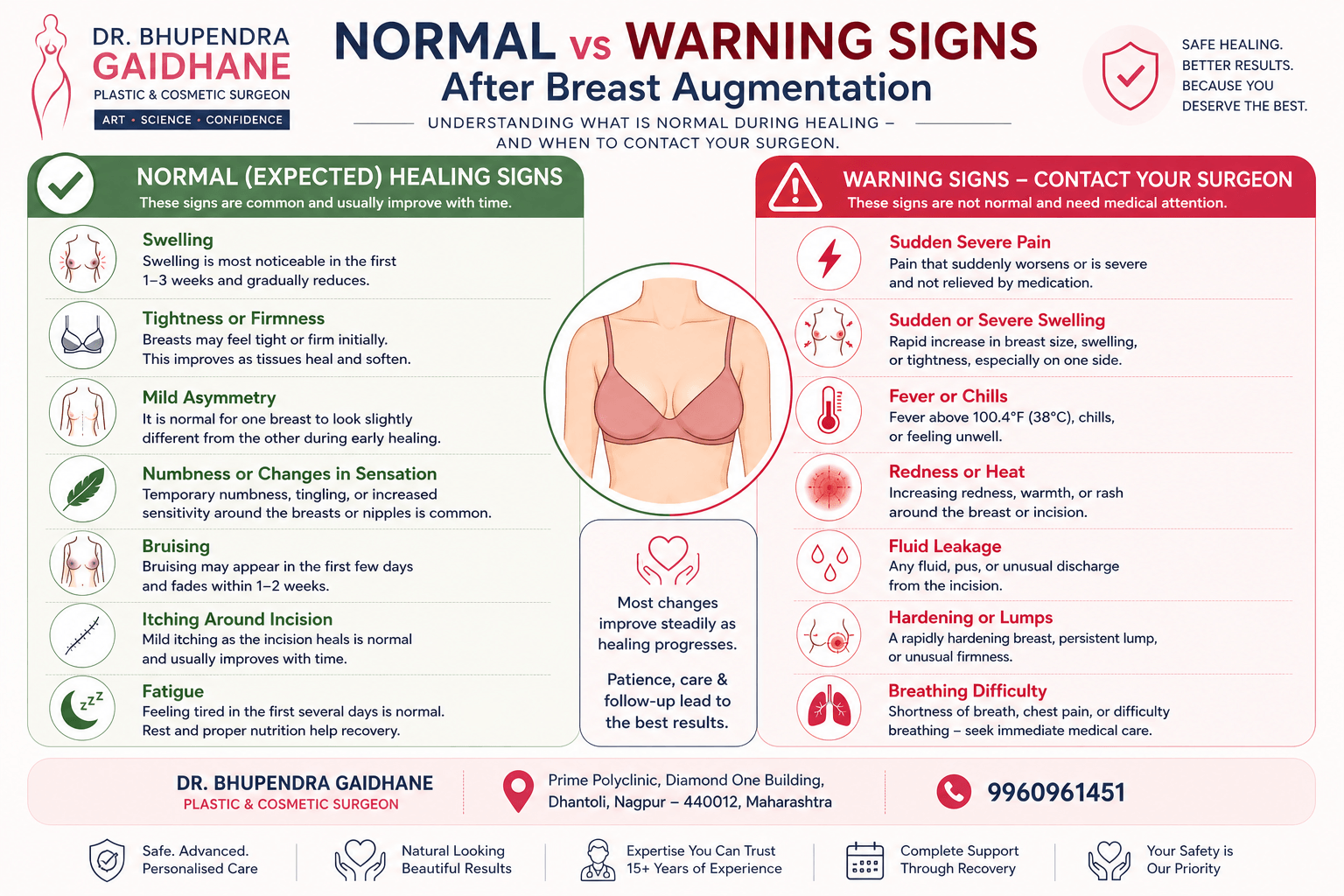
What is normal during recovery — and when should you contact your surgeon?

Certain physical changes during breast implant recovery are completely expected and temporary.

Usually normal during healing

  • swelling
  • mild asymmetry
  • temporary firmness
  • implants sitting high initially
  • temporary numbness
  • nipple sensitivity changes
  • bruising
  • itching near the incision

These usually improve gradually as healing progresses.

Contact your surgeon if you notice

  • sudden severe swelling
  • rapidly increasing pain
  • fever or chills
  • spreading redness
  • significant fluid leakage
  • breathing difficulty
  • one breast suddenly enlarging rapidly
  • severe worsening firmness

Early evaluation is important whenever symptoms feel unusual or progressively worsening.

Normal healing signs versus warning signs after breast augmentation surgery
Visual guide explaining expected healing symptoms and warning signs after breast augmentation surgery.

Many temporary symptoms after breast augmentation surgery are completely normal and improve steadily during healing. Swelling, tightness, mild asymmetry, and temporary firmness are expected during the early recovery period. However, symptoms such as sudden swelling, worsening pain, fever, or rapidly increasing redness should always be evaluated promptly. In his Nagpur practice, Dr. Bhupendra Gaidhane emphasizes structured follow-up and patient education so that recovery remains safe, predictable, and well-monitored throughout the healing process.

Understanding realistic expectations after breast augmentation

Modern breast implant surgery can create very natural-looking results, but healing requires patience.

Immediately after surgery:

  • implants may look overly prominent
  • swelling temporarily changes breast shape
  • asymmetry may appear exaggerated
  • breasts often feel firmer than expected

This is usually part of normal healing rather than a problem with the surgery itself.

Final outcomes depend on:

  • implant size and profile
  • skin elasticity
  • tissue characteristics
  • healing response
  • implant settling

Patients who understand the recovery process beforehand usually experience much less anxiety during healing.

Planning your recovery before surgery

Preparing properly before surgery usually makes recovery smoother and less stressful.

Helpful preparation steps include:

  • arranging 5–7 days of reduced activity
  • preparing loose front-open clothing
  • arranging help for childcare or lifting tasks
  • creating a comfortable sleeping setup beforehand
  • informing employers early if leave is required
  • planning transportation after surgery

The more organised the recovery environment is beforehand, the more comfortable the healing process usually becomes.

Planning breast implant surgery in Nagpur

Choosing breast implant surgery is not only about implant size or shape — it is also about understanding recovery properly before making a decision.

During consultation, patients are guided through:

  • implant options
  • implant positioning
  • incision planning
  • expected recovery stages
  • bra support
  • scar care
  • activity restrictions
  • long-term implant care

Understanding these details beforehand helps patients approach surgery with greater confidence and realistic expectations.

Dr. Bhupendra Gaidhane

Plastic & Cosmetic Surgeon, Nagpur
Prime Polyclinic, Diamond One Building, Dhantoli, Nagpur

Breast Augmentation Surgery in Nagpur
https://www.drbhupendraplasticsurgeon.com/breast-augmentation/

Frequently asked questions — breast implant surgery recovery in Nagpur

How long does it take to recover from breast implant surgery in Nagpur?

Most patients return to desk work within 5–7 days. Physical activity and gym exercises are typically resumed from week 5–6 onward. The final result — with full softening and natural drape — is visible at 3–4 months after surgery.

When can I sleep normally after breast augmentation?

For the first 2–3 weeks, sleeping on your back with your upper body slightly elevated is recommended. Side sleeping is generally comfortable from week 3–4. Sleeping face down should be avoided for at least 6 weeks.

What is “drop and fluff” after breast augmentation?

“Drop and fluff” describes the natural settling process that occurs in the first 6–12 weeks after surgery. Initially, implants sit high on the chest and feel firm. Over weeks, they descend into a more natural position and soften as the surrounding tissue relaxes.

When can I wear an underwire bra after breast implant surgery?

An underwire bra is typically avoided for the first 6–8 weeks. In the early weeks, a soft supportive post-surgical bra or sports bra is recommended. Your surgeon will advise when it is safe to return to regular bras based on your healing progress.

Is it normal for one breast to look different from the other during recovery?

Yes. Asymmetry during the healing phase is very common. Swelling resolves at different rates on each side, and implants settle at different speeds. Most asymmetry resolves by 6–8 weeks. If it persists beyond 3 months, consult your surgeon.

When will my breast implants look and feel normal?

Implants look significantly more natural by 6–8 weeks once swelling resolves. The final settled result — with natural softness, drape, and position — is typically visible at 3–4 months after surgery.

Can I travel by flight after breast augmentation surgery?

Short flights under 2 hours are generally possible after 10–14 days. For longer flights, wait 3–4 weeks and move your arms and walk periodically during the flight to support circulation.

Breast implant recovery timeline — quick overview

Timeline Recovery Milestone
Day 1–2 Rest, walking indoors, compression bra
Day 3–5 Reduced pain, light routine activity
Week 1 Desk work possible for some patients
Week 2–3 Swelling improving, driving possible
Week 4–5 Most daily activity comfortable
Week 6–8 Gym, swimming, full exercise gradually resumed
3–4 months Final implant settling and softening

360° VASER Liposuction Recovery Timeline Nagpur: A Real Week-by-Week Healing Journey

One of the most common concerns patients have after liposuction is:
“Doctor, I still look swollen. Is something wrong?”

This blog explains a real recovery journey after 360° VASER liposuction involving the abdomen, flanks, and back. Through serial recovery photographs from Day 4 to Week 5, this article explains what swelling, fibrosis, skin tightening, and healing actually look like after surgery.

The goal is simple — to help patients understand what is normal, what improves gradually, and why post-operative care matters just as much as the surgery itself.

Pre-operative markings for 360 degree VASER liposuction abdomen and back in female patient Nagpur
Pre-operative planning for 360° VASER liposuction showing marked zones on abdomen, flanks, and back before fat removal.

About This Case

Procedure: 360° VASER liposuction using Lipovase technology

Areas Treated: Abdomen, waist, flanks, and back

Fat Removed: Approximately 6.5 litres aspirate

Patient Profile: Good skin quality with stubborn fat deposits resistant to diet and exercise

Recovery Timeline Shared: Day 4, Day 11, Day 25, and Week 5

Important Note: These are not final results. Recovery and skin remodeling continue for several months after surgery.

“Liposuction recovery is not an overnight transformation. It is a gradual body remodeling process that unfolds over weeks and months.”

Before Surgery: Planning and Marking

Before surgery begins, careful body contour planning is done. The surgical markings help define the treatment zones, fat thickness, contour transitions, and areas requiring more aggressive reduction.

This was a 360-degree liposuction procedure, meaning the entire circumference of the torso was treated — not just the front abdomen. Treating the waist and back together helps create a more balanced body contour.

Day 4 swelling after VASER liposuction abdomen and back showing edema and early healing phase Nagpur
Day 4 after surgery showing peak swelling, fluid shifts, and early healing changes. This phase often looks worse before improving.


Day 4 After Liposuction: Early Swelling Phase

At this stage, the body is still reacting to surgical trauma and fluid shifts. Swelling can appear uneven, especially in the lower abdomen and waist.

Many patients become anxious during this period because they expect immediate tightening. In reality, the body is still inflamed internally.

Compression garments, lipo foam, hydration, walking, and lymphatic drainage support recovery during this phase.


Day 11 Recovery: Swelling Starts Settling

Day 11 liposuction recovery showing reduced swelling and early contour improvement abdomen and back Nagpur
By Day 11, swelling begins to reduce unevenly and early contour definition becomes visible, especially in waist and flanks. images are comparative to the previous 4th day

By the second week, some swelling begins reducing and the body contour starts appearing more defined. However, firmness and internal healing are still ongoing.

The lower abdomen typically heals slower due to gravity, lymphatic drainage patterns, and skin anatomy.

This phase often requires patience because visible improvement happens gradually rather than suddenly.


Day 25 Recovery: Transition Phase

Day 25 after liposuction showing improved waist contour and reduced swelling abdomen and back Nagpur
At around 3–4 weeks, waist definition improves, swelling reduces significantly, and skin starts redraping over the new contour.


Around the third to fourth week, the body enters a transition phase. Swelling reduces further, mobility improves, and the waist contour starts becoming more visible.

Some areas may still feel firm or irregular because fibrosis and internal scar remodeling continue beneath the skin.

This is why post-operative care remains important even after the initial recovery period.


Week 5 Recovery: Visible Contour Improvement

Pre-operative markings for 360 degree VASER liposuction abdomen and back in female patient Nagpur
Pre-operative planning for 360° VASER liposuction showing marked zones on abdomen, flanks, and back before fat removal.

By Week 5, swelling is significantly reduced compared to the early post-operative phase. The waist appears more defined and the abdominal contour becomes smoother.

However, this is still not the final result. Skin contraction, fibrosis softening, and tissue remodeling continue for several months after surgery.

Patients who remain consistent with compression garments, massage, hydration, nutrition, and activity usually continue seeing gradual improvement over time.


Related Procedures

VASER  liposuction:

tummy tuck surgery:

Explore gynecomastia surgery

What Patients Feel During Recovery — And What Surgeons Actually See

One of the hardest parts of liposuction recovery is psychological.

Patients expect to feel excited after surgery. Instead, many feel confused during the first few weeks. The abdomen feels swollen, clothes may not fit properly yet, the lower abdomen looks puffy, and some areas may feel firm or uneven.

Many patients quietly wonder:
“Did the surgery fail?”
“Why do I still look swollen?”
“Why does the lower abdomen still stick out?”

But from a surgeon’s perspective, these early phases often look completely normal.

What patients interpret as a bad result is usually active healing — swelling, tissue fluid, internal inflammation, fibrosis, and skin remodeling. The body is recovering from a controlled surgical injury. Healing takes time.

This is why proper counseling before surgery matters. Recovery is not just physical. It is emotional too.

Why VASER Liposuction Changes Recovery and Contouring

In this case, VASER-assisted liposuction using Lipovase technology was used for body contouring.

VASER technology uses ultrasonic energy to selectively target and emulsify fat before removal. This allows smoother fat extraction, improved contour precision, and better preservation of surrounding tissues compared to more aggressive traditional techniques.

For areas like the waist, flanks, and back — where contour transitions matter significantly — precision becomes extremely important.

VASER also plays an important role in skin contraction and definition during healing. However, even with advanced technology, swelling and fibrosis are still part of normal recovery.

Technology improves precision. It does not eliminate biology.

Why Surgery Alone Does Not Create the Final Result

Many patients believe the result depends entirely on the surgery itself.

In reality, post-operative recovery protocol plays a major role in determining how smoothly healing progresses.

After large-volume liposuction, the body temporarily creates internal spaces where fat was removed. Swelling fluid, inflammation, and tissue stiffness naturally develop during healing.

This is why compression garments, lipo foam, abdominal binders, movement, hydration, and lymphatic drainage become important.

The goal is not simply “comfort.” The goal is controlled healing.

Compression Garments and Binders

Compression garments help reduce swelling, support the healing tissues, and improve skin redraping over the new contour.

Areas like the lower abdomen often swell longer because gravity naturally pulls fluid downward. Consistent compression helps control this prolonged edema.

Abdominal binders and strategically placed lipo foam can also help improve contour smoothness during early healing phases.

Patients who remain consistent with compression usually tolerate swelling better and often experience smoother recovery transitions.

Manual Lymphatic Drainage (MLD)

Manual lymphatic drainage is not simply a “spa massage.”

After liposuction, lymphatic channels temporarily struggle to clear swelling fluid efficiently. MLD helps stimulate lymphatic movement, reduce fluid retention, improve tissue softness, and decrease prolonged swelling.

In larger 360-degree liposuction cases, MLD often becomes particularly valuable because multiple body zones are healing simultaneously.

Patients frequently notice that areas feeling hard or heavy gradually become softer and more mobile over time with proper recovery care.

Understanding Fibrosis After Liposuction

Fibrosis is one of the most misunderstood parts of liposuction recovery.

Patients often describe it as:
– hardness
– lumpiness
– unevenness
– tight bands beneath the skin

This usually represents internal scar remodeling and tissue healing.

Fibrosis is more noticeable in areas with thicker fat layers, aggressive fat reduction, or prolonged swelling. The lower abdomen is especially prone to this because healing there is slower.

The important thing to understand is this:
Early fibrosis is not the final result.

Over time, the tissues soften, swelling improves, skin contracts further, and contour transitions become smoother.

Consultation for Liposuction in Nagpur

If you are considering liposuction and want a realistic understanding of recovery, body contouring, swelling, and expected healing timelines, consultation and proper planning are important.

Dr. Bhupendra Gaidhane is a plastic and cosmetic surgeon in Nagpur with experience in VASER liposuction and body contouring procedures.

Prime Polyclinic, Dhantoli, Nagpur
Call: 9960961451

Why the Lower Abdomen Improves Slower

Almost every patient focuses on the lower abdomen during recovery.

And almost every surgeon expects it to heal slower.

The lower abdomen consistently retains swelling longer because:
– gravity pulls fluid downward
– lymphatic drainage is slower
– skin mobility differs in this region
– sitting posture continuously folds the area

This is why patients often panic unnecessarily during the first few weeks.

In reality, the waist and upper abdomen usually show improvement earlier, while the lower abdomen gradually catches up over time.

The Problem With “Instant Result” Liposuction Content Online

Social media often shows liposuction as an instant transformation.

Most patients never see:
– swelling
– fibrosis
– compression garments
– drainage
– uneven healing phases
– emotional recovery

They only see polished “after” photos.

But honest recovery education creates better expectations and better patient experiences.

Real recovery is gradual. Real healing takes patience. And realistic expectations usually lead to happier long-term outcomes.

A Surgeon’s Perspective on Liposuction Recovery

One of the biggest shifts patients experience after proper education is this:

They stop obsessing over daily swelling changes and start understanding the long-term recovery process.

The body continues remodeling for months after surgery. Skin tightening improves gradually. Swelling fluctuates. Some areas soften faster than others.

Recovery is rarely linear.

The goal is not to chase perfection in the first few weeks. The goal is steady improvement, controlled healing, and long-term contour balance.

This case demonstrates something important:
Good outcomes are created not only in the operating room, but throughout the recovery journey that follows.

Frequently Asked Questions About Liposuction Recovery

How long does swelling last after liposuction?

Most noticeable swelling improves within 6–8 weeks. However, subtle swelling and tissue remodeling can continue for 3–6 months depending on the amount of fat removed, treatment area, skin quality, and post-operative care. Large-volume 360° VASER liposuction cases often take longer to fully settle compared to smaller procedures.

Is swelling normal after VASER liposuction?

Yes. Swelling is a normal and expected part of recovery after VASER liposuction. The body undergoes internal healing, inflammation, and fluid shifts after surgery. Early swelling does not mean the procedure failed or that the result is poor.

What is fibrosis after liposuction?

Fibrosis refers to temporary firmness, lumpiness, or tight areas that develop during internal healing after liposuction. It is caused by scar tissue formation and tissue remodeling beneath the skin. Fibrosis usually improves gradually over time with compression, massage, movement, and healing.

Why does the lower abdomen stay swollen longer?

The lower abdomen commonly heals slower because gravity pulls fluid downward and lymphatic drainage is naturally slower in this region. Sitting posture and skin anatomy also contribute to prolonged swelling in the lower abdominal area after liposuction.

Do compression garments really help after liposuction?

Yes. Compression garments help reduce swelling, support healing tissues, improve skin redraping, and reduce fluid accumulation during recovery. Consistent garment use is an important part of post-operative recovery after liposuction surgery.

What does manual lymphatic drainage (MLD) do after liposuction?

Manual lymphatic drainage helps stimulate lymphatic circulation, reduce swelling, improve tissue softness, and support recovery after liposuction. In larger 360-degree liposuction procedures, MLD may help patients recover more comfortably during the healing phase.

When are final liposuction results visible?

Most patients notice significant improvement within 2–3 months. However, final contour definition, skin tightening, and tissue remodeling may continue improving for 6 months or longer after surgery.

Is VASER liposuction better for body contouring?

VASER liposuction uses ultrasonic energy to emulsify fat before removal, allowing smoother fat extraction and improved contour precision. It is commonly used for areas requiring more refined contour transitions such as the waist, flanks, abdomen, and back.

Liposuction vs Tummy Tuck: What’s the Real Difference — and What Do You Actually Need?


Home
Blog
Liposuction vs Tummy Tuck

Liposuction vs Tummy Tuck: What’s the Real Difference — and What Do You Actually Need?

By Dr. Bhupendra Gaidhane
Plastic & Cosmetic Surgeon, Nagpur
Body Contouring
Clinically Reviewed

Most patients don’t come in asking for liposuction or a tummy tuck by name.

They come in saying: “My stomach doesn’t look like it used to — even after months at the gym.”

That frustration is valid. And the reason it persists is almost never lack of effort. It’s usually a structural problem that exercise simply cannot fix.

The abdomen is not a single structure. It has three separate layers — fat, skin, and muscle — and each one behaves completely differently. When you treat the wrong layer, you get an incomplete result. This is exactly where most patient disappointment begins.

This guide breaks down what liposuction and tummy tuck each correct, who genuinely needs which, and where combining both gives the most complete outcome. Three real patient scenarios are included to help you see yourself in the decision.

Why Three Layers Matter More Than One Procedure

Before comparing procedures, it is essential to understand why the abdomen is uniquely complex. Three distinct layers each require a different treatment approach:

The Three Abdominal Layers — and What Each Needs

The three abdominal layers: skin, fat, and muscle Cross-section showing skin at top, subcutaneous fat in middle, and abdominal muscle at bottom with treatment labels for each layer. Skin Layer Elasticity determines stretch & retraction Subcutaneous Fat Volume, contour & shape of the abdomen Abdominal Muscle (Rectus Abdominis) Core structure, support & flat appearance Tummy Tuck (skin removal) Liposuction (fat removal) Tummy Tuck (muscle repair) Treating the wrong layer = incomplete result. Clinical assessment identifies which needs correction.

This is why gym routines plateau. Exercise improves muscle tone and reduces overall fat — but it cannot tighten skin that has lost elasticity, and it cannot close a muscle separation that occurred during pregnancy. These are anatomical realities, not failures of effort.

What Liposuction Actually Does — and What It Never Will

Liposuction is a fat-removal procedure. It does not address skin or muscle. Understanding this boundary is what separates a good outcome from a disappointing one.

What liposuction corrects

  • Localised fat deposits in the abdomen, flanks, and back
  • Waist definition and overall body contour
  • Love handles (flanks) and back fat rolls
  • Mild contour irregularities where skin is still elastic

What liposuction does not do

  • Does not remove or tighten loose skin
  • Does not repair separated abdominal muscles (diastasis recti)
  • Does not correct post-pregnancy structural changes

Important: If skin is already loose, removing fat through liposuction can make the abdomen appear more saggy — not flatter. This is not a complication. It is a result of incorrect patient selection — treating fat when skin was the actual problem.

Lipovase (4th Generation VASER) — why precision matters

In my Nagpur practice, I use Lipovase (VASER technology) — not conventional liposuction. VASER uses ultrasound energy to selectively break down fat while preserving surrounding tissue. This means smoother contour transitions, better precision in sculpting, and more predictable results — particularly in 360° body contouring.

However: Even the most advanced liposuction technology does not change anatomy. Better tools produce better fat removal — they do not fix skin laxity or muscle separation. Technology improves results within the right indication; it does not override anatomy.

What is 360° liposuction?

Most patients focus only on the front abdomen. But the body is three-dimensional. Treating only the front can leave the waist appearing flat from the front but wide from the sides — an unbalanced result. 360° liposuction treats the abdomen, flanks, and back in a single session, creating a proportionate waistline visible from all angles. It remains, however, a fat-correction procedure — loose skin and muscle separation still require a tummy tuck if present.

What a Tummy Tuck Actually Corrects

Abdominoplasty (tummy tuck) is a structural restoration procedure — not a fat-removal surgery. Its purpose is to correct what fat removal alone cannot.

What a tummy tuck corrects

  • Loose or hanging abdominal skin
  • Muscle separation (diastasis recti) — the central abdominal gap
  • Lower abdominal stretch marks (within the area of skin removed)
  • Post-pregnancy abdominal changes involving all three layers

What a tummy tuck does not do

  • Not designed for fat removal alone — liposuction handles fat
  • Not a weight-loss procedure

Diastasis Recti — Why the “Mummy Tummy” Bulge Persists

Diastasis recti — normal vs separated abdominal muscles Side-by-side comparison of normal abdominal muscles and diastasis recti showing the muscle gap and resulting abdominal bulge. Normal Muscles Skin Fat layer Rectus LA Rectus Flat contour ✓ Normal

Diastasis Recti Stretched skin Fat layer Rectus GAP Diastasis Rectus Persistent bulge ✗ Gap remains

No exercise closes diastasis recti. Surgical repair (plication) during tummy tuck is the only correction.

The Post-Pregnancy Abdomen — Where Most Decisions Go Wrong

During pregnancy, three distinct changes occur simultaneously:

  • Muscles stretch and often separate — creating diastasis recti, the central gap that causes the classic “mummy tummy” bulge that exercise cannot close
  • Skin expands beyond its elastic limits — and does not fully retract after delivery, regardless of weight loss
  • Fat distribution shifts — often accumulating in areas that are resistant to diet and exercise

The honest answer in most post-pregnancy cases: You don’t need liposuction or a tummy tuck. You need both — because fat, skin, and muscle are all involved. Addressing only one layer produces a partial improvement. Complete correction requires addressing every layer that has changed.

Three Real Patient Scenarios

Procedure decisions are made on individual anatomy — not generalisations. These three scenarios represent common presentations seen at this practice in Nagpur.

Case Scenario 01

32-year-old woman, 14 months post-partum, persistent lower belly bulge

Situation: She delivered 14 months ago, reached near-pre-pregnancy weight, and has been consistent with gym and core workouts for 10 months. Despite this, she has a persistent lower abdominal bulge, visible loose skin, and some fullness in the flanks.

Clinical finding: Moderate diastasis recti (approx 3 cm gap), mild-moderate skin laxity, moderate fat in lower abdomen and flanks, good skin quality superiorly.

Recommended: Tummy tuck (with muscle repair) + liposuction of flanks. Liposuction alone would worsen skin laxity. Tummy tuck alone leaves the flanks unaddressed. The combination corrects all three layers.

Case Scenario 02

28-year-old man, gym-going, stubborn fat in flanks — skin tight and elastic

Situation: Works out consistently, follows a structured diet, good physique overall — but stubborn fat in the flanks and lower back creates a boxy silhouette. No significant weight fluctuation. Skin pinch test confirms excellent elasticity.

Clinical finding: Localised fat in flanks, back, and lower abdomen. Skin tone excellent. No muscle separation. BMI normal.

Recommended: 360° VASER liposuction (Lipovase) only. This is an ideal liposuction candidate. Good skin elasticity means the skin will retract well after fat removal. No skin excision or muscle repair required.

Case Scenario 03

40-year-old woman, 28 kg weight loss, loose skin with residual fat

Situation: Lost 28 kg over 18 months through diet and exercise. However, the lower abdomen has loose, hanging skin and residual fat in the flanks. Skin shows significant stretch marks and poor elasticity.

Clinical finding: Significant skin excess (apron), residual fat in flanks and upper abdomen, mild diastasis, poor skin elasticity throughout.

Recommended: Full tummy tuck (with muscle repair) + liposuction of flanks. Liposuction alone would worsen the hanging appearance. The combination produces a proportionate, natural result.

Liposuction vs Tummy Tuck — Visual Comparison

Liposuction vs Tummy Tuck at a Glance

Infographic comparing liposuction and tummy tuck Side-by-side comparison showing what each procedure targets, ideal candidates, and recovery timelines. Liposuction (VASER Lipovase — 4th Generation) TARGETS ✓ Subcutaneous fat deposits ✓ Flanks, love handles, back fat ✓ Waist contour & definition DOES NOT FIX ✗ Loose or hanging skin ✗ Muscle separation (diastasis) ✗ Post-pregnancy structural changes IDEAL CANDIDATE Good skin elasticity Fat as the primary concern No significant weight fluctuation RECOVERY: Faster — days to routine

Tummy Tuck (Abdominoplasty) TARGETS ✓ Loose / hanging skin removal ✓ Muscle repair (diastasis recti) ✓ Post-pregnancy restoration DOES NOT FIX ✗ Fat deposits (lipo handles fat) ✗ Weight loss — not a diet tool IDEAL CANDIDATE Loose or excess skin present Diastasis recti confirmed Post-pregnancy / post-weight loss RECOVERY: Structured — 4–6 weeks

How to Know What You Actually Need

🔧

Liposuction only

  • Skin is firm and elastic
  • Fat is the primary concern
  • No pregnancy / major weight change
  • No visible loose skin at rest

📐

Tummy tuck only

  • Loose or hanging skin
  • Central bulge despite exercise
  • Confirmed muscle separation
  • Minimal fat — thin but loose

📋

Both procedures

  • Post-pregnancy abdomen
  • Weight loss with loose skin
  • Fat + skin excess together
  • Flanks + central area involved

These are general indicators — not a diagnosis. The only way to know definitively which layer needs treatment is a clinical examination. Anatomy varies significantly between patients.

Recovery — Setting Realistic Expectations

Liposuction Recovery

Days 1–3: Soreness and swelling — expected. Light activity possible.

Week 1–2: Return to desk work. Avoid strenuous activity.

Weeks 4–6: Compression garment throughout. Progressive improvement.

3–6 months: Final contour visible as swelling fully resolves.

Tummy Tuck Recovery

Week 1: Bed rest with assistance. Slightly bent posture is normal.

Weeks 2–3: Gradual mobilisation. Light walking encouraged.

Weeks 4–6: Most daily activities resumed. Core activities restricted.

3–6 months: Scar matures and softens. Final result visible.

Why Patients in Nagpur Choose This Practice

  • Layer-specific analysis — Every consultation distinguishes clearly between fat, skin, and muscle to identify the actual problem before any procedure is recommended
  • Lipovase (VASER 4th Gen) technology — Used for all liposuction procedures, offering precision and smoother results than conventional liposuction
  • No fixed packages — Procedures are planned case by case. A post-pregnancy patient and a gym-going male have fundamentally different needs
  • Post-pregnancy specialisation — One of the most complex and underserved areas of body contouring in Nagpur
  • Honest scar and recovery discussions — Before any decision is made, scars, timeline, and realistic outcomes are discussed in full

See also: Gynecomastia Surgery in Nagpur — for men dealing with excess chest tissue, a structurally similar decision process applies: fat, gland, and skin each behave differently and require specific correction.

Frequently Asked Questions

Can liposuction tighten loose skin?

No. Liposuction removes fat but does not significantly tighten skin. In patients with existing skin laxity, removing fat without addressing the skin can worsen the appearance. Skin tightening requires a tummy tuck.

Do all women need a tummy tuck after pregnancy?

No — only if skin laxity or muscle separation is present. Some patients with good skin elasticity and minimal fat may do well with liposuction alone. A clinical examination is needed to determine the right approach.

When is the right time for surgery after delivery?

Generally 6–12 months after delivery, after weight has stabilised and breastfeeding has ended. Operating before this point means operating on a body that is still changing — which affects planning and outcomes.

Can liposuction and tummy tuck be combined in one surgery?

Yes. Combining both is common and often ideal — particularly in post-pregnancy and post-weight-loss cases where fat, skin, and muscle are all involved. Both in one session means one anaesthesia, one recovery, and a coordinated result.

Will the gym ever fix my abdomen after pregnancy?

Exercise improves fat distribution and muscle tone — and is valuable for overall health. But it cannot close muscle separation (diastasis recti), and it cannot cause loose skin to retract. If these structural changes are present, no volume of exercise will correct them. That is not a personal failure — it is anatomy.

What about scars from a tummy tuck?

A tummy tuck leaves a horizontal scar in the lower abdomen, placed low enough to be concealed by underwear or swimwear. Scars improve significantly over 12–18 months. Scar visibility and management are always discussed thoroughly before any decision is made.

How is Lipovase different from regular liposuction?

Lipovase uses VASER (ultrasound-assisted) technology to selectively break down fat cells before removal, rather than mechanical disruption. This allows more precise sculpting, smoother contour results, and is particularly effective in 360° body contouring. Traditional liposuction carries a higher risk of irregularity in complex areas.


Ready to find out what you actually need?

If you have been exercising consistently, managing your diet, and are still not satisfied with how your abdomen looks — the answer is a clinical assessment, not more guesswork.

💬 Chat on WhatsApp

Or call: +91 99609 61451  |  drbhupendraplasticsurgeon.com

BG

Dr. Bhupendra Gaidhane

Plastic & Cosmetic Surgeon — Diamond One Building, Dhantoli, Nagpur
Specialising in VASER liposuction (Lipovase), body contouring, gynecomastia, and post-pregnancy restoration.
drbhupendraplasticsurgeon.com  |  +91 99609 61451

VASER Liposuction vs Traditional Liposuction: A Surgeon’s Honest Comparison

Dr. Bhupendra Gaidhane, DNB Plastic Surgery 📍 Nagpur, Maharashtra 📅 Updated April 2026 ⏱ 10-min read.

Most patients who come to my clinic in Nagpur asking about liposuction have already done their research. They’ve read about VASER. They’ve seen the word “Lipovase.” And they have one honest question sitting at the back of their mind:

“Is VASER actually better — or is it just marketing?”

It is a fair question. And in this article, I am going to answer it the way I would in a consultation — honestly, clinically, and without exaggeration.

Liposuction has been performed for decades. The goal has always been the same: remove stubborn, localised fat that does not respond to diet or exercise and reshape the body into a better contour. What has changed — significantly — is how that fat is removed.

Traditional liposuction relies purely on mechanical suction. VASER liposuction adds a step before suction: it uses ultrasound energy to selectively break down fat first. That one difference — ultrasound pre-treatment — changes almost everything about the procedure: precision, tissue trauma, skin response, recovery, and the quality of the final contour.

Let me walk you through it properly.

Most patients are not just looking for fat removal — they are looking for confidence. Whether it’s avoiding certain clothes, feeling uncomfortable in fitted shirts, or noticing areas that don’t respond to consistent diet and exercise — these concerns are usually present long before surgery is considered.


“Before and after 360 VASER liposuction of abdomen and back showing full torso contouring.”
“Complete midsection transformation with high-definition 360° Lipovase sculpting.”

How Each Technique Works — The Core Difference

Traditional Liposuction (Tumescent / Suction-Assisted)

In traditional liposuction, the surgeon first injects a tumescent solution — a mixture of saline, local anaesthetic, and adrenaline — into the target area. This solution expands the fat layer, reduces bleeding, and provides some local anaesthesia.

A cannula (a thin hollow tube) is then inserted through small incisions and moved back and forth in a fan-like motion. The mechanical movement physically breaks fat cells apart, and suction removes the loosened fat. The technique is effective and has been the global standard for decades.

The limitation is inherent to the mechanism: the cannula must physically tear through fat tissue. This creates more trauma, more bruising, more irregular disruption of the surrounding connective tissue — and for denser or fibrous fat areas, it requires significant force.

VASER Liposuction (Ultrasound-Assisted)

VASER adds a step before the cannula enters. A VASER probe — which emits ultrasound energy at a precise frequency — is introduced into the tumescent-filled fat layer. The ultrasound energy causes fat cell membranes to resonate and rupture selectively, while leaving nerves, blood vessels, and connective tissue largely intact.

The result is liquefied fat — already broken down before any suction begins. When the cannula then removes this fat, it encounters significantly less resistance. The process is more controlled, less traumatic, and more precise.

At this clinic, we use Lipovase — 4th-generation VASER technology. It is the most advanced iteration of this system currently available, offering finer probe calibration and more consistent energy delivery than earlier VASER generations.

Why this matters clinically: Fat in different parts of the body has different density. Abdominal fat is softer. Fat in the back, chest (in gynecomastia), flanks, and male abdomen is often denser and more fibrous. Traditional liposuction struggles in these areas. VASER does not — the ultrasound energy breaks down fibrous fat just as effectively as softer fat.

Head-to-Head Comparison: VASER vs Traditional Liposuction

Factor Traditional Liposuction VASER Liposuction (Lipovase)
Mechanism Mechanical suction only Ultrasound pre-treatment + suction
Fat Selectivity Non-selective — disrupts surrounding tissue Selective — targets fat cells specifically
Precision of Contouring Moderate — good for larger areas High — suitable for detailed sculpting
Fibrous / Dense Fat Areas Difficult — requires more force Effective — ultrasound breaks fibrous fat
Skin Tightening None — skin left to contract passively Active — ultrasound stimulates skin contraction
Post-Op Bruising More — due to mechanical trauma Less — reduced tissue disruption
Swelling Duration Longer — 4–8 weeks Shorter — 2–4 weeks typically
Recovery to Work 7–14 days typically 3–7 days typically
Smoothness of Result Good — depends on technique Typically smoother due to even fat removal
Suitable for Gynecomastia Partial — struggles with glandular tissue Yes — emulsifies dense glandular fat effectively
High-Definition Sculpting Not suitable Possible — allows muscle definition enhancement
Cost Lower Higher — due to technology
Availability in Nagpur Widely available Available at Prime Polyclinic (Lipovase)

The Skin Tightening Advantage — Why It Matters More Than Most Patients Realise

One of the most underappreciated differences between VASER and traditional liposuction is what happens to the skin after fat removal.

When fat is removed from beneath the skin, the skin needs to contract and conform to the new, smaller volume. In younger patients with good skin elasticity, this happens reasonably well with any technique. In patients with moderate skin laxity — common in adults over 30, or in areas like the inner thigh and upper arms — how well the skin contracts determines whether the result looks smooth and tight, or loose and irregular.

Traditional liposuction relies entirely on passive skin contraction — the skin tightens on its own over time, with no assistance from the procedure itself.

VASER actively contributes to skin tightening. The ultrasound energy delivered through the probe heats the deep dermis, stimulating collagen production and causing the skin to contract more actively after fat removal. The result is a noticeably tighter, more adherent skin envelope — particularly in areas where moderate laxity was present before surgery.

This is not a minor benefit. For many patients, it is the difference between a good result and an excellent one.

A Specific Case: Why VASER Is Superior for Gynecomastia

Gynecomastia — the enlargement of male breast tissue — is one of the most common procedures performed at this clinic. And it is also one of the clearest examples of where VASER outperforms traditional liposuction.

Male breast tissue in gynecomastia is not pure soft fat. It contains dense, fibrous glandular tissue — particularly beneath the nipple area — that is significantly harder to remove than standard subcutaneous fat. Traditional liposuction cannot adequately address this glandular component. The cannula struggles through the fibrous tissue, often leaving a residual lump beneath the nipple — the most common reason patients are disappointed after traditional liposuction for gynecomastia.

VASER’s ultrasound energy emulsifies even dense, fibrous glandular fat effectively. Combined with micro-incision gland excision for the firm central gland, this allows far more complete chest flattening than traditional techniques allow.

If you are researching gynecomastia surgery specifically, you can read the detailed guide here → Gynecomastia Surgery in Nagpur — Technique, Grades, and Results

Recovery: What the Difference Feels Like

Patients often ask me: “Will I feel the difference in recovery?”

The honest answer is yes — usually within the first week.

That said, recovery is influenced not only by the technique but also by the area treated, the volume of fat removed, and how well post-operative instructions are followed.

With traditional liposuction, the mechanical disruption of tissue causes more immediate post-operative discomfort, more bruising, and more firmness in the treated area. Swelling tends to be significant for a longer period. Most patients need 7–14 days before returning to desk work.

With VASER, because the fat has been pre-liquefied and surrounding tissue is less disrupted, the post-operative experience is generally gentler. Bruising is reduced. Swelling resolves faster. Most patients are back to desk work within 3–5 days, and the firmness that follows (as the body heals internally) resolves sooner as well.

That said, compression garments are essential with both techniques. They are not optional. Wearing the garment correctly — consistently, for the prescribed duration — is a major factor in how smooth and even the final result appears.

For a detailed week-by-week breakdown of what liposuction recovery looks like → Gynecomastia and Liposuction Recovery Timeline

When Is Traditional Liposuction Still Appropriate?

I want to be balanced here. Traditional liposuction is not an inferior procedure — it is a well-established technique that has produced good results for millions of patients worldwide. There are situations where it remains appropriate:

  • Very localised, small-volume fat removal in a young patient with excellent skin elasticity
  • Cost constraints — traditional liposuction is less expensive, and in the right patient, can deliver satisfactory results
  • Areas with very soft fat where the precision advantage of VASER is less critical
  • Patients who are not candidates for the longer procedural time VASER requires

The key is proper patient selection and honest surgeon consultation. When a patient sits across from me, I assess their anatomy, their goals, their skin quality, and the specific areas they want treated — and I recommend the technique that will give them the best result for their individual situation.


What actually matters more than the technology:
The final outcome depends on how the technique is performed. Factors like surgical precision, understanding of body contour, and correct patient selection play a far more important role than the device alone.

Why Patients Choose Lipovase (4th-Gen VASER) in Nagpur

Experience

Body contouring is not just about fat removal — it involves understanding proportions, symmetry, and how different body areas transition into each other. This becomes especially important in areas like the abdomen, chest, and flanks.

Technique

VASER-assisted liposuction (Lipovase) allows controlled fat removal in both soft and fibrous areas, combined with contour-focused techniques tailored to each individual case rather than a one-size-fits-all approach.

Recovery Clarity

Patients are guided with clear expectations regarding swelling, compression garment use, and timeline of visible results. This clarity helps ensure smoother recovery and more predictable outcomes.

Beyond the technology itself, the outcome depends on the surgeon performing it. VASER in inexperienced hands can cause thermal injury, irregularities, or incomplete results. The ultrasound probe must be moved at the correct speed, depth, and pattern. This is a technique that rewards precision and experience.

To understand the full range of liposuction procedures available at this clinic → Liposuction in Nagpur — Procedure, Areas, and Results


Which technique is right for you?

VASER liposuction is often preferred in patients with fibrous fat areas (such as chest, back, or flanks), those seeking more refined contouring, or where mild skin laxity is present.

Traditional liposuction remains appropriate for small, localized fat deposits in patients with good skin elasticity where simple volume reduction is the goal.

The choice is not about which technique is “better” — but which is more suitable for your anatomy and expectations.


The Honest Summary

For most body contouring goals — abdomen, flanks, chest, back, thighs, arms — VASER (Lipovase) delivers better precision, less post-operative discomfort, faster recovery, and active skin tightening compared to traditional liposuction. It is particularly superior in fibrous fat areas and in gynecomastia treatment.

Traditional liposuction remains a valid option for simpler cases, younger patients with good skin elasticity, or where cost is a primary factor.

The right technique is determined by your anatomy, your goals, and an honest assessment during consultation — not by marketing language.

Related Reading


Frequently Asked Questions

Frequently Asked Questions

Is VASER liposuction available in Nagpur?

Yes. Dr. Bhupendra Gaidhane at Prime Polyclinic, Dhantoli, Nagpur offers 4th-generation VASER liposuction under the brand name Lipovase — the most advanced version of VASER technology currently available.

Is VASER liposuction painful?

VASER liposuction is performed under general anesthesia or sedation — there is no pain during the procedure. Post-operatively, patients typically experience mild soreness and tightness, which is generally less than after traditional liposuction due to reduced mechanical tissue trauma.

How long is recovery after VASER liposuction?

Most patients resume desk work within 3–5 days. Swelling reduces significantly by 3–4 weeks. Final body contour becomes visible by 2–3 months. Recovery is generally faster compared to traditional liposuction.

Can VASER liposuction tighten skin?

Yes. The ultrasound energy used in VASER stimulates the overlying skin to contract after fat removal by promoting collagen production in the deep dermis. This is a meaningful advantage over traditional liposuction, which has no skin-tightening mechanism.

What is Lipovase?

Lipovase is the name used at this practice for 4th-generation VASER technology — the most advanced version of ultrasound-assisted liposuction currently available. It offers improved precision and outcomes compared to earlier VASER generations and standard ultrasound liposuction devices.

Who is a good candidate for VASER liposuction?

Ideal candidates are adults who are close to their target weight with stubborn localised fat deposits that do not respond to diet and exercise. VASER is particularly suitable for patients wanting precise contouring, better skin tightening, or treatment of fibrous fat areas such as the back, chest (gynecomastia), or flanks.

Dr. Bhupendra GaidhaneDNB Plastic Surgery | Plastic & Cosmetic Surgeon
Prime Polyclinic, Cabin No. 3, Diamond One Building, Dhantoli, Nagpur – 440012
Specialises in VASER liposuction, gynecomastia surgery, and body contouring using Lipovase (4th-gen VASER) technology.

Ready to Understand Which Technique Is Right for You?

Every patient’s anatomy is different. A consultation at our clinic in Dhantoli, Nagpur will help you understand whether VASER, traditional liposuction, or a combined approach best suits your goals — with transparent cost and a clear recovery plan.

Book a Consultation 

Common Questions Patients Also Ask About Liposuction

Is VASER liposuction safer than traditional liposuction?

Both techniques are considered safe when performed by a qualified plastic surgeon. VASER may offer an advantage in terms of reduced tissue trauma due to its selective action on fat cells. However, overall safety depends more on surgical planning, technique, and patient selection than on the device itself.

Which is better for belly fat — VASER or traditional liposuction?

Both techniques can effectively remove abdominal fat. VASER may provide better contouring and smoother results, particularly in patients with mild skin laxity or those seeking more defined shaping. The choice depends on fat quality, skin elasticity, and aesthetic goals.

Does liposuction cause loose skin?

Liposuction removes fat but does not remove excess skin. In patients with good skin elasticity, the skin usually contracts well after fat removal. In cases of mild to moderate laxity, techniques like VASER may help improve skin contraction. Significant skin excess may require additional procedures.

Is VASER liposuction good for gynecomastia?

VASER-assisted liposuction is particularly useful in gynecomastia because it can break down dense, fibrous fat in the male chest. It is often combined with gland excision to achieve a flatter and more defined chest contour.

What is the difference between VASER and laser liposuction?

VASER uses ultrasound energy to selectively break down fat, while laser liposuction uses heat generated by laser energy. VASER is generally preferred for larger areas and more precise contouring, while laser liposuction is often used for smaller areas. The choice depends on the treatment goal and surgeon preference.

How soon can I see results after liposuction?

Initial changes are visible within a few weeks as swelling reduces. More defined results appear over 1–3 months, with continued refinement over time as tissues settle and skin adapts.

Is liposuction a weight loss procedure?

No. Liposuction is a body contouring procedure, not a weight loss method. It is best suited for patients close to their target weight who want to remove localized fat deposits that do not respond to diet and exercise.


Gynecomastia Grades Explained: Grade 1 to 4 — and Why Earlier is Always Better

Patient Education Guide · Dr. Bhupendra Gaidhane

A plain-language guide from a Nagpur plastic surgeon — for the man who’s been avoiding the mirror, the gym, or the beach for far too long.

👨‍⚕️ Dr. Bhupendra Gaidhane, DNB Plastic Surgery
📍 Nagpur, Maharashtra
🕐 10-min read
📅 Updated April 2026


Gynecomastia is commonly classified into four grades based on the amount of excess gland tissue, fat, skin laxity, and chest enlargement. Grade 1 is mild and usually confined to the area beneath the nipple, while Grade 4 involves significant chest enlargement with excess skin that may resemble a female breast. Identifying the correct grade helps determine the most appropriate surgical approach and expected recovery.

Key Takeaways

  • Gynecomastia is generally divided into Grades 1, 2, 3, and 4.
  • Higher grades involve more gland tissue, fat, and skin excess.
  • Early-stage gynecomastia is usually easier to treat.
  • Grade 1 and Grade 2 cases often require liposuction and gland excision.
  • Grade 3 and Grade 4 cases may need additional skin management.
  • Correct grading helps predict surgical planning, scars, and recovery.

Every week, I see men walk into my clinic at Prime Polyclinic in Dhantoli — some in their teens, some well into their thirties — who’ve been living with enlarged male breasts for years. And almost without exception, the first thing they say to me is:

“Doctor, I thought it would go away on its own. My family said it’s normal. I kept waiting.”

I understand. Gynecomastia is one of those conditions that carries a lot of shame and very little conversation. So men wait. They wear dark, loose shirts. They skip swimming. They avoid the gym locker room. And by the time they sit across from me, they’ve been quietly suffering — often for 5 to 10 years.

Here’s what I want you to take from this article: the grade of your gynecomastia determines everything — the surgical technique, how big the scar will be, how long recovery takes, and what the final result looks like. And the higher the grade, the more complex all of those things become.

Grade Typical Findings Surgical Complexity
Grade 1 Small gland beneath nipple Low
Grade 2 Moderate chest fullness Moderate
Grade 3 Significant enlargement with skin laxity Moderate to High
Grade 4 Severe enlargement with excess skin High

Infographic showing progression of gynecomastia from Grade 1 to Grade 4, highlighting increasing severity, need for skin removal, longer recovery, and more complex surgical management

This isn’t scare-mongering. This is simply the biology of the condition. Skin that hasn’t been stretched yet has elasticity. A gland that’s small is easier to remove cleanly. An incision on fresh, tight skin heals beautifully. Once that window passes — once the skin starts to sag and stretch — you’re in a different category of surgery entirely.

Let me walk you through each grade, exactly as I explain it to patients sitting in front of me.


📊 Quick Fact

Gynecomastia is now India’s 5th most common cosmetic surgery. In 2024 alone, over 47,000 Indian men had the surgery — a 10.8% jump from the year before. 94% of India’s plastic surgeons perform this procedure. You are far from alone.

Many patients first struggle to understand whether the issue is fat or gland. You can read a detailed explanation here → Chest Fat vs Gynecomastia: How to Tell the Difference


Grade 1 — “Puffy Nipples”
The Earliest, Most Treatable Stage

1

Grade 1 Gynecomastia

Small subareolar gland · No skin excess · Excellent surgical outcome

image showing grade 1 gynecomastia in nagpur before and after

Patient example: Subareolar fullness / puffy nipple — pre-op and 3-month post-op

This is the grade most men don’t even know they have. There’s no obvious “breast” — what you see is the nipple area looking slightly puffy, almost like it’s been pushed outward from behind. In medical language, we call it subareolar fullness.

“In clinic, I ask the patient to lie on his back. I place two fingers just behind the nipple. If I feel a firm, rubbery disc — sometimes the size of a 10-rupee coin — that’s the gland. That’s Grade 1. Most patients are shocked. They thought it was just fat.”

Grade 1 gynecomastia is almost always pure glandular tissue — there’s very little fat involved. The gland is small, confined to the area directly behind the nipple-areola complex, and the skin overlying it is completely normal — tight and elastic.

Each grade reflects differences in gland, fat, skin excess, and nipple position, which directly influence treatment planning

What Grade 1 looks and feels like:

  • Nipples appear “puffy” or protruding — especially noticeable in a tight t-shirt
  • You can feel a hard or rubbery disc behind the nipple when you press
  • Sometimes tender or sensitive, especially in teenagers
  • Usually affects both sides, though one side may be slightly larger
  • Not visible when wearing clothes, but very obvious shirtless
  • Chest otherwise looks flat and normal
Surgery Duration
45–60 mins
Incision Size
4–5 mm
Skin Removal
None required
Scar Visibility
Near invisible
Back to Work
2–3 days
Gym Resume
4–5 weeks
Surgery Cost
₹50,000
VASER / Lipovase
Not required
✅ My Approach for Grade 1

I use micro-incision gland excision through a tiny 4–5 mm incision placed right at the lower edge of the areola — where the skin naturally changes colour. The scar fades into this border within a few months and becomes virtually invisible. At Grade 1, the enlargement is purely glandular with little to no fat — so liposuction is not needed. This is a day-care procedure. You go home the same afternoon.


Grade 2 — Visible Chest Enlargement
The Grade I See Most Often in Nagpur

2

Grade 2 Gynecomastia (2a & 2b)

Moderate enlargement extending beyond areola · Skin still has good elasticity

“Gynecomastia Grade 2A before and after treated with ultrasonic-assisted liposuction and micro-incision gland excision.”
“Improved upper chest contour and projection correction using ultrasonic technology.”

Patient example: Grade 2a (no skin excess) and Grade 2b (minor skin excess) — pre-op and 3-month post-op

Grade 2 is by far the most common presentation I see. The chest has a clear, rounded shape that’s visible even through a shirt. When the man removes his shirt, there’s an obvious “breast-like” mound — not as dramatic as a female breast, but unmistakeable. This is what men are typically referring to when they say they have “man boobs.”

Grade 2 is divided into two subtypes:

  • Grade 2a — moderate enlargement, but the skin is still tight and there’s no excess hanging skin
  • Grade 2b — slightly more tissue, and the skin has started to show very minor laxity

“The difference between 2a and 2b matters because it tells me how the skin will behave after I remove the tissue. In 2a, the skin retracts beautifully on its own with VASER. In 2b, I sometimes need to take a slightly more careful approach to ensure the skin sits flat. But in both cases — no skin removal, no major scars.”

At this grade, there’s usually a mix of both glandular tissue and fat. That’s why VASER liposuction combined with gland excision works so well here. The VASER energy helps the skin retract after fat removal — something conventional liposuction cannot do as effectively.

Early stages are easier to manage and often require less extensive intervention compared to advanced grades.

Gynecomastia Treatment Options in Nagpur

What Grade 2 looks and feels like:

  • Chest mound clearly visible in fitted clothes or gym wear
  • Breast tissue extends beyond the areola, towards the sides of the chest
  • Both a soft component (fat) and firm component (gland) when touched
  • Visible and prominent when shirtless
  • Nipple may appear to point slightly downward or forward
  • Many patients have mild tenderness
Surgery Duration
60–90 mins
Incision Size
4–6 mm
Skin Removal
None (2a) / Rare (2b)
Scar Visibility
Minimal — areola edge
Back to Work
3–5 days
Gym Resume
5–6 weeks
Surgery Cost
₹60,000
+ Lipovase VASER
+ ₹20,000 (optional)

⚡ Premium Technology — Available from Grade 2 Onwards
Lipovase — 4th Generation VASER Liposuction

From Grade 2 onwards, fat removal becomes part of the surgery. Standard liposuction works — but Lipovase, the 4th generation VASER technology I use, goes significantly further. It is the most advanced ultrasound-assisted liposuction available in Central India, and the only technology I use for male chest contouring.

🎯 Selective Fat Removal
Targets only fat cells. Nerves, blood vessels and connective tissue are left intact.
🩹 Active Skin Tightening
Ultrasound energy stimulates collagen production — skin contracts naturally without cutting.
🩸 Less Bleeding & Bruising
Fat is emulsified before removal — far gentler than conventional liposuction.
⚡ Faster Recovery
Minimal trauma to surrounding tissue means less swelling and quicker return to normal life.
💰 Lipovase adds approximately ₹20,000 to the base surgery cost. For Grade 2, 3 and 4 patients — where fat removal and skin retraction both matter — it is the upgrade I recommend to every patient who wants the best possible chest contour and the lowest chance of needing skin resection.
✅ My Approach for Grade 2

Lipovase (4th-gen VASER) + micro-incision gland excision. The VASER precisely emulsifies and removes the fat component, while its ultrasound energy simultaneously stimulates the skin to contract. The gland is excised through the same tiny 4–6 mm incision at the areola border. Result: a flat, masculine chest with a near-invisible scar. Day-care surgery — home the same evening. Base cost ₹60,000; with Lipovase upgrade ₹80,000.


Chat on WhatsApp


Grade 3 — Moderate Enlargement
When the Skin Starts to Lose Its Snap

3

Grade 3 Gynecomastia

Significant enlargement · Skin laxity present · Surgery more complex

Before and after gynecomastia (male breast reduction) surgery in Nagpur by Dr. Bhupendra Gaidhane. Effective liposuction treatment for male breast reduction
Before and after results of gynecomastia surgery in Nagpur by Dr. Bhupendra Gaidhane. Expert in liposuction, breast augmentation, and lipoma removal.

Patient example: Grade 3 with moderate skin excess — pre-op and 6-month post-op

By Grade 3, the breast enlargement is significant. The tissue has expanded beyond just the nipple area — it fills out across the lower chest, creating an obviously feminine breast shape. More importantly, the skin has now been stretched over time and has started to lose its elasticity.

This is the grade where I have a very honest conversation with my patients. I say: “We can still get an excellent result, but the surgery is more involved than if you’d come to me two years ago.”

“With Grade 3, the key challenge is the skin. After I remove all that tissue, the skin needs to retract and sit flat on the chest wall. VASER helps this a great deal — it preserves the deep connective tissue that helps the skin ‘zip up’. In many Grade 3 patients, we still avoid skin excision. But in some — particularly heavier patients, or those who’ve had the condition for many years — a small skin resection becomes necessary. I always explain this before surgery, never as a surprise.”

What Grade 3 looks and feels like:

  • Prominent chest mound visible from a distance, even in a loose shirt
  • Breast tissue extends towards the armpit (lateral chest)
  • Skin may feel slightly loose or “floppy” rather than taut
  • Nipple-areola complex may begin to droop slightly downward
  • Significant emotional impact — many patients at this grade are deeply self-conscious
  • Often associated with weight gain or obesity
Surgery Duration
90–120 mins
Incision Size
6–10 mm +
Skin Removal
Sometimes needed
Scar Visibility
Moderate — fades over time
Back to Work
5–7 days
Gym Resume
6–8 weeks
Surgery Cost
₹70,000
+ Lipovase VASER
+ ₹20,000 (recommended)
⚠️ Important Note for Grade 3 Patients

At Grade 3, whether or not you need skin removal depends heavily on your individual skin quality, age, BMI, and how long you’ve had the condition. Younger patients with good skin elasticity can often avoid skin resection even at Grade 3 — and Lipovase VASER’s active skin-tightening effect significantly improves the chances of avoiding skin excision. This is why I strongly recommend the Lipovase upgrade for all Grade 3 patients. This is also why I insist on an in-person clinical examination before discussing the surgical plan. A photo or a WhatsApp message cannot tell me how your skin will behave.


Grade 4 — Severe Enlargement
The Grade Where Scars Become Unavoidable

Grade 4 Gynecomastia

Female-pattern breast appearance · Significant skin excess · Skin resection typically required

“Before after gynecomastia Grade 4 correction with ultrasonic liposuction and skin lift in Nagpur.”
“Advanced gynecomastia correction with skin excision and chest reshaping.”

Patient example: Grade 4 with significant ptosis and skin excess — pre-op and on table post-op

Grade 4 is the most advanced stage of gynecomastia. The chest now closely resembles a female breast — there is substantial volume, the nipple-areola complex has drooped downward (what surgeons call ptosis), and there is a significant amount of excess skin hanging from the lower chest. These patients typically also have significant amounts of fat alongside the glandular tissue.

I want to be very direct with Grade 4 patients: this surgery will leave a more visible scar. To achieve a flat, masculine chest, I have to remove not just the tissue but also the excess skin. There is no way around this. The technique is similar to a breast reduction procedure — we create a scar that runs along the lower border of the chest or around the areola.

“I tell Grade 4 patients: you have two choices. We do thorough surgery that removes everything and gives you a flat chest with a visible but well-placed scar. Or we do minimal surgery that reduces the size but leaves skin laxity and an imperfect result. Almost every patient chooses the first option. A scar you can’t see in a shirt is better than breasts you can.”

The good news: even at Grade 4, the surgery is very effective, and results are life-changing. Patients who come to me at Grade 4 often say the improvement in their confidence and daily life is enormous — worth every day of recovery.

Higher grades often involve excess skin and require a more structured surgical approach

What Grade 4 looks and feels like:

  • Large, visibly feminine-shaped breasts — clearly apparent even fully clothed
  • Nipple-areola complex pointing downward, sometimes towards the belly
  • Significant excess skin, especially at the lower chest and under the breast
  • Deep emotional and social impact — many patients have completely withdrawn from social activities
  • Often seen in patients who have lost significant weight, or who have had the condition for 10+ years
  • Chest skin feels stretched, thin, and has poor rebound when pinched
Surgery Duration
2–3 hours
Incision Size
Larger — per skin excess
Skin Removal
Usually required
Scar Visibility
Noticeable — well-placed
Back to Work
7–14 days
Gym Resume
8–12 weeks
Surgery Cost
Up to ₹90,000
+ Lipovase VASER
+ ₹20,000 (standard)
💡 A Note on Grade 4 Results

Even at Grade 4, my goal is to place scars in the most concealed locations possible — along the lower border of the chest, within natural skin folds, and around the areola margin. Lipovase VASER is used as standard at this grade to remove fat with maximum precision and minimal trauma before skin resection. Scars mature and fade significantly over 12–18 months with silicone scar therapy. The final result, while more complex to achieve, can still be genuinely life-changing.


Grade-by-Grade Comparison:
Surgery, Scars & Recovery at a Glance

Here’s the honest, practical breakdown of what each grade means for your surgery — the information I give every patient before they go to the operation theatre:

Factor Grade 1 Grade 2 Grade 3 Grade 4
Skin Removal Needed? No No (2a) / Rarely (2b) Sometimes Usually Yes
Scar Size 4–5 mm, invisible 4–6 mm, minimal Moderate Larger, well-placed
Surgery Complexity Simple Moderate Involved Complex
Anaesthesia Local / sedation GA / sedation General (GA) General (GA)
Hospital Stay Day care Day care Day care / 1 night 1 night (sometimes)
Back to Work 2–3 days 3–5 days 5–7 days 7–14 days
Full Recovery 4–5 weeks 5–6 weeks 6–8 weeks 10–12 weeks
Base Surgery Cost ₹50,000 ₹60,000 ₹70,000 Up to ₹90,000
Lipovase VASER Add-on Not needed + ₹20,000 (optional) + ₹20,000 (recommended) + ₹20,000 (standard)
Result Quality Excellent Excellent Very Good Good (scar trade-off)

💰 Gynecomastia Surgery Cost in Nagpur — 2026
Grade Base Cost + Lipovase VASER Surgical Complexity
Grade 1 ₹50,000 Not required Small gland only · No fat component
Grade 2 ₹60,000 + ₹20,000 Moderate gland + fat · VASER optional
Grade 3 ₹70,000 + ₹20,000 Larger gland · Chest contouring required
Grade 4 Up to ₹90,000 + ₹20,000 Advanced · Possible skin procedures
⚡ About the Lipovase VASER Add-on: Lipovase (4th generation VASER technology) is used from Grade 2 onwards — whenever liposuction is part of the surgery. It adds ₹20,000 to the base cost and delivers superior fat removal, active skin tightening, less bruising, and faster recovery compared to conventional liposuction. For Grade 3 patients especially, Lipovase significantly improves the chance of avoiding skin resection.

*All costs are indicative. Final cost confirmed after in-person examination based on grade, technique, and individual anatomy. Source: Gynecomastia Surgery Cost Nagpur 2026


Why Operating Early is Always the Smarter Decision

This is the section I wish every young man with gynecomastia would read. Because the single biggest factor that determines how simple or complex your surgery is — how big the scar will be, how long recovery takes, how good the final result looks — is how long you’ve waited.

Patients who seek evaluation earlier often have more straightforward treatment options and recovery timelines.

Early-stage gynecomastia is simpler to manage. Later stages often require more extensive procedures
Infographic explaining benefits of early gynecomastia treatment, including less complex surgery, smaller scars, faster recovery, and improved outcomes.
Here’s the simple biology of why early intervention wins every time:

1. Early = No skin removal, no major scars

At Grade 1 and Grade 2a, the skin hasn’t been stretched. After I remove the tissue and fat, the skin contracts beautifully on its own — especially with VASER technology. You end up with a flat chest and a scar that’s literally the size of a small puncture wound, hidden at the edge of the areola. Most people cannot find it at the 3-month review.

At Grade 3 and 4, the skin has been stretched for years. It no longer has that elastic rebound. When I remove the tissue, the skin doesn’t fully retract. That’s when skin resection — with its larger, more visible scars — becomes necessary.

2. Early = Lower cost

Simpler surgery = shorter operation time = lower surgical fees, lower anaesthesia charges, and no hospital overnight stay. A Grade 1 surgery typically costs roughly half of what a Grade 4 surgery costs. The condition doesn’t get cheaper to treat by waiting.

3. Early = Faster recovery

Grade 1 and 2 patients are typically back at their desk in 2–3 days. Grade 4 patients may need 10–14 days off work, and 10–12 weeks before they can return to full gym activity. Early surgery means minimal disruption to your life.

4. Early = Better skin quality over the implant

When the underlying architecture is correct — tissue removed cleanly, fat contoured with VASER, skin allowed to retract naturally — the skin drapes beautifully over the chest muscles. The result looks like you simply have a flat, athletic chest. Not “someone who had surgery.” At higher grades, even with excellent surgery, there can be residual contour irregularities as the stretched skin settles.

5. Early = Younger skin heals better

Skin in your late teens and early twenties has maximum collagen density and vascularity. Scars heal faster, fade more completely, and skin contracts more reliably. If you’re reading this at 17, 18, or 21 — this is your golden window. Don’t wait for it to close.

“I had a 27-year-old patient last month — Grade 2a, flat chest the next morning, back to his IT job in three days, a tiny scar hidden at his areola edge that you’d need a magnifying glass to find. He told me he’d been suffering since age 16. Eleven years. For a surgery that took 75 minutes and changed his life. Please don’t let that be you.”

⚠️ The Common Myth: “It Will Go Away on Its Own”

Pubertal gynecomastia can spontaneously resolve — but only within the first 1–2 years after onset. If you still have it by age 18 or 19, the chances of it resolving without surgery are very small. The gland hardens over time, becoming fibrous. No exercise, no medication, no supplement can remove a hardened glandular disc. Only surgery can.


Visual Summary: The 4 Grades of Gynecomastia

The infographic below summarises everything we’ve discussed — print it, save it, share it with someone who needs to read this.


Infographic explaining Lipovase VASER technology in gynecomastia surgery, showing its role in fat emulsification, skin tightening, and reducing need for skin removal across Grade 2, Grade 3, and Grade 4, along with comparison of scarring and recovery times.
Lipovase VASER technology in gynecomastia surgery: understanding how treatment approach evolves from Grade 2 to Grade 4 and why timing influences surgical planning.


Chat on WhatsApp

Frequently Asked Questions

These are the questions I get asked most often in clinic and on WhatsApp. Honest answers only.

Q: How do I know what grade of gynecomastia I have?

You can get a rough idea from photos and descriptions, but accurate grading requires a physical examination. The pinch test (pressing the fingers behind the nipple to feel the gland), assessment of skin laxity, and measurement of tissue volume are all done in person. I always grade the patient myself before discussing the surgical plan — photographs on a phone are not enough.

Q: I have Grade 1 — should I operate now or wait?

If the Grade 1 gynecomastia has been present for more than 12–18 months and you’re past puberty, it is very unlikely to resolve on its own. Waiting only risks progression to Grade 2. Grade 1 surgery is the simplest, fastest, cheapest, and gives the best cosmetic result. There is no clinical reason to delay once you are physically mature and emotionally ready.

Q: Does gynecomastia surgery always leave a scar?

All surgery involves some form of incision. At Grade 1 and 2, my incisions are 4–6 mm, placed at the lower edge of the areola where the natural colour change hides the scar line. At 3–6 months, these scars are typically near-invisible. At Grade 3 and 4, where skin removal is sometimes needed, scars are larger but are placed in the most concealed positions possible. I use layered closure techniques and recommend silicone scar sheets post-operatively for all patients.

Q: I’ve been going to the gym for 2 years and it hasn’t changed. Why?

Because true gynecomastia involves glandular tissue — not fat. No amount of chest pressing, bench pressing, or cardio can remove a glandular disc. Exercise can reduce the fat component around it, which sometimes makes the gland more noticeable (not less). If there’s a firm lump behind the nipple, that’s gland — and only surgery removes it.

Q: At what age is it safe to have gynecomastia surgery?

I operate on patients from age 16 upward, as long as they’ve had the condition for at least 12–18 months and it’s not regressing. Below 16, I usually recommend observation unless the psychological impact is very significant. The ideal age window is 17–25 — when skin elasticity is at its highest and recovery is fastest.

Q: Will gynecomastia come back after surgery?

Once the glandular tissue is properly excised, it does not regenerate. Recurrence is rare — it typically only occurs if a hormonal abnormality is left untreated, or if anabolic steroids are used post-surgery. The fat component can return with significant weight gain, but the gland will not. The surgery is considered permanent.

Q: Is gynecomastia surgery painful?

The surgery itself is performed under anaesthesia — you feel nothing. Post-operatively, there is some tightness and mild discomfort in the chest for the first 3–5 days, well managed with prescribed pain relief. Most patients describe it as a “tight, sore” feeling rather than sharp pain. By Day 5–7, most patients are comfortable enough to not need any painkillers.

Q: What’s the difference between chest fat and gynecomastia?

Chest fat (pseudogynecomastia) is soft, uniform, and spreads across the entire pectoral area — it responds to weight loss and exercise. True gynecomastia has a firm or rubbery disc of tissue directly behind the nipple — you can feel it distinctly when you press. Many men have a combination of both. The easiest test: lie flat and press two fingers firmly behind your nipple. If you feel a hard button-like mass, that’s a gland — that’s gynecomastia.

Dr. Bhupendra Gaidhane — DNB Plastic & Reconstructive Surgery

Board-certified plastic surgeon with 10+ years of experience in gynecomastia surgery, VASER liposuction, and body contouring. Practicing at Prime Polyclinic, Dhantoli, Nagpur. Member: Maharashtra Medical Council · Central India Association of Plastic Surgeons. Patients from across Central India, including Chandrapur, Amravati, Raipur, Jabalpur, and the UK.

Not Sure Which Grade You Are?

Book a personal consultation. I’ll examine you, grade your gynecomastia, and give you an honest surgical plan — with transparent costs, no surprises.

Prime Polyclinic, Cabin No. 3, 1st Floor, Diamond One Building, Dhantoli, Nagpur · Mon–Sat 10am–7pm


Chest Fat vs Gynecomastia: How to Tell the Difference

Author: Dr. Bhupendra Gaidhane, Plastic Surgery | Diamond One Building, Dhantoli, Nagpur

Quick Answer

Chest fat (pseudogynecomastia) is caused primarily by excess body fat, while gynecomastia involves enlargement of glandular breast tissue beneath the nipple. Chest fat often improves with weight loss and exercise, whereas true gynecomastia usually persists despite fitness efforts and may require surgical treatment if gland tissue is present.

It usually doesn’t start with a diagnosis.
It starts with a loose T-shirt.
Then comes the habit of standing slightly turned away in photos. Skipping swimming. Choosing darker colours. Avoiding fitted clothes you’d otherwise wear.

For most men who come to consult at my clinic in Nagpur, the chest concern started somewhere in their teenage years. They noticed a fullness, a puffiness under the nipple, or a slight projection when they looked sideways in the mirror. Some were told it would go away. Some started working out harder. Some waited years.

But the chest didn’t change.

That’s when the question becomes very real: is this chest fat — or is it gynecomastia?
Because the answer changes everything about how it should be addressed.

Key Takeaways

  • Chest fat is soft and usually associated with overall weight gain.
  • Gynecomastia contains firm gland tissue beneath the nipple.
  • Weight loss can improve chest fat but cannot remove gland tissue.
  • Puffy nipples are more commonly associated with gynecomastia.
  • Many patients have a combination of fat and gland tissue.
  • A clinical examination is the most reliable way to distinguish between the two.


Why This Confusion Is So Common

From the outside, chest fat and gynecomastia can look nearly identical. Both cause fullness in the chest. Both can create a soft, rounded appearance. And neither responds well to shame or wishful thinking.

But internally, they are completely different:

Chest fat = accumulation of fat tissue in the chest area
Gynecomastia = enlargement of the male breast gland tissue itself

This distinction matters because fat responds to diet, exercise, and liposuction. Gland tissue does not respond to diet or exercise — it requires surgical excision to be removed. Treating one when the patient has the other leads to incomplete results and frustration.

Most patients who walk into my clinic after years of gym work and weight loss have not failed. They were simply treating the wrong thing.

What Is Chest Fat (Pseudogynecomastia)?

Chest fat, also called pseudogynecomastia, is the accumulation of fat in the chest area without any gland involvement. It is directly linked to overall body fat and typically appears when fat is deposited unevenly across the torso.


Typical characteristics:

  • Soft, compressible feel when pressed
  • Diffuse spread across the entire chest — not concentrated under the nipple
  • No firm or rubbery lump behind the areola
  • Often present alongside fat in the abdomen and flanks
  • Improves meaningfully with consistent weight loss

Pseudogynecomastia responds to lifestyle changes and, when needed, liposuction for contouring. There is no gland to remove.

Male chest showing diffuse fat deposition without nipple projection – pseudogynecomastia front and side view
Diffuse chest fullness with no central gland prominence. Typical pseudogynecomastia pattern.

In some patients, chest fullness is due to fat rather than true gynecomastia. This is called pseudogynecomastia. The key difference lies in the presence or absence of gland tissue. Fat deposition tends to be diffuse, spreading across the chest and extending towards the axillary (side) area, often accompanied by overall weight gain. Importantly, there is no firm gland under the nipple and no cone-shaped projection when viewed from the side. In contrast, true gynecomastia involves glandular tissue, which creates a central, firm fullness directly beneath the nipple–areola complex, often giving a characteristic conical or projected appearance. Understanding this difference is essential, because fat may improve with weight loss or liposuction, whereas glandular gynecomastia does not resolve with exercise alone and typically requires surgical excision.

What Is Gynecomastia?

Gynecomastia is the enlargement of glandular tissue in the male breast. It often begins during adolescence due to hormonal shifts, and in many men it does not fully resolve on its own. It can also develop in adulthood due to medications, hormonal imbalances, or other causes.

True gynecomastia shows central glandular enlargement with cone-shaped projection, which does not improve with weight loss alone
Male chest showing true gynecomastia with central glandular enlargement under the nipple and cone-shaped projection visible from the side profile

Typical characteristics:

  • A firm or rubbery disc of tissue felt directly under the nipple
  • Puffy or enlarged areola
  • A cone-shaped projection visible from the side profile
  • Present even in lean individuals
  • Does not reduce significantly with exercise or weight loss

Gynecomastia is not a fat problem. It is a gland problem. No amount of gym work removes gland tissue.

Chest Fat vs Gynecomastia — A Direct Comparison

Feature Chest Fat (Pseudogynecomastia) Gynecomastia
Feel Soft, compressible Firm or rubbery disc
Location Diffuse across chest Centralised under nipple
Shape Flat or sagging Cone-shaped projection
Effect of weight loss Reduces noticeably Usually persists
Nipple / areola Normal appearance Puffy or enlarged
Gym response Some improvement No significant change
Treatment Liposuction if needed Gland excision + liposuction

How to Do a Self-Examination at Home

Many men search for ways to assess themselves before deciding to consult. Here is a practical approach that gives useful preliminary information — though it is not a substitute for clinical assessment.

Step 1 — Mirror check
Stand in front of a mirror in good light. Look at your chest from the front, then turn sideways. Note whether there is a cone-shaped projection from the side, and whether the nipple or areola appears puffy or enlarged compared to the surrounding chest.

Step 2 — The pinch test
Using your thumb and index finger, gently compress the tissue behind the nipple. Soft, pliable tissue that compresses evenly suggests fat. A firm, disc-like structure that resists compression and feels distinctly different from the surrounding tissue suggests gland.

Step 3 — The flex test
Tighten your chest muscles as if posing. Fat tissue tends to blend and flatten with the muscle underneath. Gland tissue tends to remain prominent and unchanged — it sits on top of the muscle and does not respond to flexion.

Step 4 — Symmetry check
Fat accumulation tends to be broadly symmetrical across both sides of the chest. Gynecomastia may be uneven — more prominent on one side, or with different degrees of gland firmness on each side.

Still unsure? If you can feel a firm disc-like lump directly beneath the nipple that remains despite weight loss, true gynecomastia is more likely than simple chest fat.

What self-examination can and cannot tell you
Self-examination helps you understand whether your concern is more likely fat, gland, or a mixture of both. It cannot determine the grade of gynecomastia, the ratio of fat to gland, or what treatment is appropriate. The majority of men presenting for evaluation have a combination of both — and that combination requires clinical assessment to quantify accurately.

How Gynecomastia Is Assessed During a Clinical Consultation

This is where a preliminary idea becomes a clear diagnosis and a structured plan.

Visual assessment — front and side view
The chest is examined from both views under consistent lighting. The degree of projection, the areolar size, and the overall chest contour are noted. In more advanced cases, the presence of an inframammary fold — a visible crease below the chest — indicates skin and tissue excess beyond simple gland enlargement.

Muscle contraction test
The patient is asked to flex the chest. This separates fat (which softens and flattens) from gland tissue (which remains firm and visible). It also helps assess how much of the projection is tissue versus skin.

Palpation and layer analysis
This is the most informative part of the examination. Each layer is individually assessed:

  • The fat layer — depth and distribution across the chest and into the lateral chest and axillary area
  • The gland — size, firmness, position relative to the nipple, and extent
  • The skin — elasticity and likelihood of adequate retraction after tissue removal

Axillary fullness
In some patients, tissue extends toward the armpit — what is often called the axillary roll or lateral chest fullness.

Grade assessment
Gynecomastia is typically graded from Grade I to Grade IV. The grade determines the surgical approach.

Why Gym Alone Does Not Solve This

This is one of the most common frustrations I hear:

“I have been working out for two years. My body has changed everywhere. But the chest looks the same.”

There is a straightforward reason for this. Exercise reduces body fat, including chest fat. But it has no effect on gland tissue. If a patient has even a moderate gland component, the chest will continue to project regardless of how lean or muscular they become. In some cases, as the surrounding fat reduces and the muscle grows, the gland becomes more visible — not less.

This is not a failure of effort. It is a misunderstanding of what the chest is made of.

Similarly, some patients who previously had gland excision elsewhere report that their chest has “come back.” In most of these cases, what has returned is fat — not gland. True gland recurrence after complete excision is uncommon. Fat deposition, however, continues with weight gain. This is why a combined approach — addressing both fat and gland — gives more stable, natural results over time.

Advanced Signs in Higher Grades

In more advanced presentations, the chest begins to behave more like a breast structurally. Two signs are particularly relevant:

Inframammary fold (IMF)

A visible crease or fold below the chest indicates that the breast mound has developed a defined lower boundary. This suggests tissue and skin excess beyond what liposuction and gland excision alone can address — and requires additional planning for skin management.

Axillary fullness

Tissue extending toward the armpit, sometimes called the bra roll or lateral chest bulge, is more noticeable in fitted clothing and during movement. It needs to be addressed as part of the same procedure for a complete and natural result.

Both signs are common in Grade III and Grade IV cases and require a structured surgical plan rather than a standard approach.

The Role of VASER (Lipovase Technology) in Treatment

In my practice, I use Lipovase — a 4th generation VASER ultrasound-assisted liposuction system — for fat removal in gynecomastia surgery.

Traditional liposuction mechanically disrupts fat. VASER uses ultrasound energy to selectively emulsify fat cells before they are removed, which has specific advantages in gynecomastia treatment:

  • More precise fat removal around the gland, reducing the risk of leaving a visible step-off or depression
  • Better ability to address the lateral chest and axillary area where tissue transitions are subtle
  • Improved skin retraction in many patients due to the effect of ultrasound energy on the subdermal layer
  • Smoother overall contour in mixed fat-and-gland cases where the junction between fat and gland needs careful handling

VASER does not replace gland excision — firm gland tissue is still removed through a small periareolar incision. But it substantially improves the quality of fat contouring around the excision, which is what gives the result a natural appearance rather than an operated one.

This technology is particularly useful in mixed cases, higher grades, and patients with lateral chest or axillary involvement.

Treatment Overview

If the concern is primarily chest fat:

  • Weight loss and lifestyle changes as first-line management
  • Liposuction for contouring if fat persists despite adequate weight loss
  • No gland excision required

If it is gynecomastia (gland present):

  • Gland excision through a small periareolar incision — this is essential and cannot be replaced by any non-surgical method
  • VASER-assisted liposuction for fat contouring around the gland
  • Skin management if excess skin is present (more advanced grades)

In most patients — a combined approach:

The majority of men who present for evaluation have both fat and gland in varying proportions. The treatment plan is built around the individual layer analysis — how much fat, how much gland, what grade, and what the skin quality allows. This is why a consultation and clinical assessment is the starting point, not a treatment protocol selected in advance.

Learn more about the procedure in Gynecomastia Surgery in Nagpur

When to Seek an Evaluation

Consider a consultation if any of the following apply:

  • Your chest has not improved despite sustained weight loss and exercise
  • You can feel a firm or rubbery lump behind the nipple
  • The concern has been present since your teenage years
  • The chest looks the same or worse as you get leaner
  • You notice visible projection from the side profile
  • There is asymmetry between the two sides

Why Patients in Nagpur and Surrounding Areas Choose to Consult Here

Patients come from Nagpur, Wardha, Amravati, and other parts of Vidarbha with a common set of concerns: they want a clear diagnosis, an honest assessment of what treatment is appropriate, and realistic expectations about results and recovery.

What I offer at my clinic at Diamond One Building, Dhantoli, Nagpur, is a structured clinical evaluation — not a one-size-fits-all protocol. The layer analysis described in this article is how every patient is assessed. The treatment plan follows from that, not from assumptions.

For patients who require surgery, I use Lipovase (4th generation VASER) for fat contouring and perform gland excision where indicated. Recovery guidance is given clearly before surgery so patients understand the timeline for returning to work, exercise, and normal activity.

Frequently Asked Questions

How do I know if I have gynecomastia or just chest fat?

The most reliable self-assessment is the pinch test — compressing the tissue behind the nipple between your fingers. Soft, uniform tissue that feels the same as the surrounding chest area is more likely fat. A firm, disc-shaped structure that resists compression and sits distinctly under the nipple is more consistent with gland tissue. A side-profile view showing a cone-shaped projection rather than a flat or sagging appearance also suggests glandular involvement. However, most men have a combination of both, and the exact proportion can only be determined through clinical palpation by an experienced surgeon.

Can chest fat turn into gynecomastia?

No. Chest fat and gynecomastia are different types of tissue. Fat does not transform into gland tissue. However, both can coexist in the same patient, which is why the chest may have both a soft component (fat) and a firm component (gland) at the same time.

Will losing weight fix my gynecomastia?

Weight loss can reduce the fat component of chest enlargement, which may improve appearance. It will not reduce the gland component. If gland tissue is present, it will remain after weight loss — and in some lean patients, it becomes more visible as surrounding fat reduces. If your chest has not responded to sustained weight loss and exercise, gland tissue is likely a significant component.

Is self-examination reliable enough to avoid a consultation?

Self-examination gives useful preliminary information and helps you describe your concern accurately. It cannot determine the grade of your condition, the ratio of fat to gland, the quality of your skin, or what treatment approach is appropriate. These require physical examination by a surgeon. If your concern has persisted for more than a year despite lifestyle changes, a consultation is the most efficient next step.

Is surgery always required for gynecomastia?

Not always. Very mild Grade I cases in younger patients with primarily hormonal causes may be monitored. However, once gynecomastia has been present for more than one to two years, the gland tissue becomes fibrous and does not respond to medication or any non-surgical treatment. For established gynecomastia with a firm gland component, surgery is the only method that removes the gland.

What is the recovery like after gynecomastia surgery?

Most patients return to desk work within 3 to 5 days. A compression garment is worn for 4 to 6 weeks. Gym and upper body exercise are typically resumed after 4 to 6 weeks depending on the extent of surgery. The final contour is visible once swelling has fully resolved, which takes approximately 2 to 3 months. Specific recovery instructions are discussed in detail during the pre-surgical consultation.

Many patients face this phase for years before opting for treatment. Read more in Gynecomastia Recovery Timeline

What is VASER liposuction and how is it different in gynecomastia surgery?

VASER uses ultrasound energy to break down fat cells before removal, rather than mechanically disrupting them. In gynecomastia surgery, this allows more precise contouring around the gland, better handling of the lateral chest and axillary area, and a smoother overall result compared to standard liposuction. I use Lipovase, a 4th generation VASER system, for fat management in gynecomastia cases at my clinic in Nagpur.

Can gynecomastia come back after surgery?

Once the gland is completely excised, true gland recurrence is very uncommon. What patients sometimes notice years later is fat deposition — not gland regrowth — especially if there has been significant weight gain. This is why maintaining a stable weight after surgery is important for a lasting result.

I had surgery elsewhere but my chest looks full again. What has happened?

In most cases where this occurs, the fullness is due to fat accumulation rather than gland regrowth. If only the gland was removed previously without adequate fat contouring, or if weight has increased since surgery, the chest can appear full again. A clinical examination is needed to determine whether the fullness is fat, residual gland, or a combination.

At what age can gynecomastia surgery be performed?

Surgery is generally recommended once the hormonal fluctuations of puberty have stabilised, which is typically around 18 years of age. In adults, there is no upper age limit — the assessment is based on the individual’s overall health, tissue characteristics, and realistic expectations rather than age alone.


A Closing Thought

Get Clarity About Your Condition

If your chest has not changed despite years of effort, it is almost certainly not about effort.

The distinction between fat and gland is a clinical one.

If you have been uncertain, a consultation is the most direct way to get clarity.

Consultation available at Diamond One Building, Dhantoli, Nagpur.

Dr. Bhupendra Gaidhane

Plastic & Cosmetic Surgery
Diamond One Building, Dhantoli, Nagpur

This article is written for educational purposes. Clinical assessment is required for diagnosis.


Related Topics