
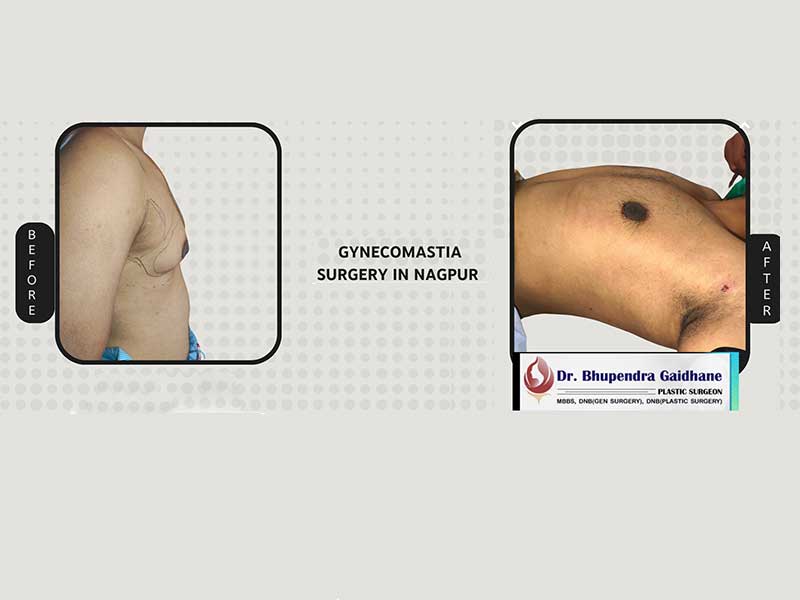
Quick Answer
Gynecomastia surgery recovery is usually progressive and predictable. Most patients return to desk-based work within 3–5 days, feel significantly better by the second week, resume light exercise around week 3, and gradually return to full gym activities between weeks 4–6. Mild swelling, firmness, and temporary asymmetry are normal during the healing process.
4-Week Recovery Snapshot
- Days 1–7: Swelling, tightness, and bruising are most noticeable.
- Week 2: Pain decreases and swelling begins to settle.
- Week 3: Most patients feel 70–80% recovered.
- Weeks 4–6: Gradual return to chest workouts and sports.
- Compression garments remain an important part of recovery.
- Final chest definition continues improving over the following months.
Most men who come in for gynecomastia surgery don’t worry about the procedure itself. The real concern is simple and practical: “How long will I be down for?” “When can I start working again?” “When can I hit the gym?”
Planning surgery? Most patients return to desk work within 3–5 days and resume gym activities within 4–6 weeks, although individual recovery varies.
Fair questions — and you deserve clear, honest answers. This guide gives you a straightforward 4-week recovery roadmap based on modern techniques like the Ultrasonic-Assisted Micro-Incision Protocol and our 3-Day Accelerated Recovery Package. No vague statements. No guessing. Just real expectations.
For a detailed week-by-week explanation of the healing process, read the complete Gynecomastia Surgery Recovery Timeline Guide.
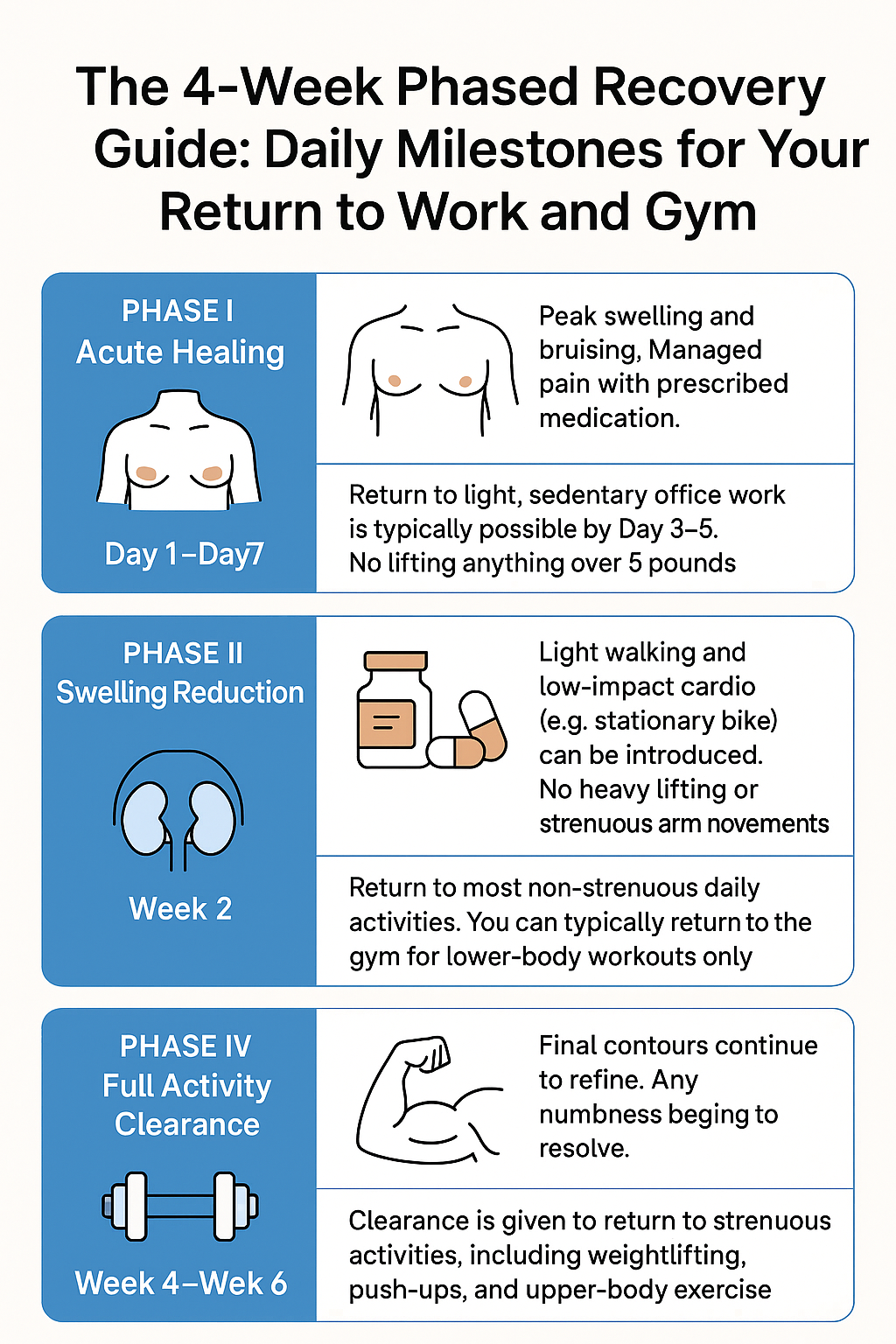
Phase I: Acute Healing (Day 1 to Day 7)
This is the “heavy lifting” week — your body is working hard and you’ll feel it. Expect swelling, tightness, and some bruising. The compression garment stays on 24/7.
- Swelling is highest during the first 48 hours.
- Pain is moderate but controlled well with medication.
- Mild asymmetry, hardness, or uneven swelling is normal.
- Compression garment is mandatory.
Return to work: Most patients can resume light, desk-based work by Day 3–5.
Avoid lifting anything heavier than 5 kg.
Phase II: Swelling Reduction (Week 2)
This is the week where you start feeling “normal” again. Pain reduces significantly, swelling begins to settle, and bruising fades.
- OTC pain relief is usually enough.
- Skin begins to stick smoothly to your new chest contour.
- Walking and stationary cycling are safe.
Avoid: running, chest exercises, heavy weights, and anything that causes chest bounce.
Phase III: Integration & Light Exercise (Week 3)
Your chest shape becomes clearly visible and most bruising disappears. Most patients feel around 70–80% recovered by this point.
- Compression garment often shifts to 12 hours/day.
- Energy levels improve.
- You can train legs, abs, and do light cardio.
Avoid: bench press, push-ups, dips, pull-ups, chest machines, swimming.
Phase IV: Full Activity Clearance (Week 4 to Week 6)
Now your healing stabilises. Swelling continues to settle and any numbness starts improving.
- Upper body workouts are usually cleared by Week 4–6.
- Sports, running, and swimming are back on the table.
- Final definition improves over the next several weeks.
Most patients feel completely normal by Week 4 or 5.
The Compression Garment: Your Results Depend On It
Compression is not optional. It is a major reason why some patients heal with crisp definition and some don’t.
- Helps swelling resolve faster.
- Improves skin tightening.
- Prevents fluid pockets.
- Maintains consistent chest contour.
Protocol:
24/7 for the first 14 days → then 12 hours/day for 2–3 more weeks.
Maintaining Your Results Long-Term
The surgery fixes the gland and fat, but long-term results depend on you:
- Maintain a stable weight.
- Avoid steroids and hormonal supplements.
- Stay consistent with workouts after clearance.
- Follow your follow-up schedule.
Why Our Recovery System Works
Our outcomes stay predictable because our process is disciplined. Using ultrasonic energy for precise fat removal, micro-incisions for minimal scarring, and structured aftercare allows faster recovery without rushing your body.
Thinking About Gynecomastia Surgery?
If you want a transparent, predictable, and patient-first approach to gynecomastia surgery in Nagpur, you’re welcome to book a consultation. Clear recovery planning is part of your treatment — not an afterthought.
Clinic: Prime Polyclinic, Dhantoli, Nagpur
Contact: 9960961451
Website: https://www.drbhupendraplasticsurgeon.com/