
Most patients who come to my clinic in Nagpur asking about liposuction have already done their research. They’ve read about VASER. They’ve seen the word “Lipovase.” And they have one honest question sitting at the back of their mind:
“Is VASER actually better — or is it just marketing?”
It is a fair question. And in this article, I am going to answer it the way I would in a consultation — honestly, clinically, and without exaggeration.
Liposuction has been performed for decades. The goal has always been the same: remove stubborn, localised fat that does not respond to diet or exercise and reshape the body into a better contour. What has changed — significantly — is how that fat is removed.
Traditional liposuction relies purely on mechanical suction. VASER liposuction adds a step before suction: it uses ultrasound energy to selectively break down fat first. That one difference — ultrasound pre-treatment — changes almost everything about the procedure: precision, tissue trauma, skin response, recovery, and the quality of the final contour.
Let me walk you through it properly.
Most patients are not just looking for fat removal — they are looking for confidence. Whether it’s avoiding certain clothes, feeling uncomfortable in fitted shirts, or noticing areas that don’t respond to consistent diet and exercise — these concerns are usually present long before surgery is considered.
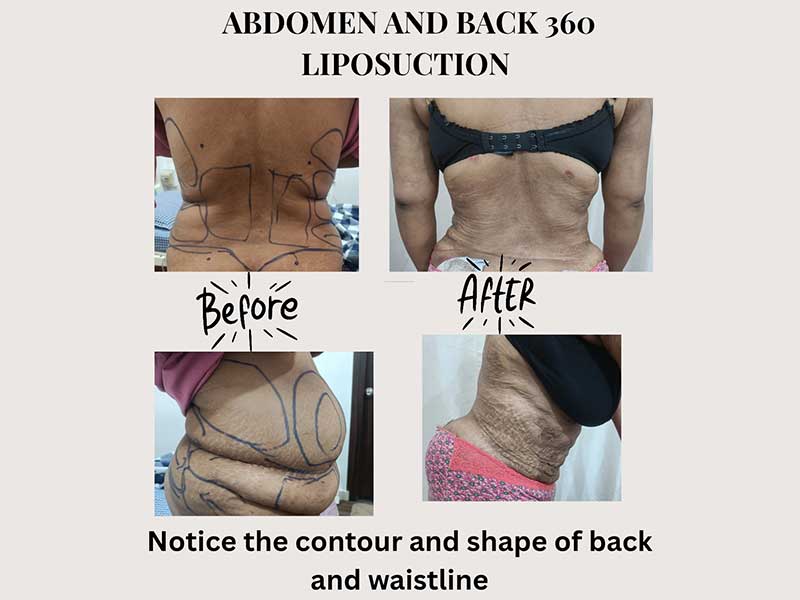
How Each Technique Works — The Core Difference
Traditional Liposuction (Tumescent / Suction-Assisted)
In traditional liposuction, the surgeon first injects a tumescent solution — a mixture of saline, local anaesthetic, and adrenaline — into the target area. This solution expands the fat layer, reduces bleeding, and provides some local anaesthesia.
A cannula (a thin hollow tube) is then inserted through small incisions and moved back and forth in a fan-like motion. The mechanical movement physically breaks fat cells apart, and suction removes the loosened fat. The technique is effective and has been the global standard for decades.
The limitation is inherent to the mechanism: the cannula must physically tear through fat tissue. This creates more trauma, more bruising, more irregular disruption of the surrounding connective tissue — and for denser or fibrous fat areas, it requires significant force.
VASER Liposuction (Ultrasound-Assisted)
VASER adds a step before the cannula enters. A VASER probe — which emits ultrasound energy at a precise frequency — is introduced into the tumescent-filled fat layer. The ultrasound energy causes fat cell membranes to resonate and rupture selectively, while leaving nerves, blood vessels, and connective tissue largely intact.
The result is liquefied fat — already broken down before any suction begins. When the cannula then removes this fat, it encounters significantly less resistance. The process is more controlled, less traumatic, and more precise.
At this clinic, we use Lipovase — 4th-generation VASER technology. It is the most advanced iteration of this system currently available, offering finer probe calibration and more consistent energy delivery than earlier VASER generations.
Head-to-Head Comparison: VASER vs Traditional Liposuction
| Factor | Traditional Liposuction | VASER Liposuction (Lipovase) |
|---|---|---|
| Mechanism | Mechanical suction only | Ultrasound pre-treatment + suction |
| Fat Selectivity | Non-selective — disrupts surrounding tissue | Selective — targets fat cells specifically |
| Precision of Contouring | Moderate — good for larger areas | High — suitable for detailed sculpting |
| Fibrous / Dense Fat Areas | Difficult — requires more force | Effective — ultrasound breaks fibrous fat |
| Skin Tightening | None — skin left to contract passively | Active — ultrasound stimulates skin contraction |
| Post-Op Bruising | More — due to mechanical trauma | Less — reduced tissue disruption |
| Swelling Duration | Longer — 4–8 weeks | Shorter — 2–4 weeks typically |
| Recovery to Work | 7–14 days typically | 3–7 days typically |
| Smoothness of Result | Good — depends on technique | Typically smoother due to even fat removal |
| Suitable for Gynecomastia | Partial — struggles with glandular tissue | Yes — emulsifies dense glandular fat effectively |
| High-Definition Sculpting | Not suitable | Possible — allows muscle definition enhancement |
| Cost | Lower | Higher — due to technology |
| Availability in Nagpur | Widely available | Available at Prime Polyclinic (Lipovase) |
The Skin Tightening Advantage — Why It Matters More Than Most Patients Realise
One of the most underappreciated differences between VASER and traditional liposuction is what happens to the skin after fat removal.
When fat is removed from beneath the skin, the skin needs to contract and conform to the new, smaller volume. In younger patients with good skin elasticity, this happens reasonably well with any technique. In patients with moderate skin laxity — common in adults over 30, or in areas like the inner thigh and upper arms — how well the skin contracts determines whether the result looks smooth and tight, or loose and irregular.
Traditional liposuction relies entirely on passive skin contraction — the skin tightens on its own over time, with no assistance from the procedure itself.
VASER actively contributes to skin tightening. The ultrasound energy delivered through the probe heats the deep dermis, stimulating collagen production and causing the skin to contract more actively after fat removal. The result is a noticeably tighter, more adherent skin envelope — particularly in areas where moderate laxity was present before surgery.
This is not a minor benefit. For many patients, it is the difference between a good result and an excellent one.
A Specific Case: Why VASER Is Superior for Gynecomastia
Gynecomastia — the enlargement of male breast tissue — is one of the most common procedures performed at this clinic. And it is also one of the clearest examples of where VASER outperforms traditional liposuction.
Male breast tissue in gynecomastia is not pure soft fat. It contains dense, fibrous glandular tissue — particularly beneath the nipple area — that is significantly harder to remove than standard subcutaneous fat. Traditional liposuction cannot adequately address this glandular component. The cannula struggles through the fibrous tissue, often leaving a residual lump beneath the nipple — the most common reason patients are disappointed after traditional liposuction for gynecomastia.
VASER’s ultrasound energy emulsifies even dense, fibrous glandular fat effectively. Combined with micro-incision gland excision for the firm central gland, this allows far more complete chest flattening than traditional techniques allow.
If you are researching gynecomastia surgery specifically, you can read the detailed guide here → Gynecomastia Surgery in Nagpur — Technique, Grades, and Results
Recovery: What the Difference Feels Like
Patients often ask me: “Will I feel the difference in recovery?”
The honest answer is yes — usually within the first week.
That said, recovery is influenced not only by the technique but also by the area treated, the volume of fat removed, and how well post-operative instructions are followed.
With traditional liposuction, the mechanical disruption of tissue causes more immediate post-operative discomfort, more bruising, and more firmness in the treated area. Swelling tends to be significant for a longer period. Most patients need 7–14 days before returning to desk work.
With VASER, because the fat has been pre-liquefied and surrounding tissue is less disrupted, the post-operative experience is generally gentler. Bruising is reduced. Swelling resolves faster. Most patients are back to desk work within 3–5 days, and the firmness that follows (as the body heals internally) resolves sooner as well.
That said, compression garments are essential with both techniques. They are not optional. Wearing the garment correctly — consistently, for the prescribed duration — is a major factor in how smooth and even the final result appears.
For a detailed week-by-week breakdown of what liposuction recovery looks like → Gynecomastia and Liposuction Recovery Timeline
When Is Traditional Liposuction Still Appropriate?
I want to be balanced here. Traditional liposuction is not an inferior procedure — it is a well-established technique that has produced good results for millions of patients worldwide. There are situations where it remains appropriate:
- Very localised, small-volume fat removal in a young patient with excellent skin elasticity
- Cost constraints — traditional liposuction is less expensive, and in the right patient, can deliver satisfactory results
- Areas with very soft fat where the precision advantage of VASER is less critical
- Patients who are not candidates for the longer procedural time VASER requires
The key is proper patient selection and honest surgeon consultation. When a patient sits across from me, I assess their anatomy, their goals, their skin quality, and the specific areas they want treated — and I recommend the technique that will give them the best result for their individual situation.
The final outcome depends on how the technique is performed. Factors like surgical precision, understanding of body contour, and correct patient selection play a far more important role than the device alone.
Why Patients Choose Lipovase (4th-Gen VASER) in Nagpur
Experience
Body contouring is not just about fat removal — it involves understanding proportions, symmetry, and how different body areas transition into each other. This becomes especially important in areas like the abdomen, chest, and flanks.
Technique
VASER-assisted liposuction (Lipovase) allows controlled fat removal in both soft and fibrous areas, combined with contour-focused techniques tailored to each individual case rather than a one-size-fits-all approach.
Recovery Clarity
Patients are guided with clear expectations regarding swelling, compression garment use, and timeline of visible results. This clarity helps ensure smoother recovery and more predictable outcomes.
Beyond the technology itself, the outcome depends on the surgeon performing it. VASER in inexperienced hands can cause thermal injury, irregularities, or incomplete results. The ultrasound probe must be moved at the correct speed, depth, and pattern. This is a technique that rewards precision and experience.
To understand the full range of liposuction procedures available at this clinic → Liposuction in Nagpur — Procedure, Areas, and Results
Which technique is right for you?
VASER liposuction is often preferred in patients with fibrous fat areas (such as chest, back, or flanks), those seeking more refined contouring, or where mild skin laxity is present.
Traditional liposuction remains appropriate for small, localized fat deposits in patients with good skin elasticity where simple volume reduction is the goal.
The choice is not about which technique is “better” — but which is more suitable for your anatomy and expectations.
The Honest Summary
For most body contouring goals — abdomen, flanks, chest, back, thighs, arms — VASER (Lipovase) delivers better precision, less post-operative discomfort, faster recovery, and active skin tightening compared to traditional liposuction. It is particularly superior in fibrous fat areas and in gynecomastia treatment.
Traditional liposuction remains a valid option for simpler cases, younger patients with good skin elasticity, or where cost is a primary factor.
The right technique is determined by your anatomy, your goals, and an honest assessment during consultation — not by marketing language.
Related Reading
- Liposuction in Nagpur — Full Procedure Guide
- Gynecomastia Surgery in Nagpur — VASER & Micro-Incision
- Gynecomastia Surgery Cost in Nagpur (2026)
- Gynecomastia Grades Explained — Grade 1 to 4
- Gynecomastia & Liposuction Recovery Timeline
Frequently Asked Questions
Frequently Asked Questions
Is VASER liposuction available in Nagpur?
Yes. Dr. Bhupendra Gaidhane at Prime Polyclinic, Dhantoli, Nagpur offers 4th-generation VASER liposuction under the brand name Lipovase — the most advanced version of VASER technology currently available.
Is VASER liposuction painful?
VASER liposuction is performed under general anesthesia or sedation — there is no pain during the procedure. Post-operatively, patients typically experience mild soreness and tightness, which is generally less than after traditional liposuction due to reduced mechanical tissue trauma.
How long is recovery after VASER liposuction?
Most patients resume desk work within 3–5 days. Swelling reduces significantly by 3–4 weeks. Final body contour becomes visible by 2–3 months. Recovery is generally faster compared to traditional liposuction.
Can VASER liposuction tighten skin?
Yes. The ultrasound energy used in VASER stimulates the overlying skin to contract after fat removal by promoting collagen production in the deep dermis. This is a meaningful advantage over traditional liposuction, which has no skin-tightening mechanism.
What is Lipovase?
Lipovase is the name used at this practice for 4th-generation VASER technology — the most advanced version of ultrasound-assisted liposuction currently available. It offers improved precision and outcomes compared to earlier VASER generations and standard ultrasound liposuction devices.
Who is a good candidate for VASER liposuction?
Ideal candidates are adults who are close to their target weight with stubborn localised fat deposits that do not respond to diet and exercise. VASER is particularly suitable for patients wanting precise contouring, better skin tightening, or treatment of fibrous fat areas such as the back, chest (gynecomastia), or flanks.
Ready to Understand Which Technique Is Right for You?
Every patient’s anatomy is different. A consultation at our clinic in Dhantoli, Nagpur will help you understand whether VASER, traditional liposuction, or a combined approach best suits your goals — with transparent cost and a clear recovery plan.
Common Questions Patients Also Ask About Liposuction
Is VASER liposuction safer than traditional liposuction?
Both techniques are considered safe when performed by a qualified plastic surgeon. VASER may offer an advantage in terms of reduced tissue trauma due to its selective action on fat cells. However, overall safety depends more on surgical planning, technique, and patient selection than on the device itself.
Which is better for belly fat — VASER or traditional liposuction?
Both techniques can effectively remove abdominal fat. VASER may provide better contouring and smoother results, particularly in patients with mild skin laxity or those seeking more defined shaping. The choice depends on fat quality, skin elasticity, and aesthetic goals.
Does liposuction cause loose skin?
Liposuction removes fat but does not remove excess skin. In patients with good skin elasticity, the skin usually contracts well after fat removal. In cases of mild to moderate laxity, techniques like VASER may help improve skin contraction. Significant skin excess may require additional procedures.
Is VASER liposuction good for gynecomastia?
VASER-assisted liposuction is particularly useful in gynecomastia because it can break down dense, fibrous fat in the male chest. It is often combined with gland excision to achieve a flatter and more defined chest contour.
What is the difference between VASER and laser liposuction?
VASER uses ultrasound energy to selectively break down fat, while laser liposuction uses heat generated by laser energy. VASER is generally preferred for larger areas and more precise contouring, while laser liposuction is often used for smaller areas. The choice depends on the treatment goal and surgeon preference.
How soon can I see results after liposuction?
Initial changes are visible within a few weeks as swelling reduces. More defined results appear over 1–3 months, with continued refinement over time as tissues settle and skin adapts.
Is liposuction a weight loss procedure?
No. Liposuction is a body contouring procedure, not a weight loss method. It is best suited for patients close to their target weight who want to remove localized fat deposits that do not respond to diet and exercise.