• Prime Polyclinic, Cabin no 3, 1st Floor, Dimond One Building, Dhantoli, Nagpur, Maharashtra 440012

Category Archives: Plastic Surgery Services

Dedicated category for plastic, cosmetic, and reconstructive surgery services including gynecomastia, liposuction, lipoma removal, axillary breast surgery, and related procedures.

Gynecomastia Surgery Cost in Nagpur 2026 | ₹50,000–₹90,000

GYNECOMASTIA SURGERY COST · NAGPUR

Gynecomastia Surgery Cost in Nagpur (2026 Guide)

Typical cost: ₹50,000–₹90,000+, depending on the amount of glandular tissue and fat, skin excess, and the surgical approach required.

Every chest is different. Some patients mainly have firm glandular tissue; others have a combination of gland, fat and excess skin. Treatment may involve gland excision, liposuction, or both. This guide explains the main factors that influence the estimate and what to clarify before deciding.

Medically reviewed by Dr. Bhupendra Gaidhane
MBBS, DNB General Surgery, DNB Plastic Surgery
Last medically reviewed: 11 October 2026

QUICK ANSWER

How much does gynecomastia surgery cost?

₹50,000–₹90,000+

This is an indicative range, not a fixed quote. The final estimate is confirmed after clinical examination and discussion of the treatment plan.

Gland and fat

The amount and distribution of tissue affect the work required.

Skin and contour

Skin excess and the chest shape may affect surgical planning.

Technique and facility

Liposuction, gland excision, anaesthesia and facility requirements influence the estimate.

When VASER-assisted liposuction (Lipovase) is appropriate, it may add approximately ₹20,000. It is not required for every case; this is discussed during consultation.

YOUR NEXT STEP

Would you like a personalised assessment?

Book an appointment with Dr. Bhupendra Gaidhane online. Booking usually takes about 2 minutes.

Afternoon and evening slots may be available at both clinic locations. Choose your preferred clinic and an available time when booking.

Book an Appointment →

Indicative cost by grade

Clinical grade can help describe the appearance of the chest, but it does not determine the operation or cost by itself. Tissue distribution, skin quality and the treatment plan also matter.
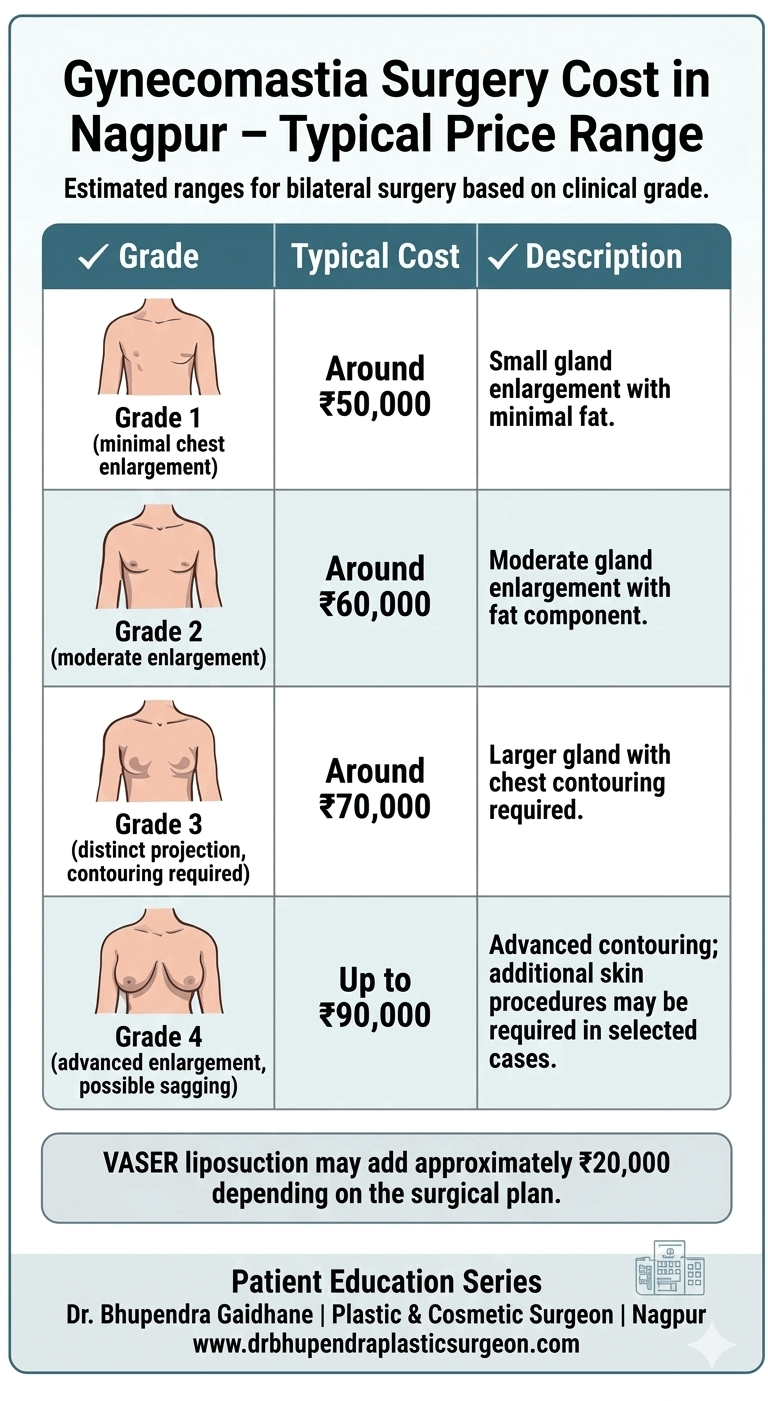

Indicative gynecomastia surgery cost range in Nagpur by clinical grade and surgical complexity
Use grade as a starting point for discussion, not as a substitute for an individual assessment.

To understand the clinical differences, read Gynecomastia Grades Explained: Grade 1 to 4.

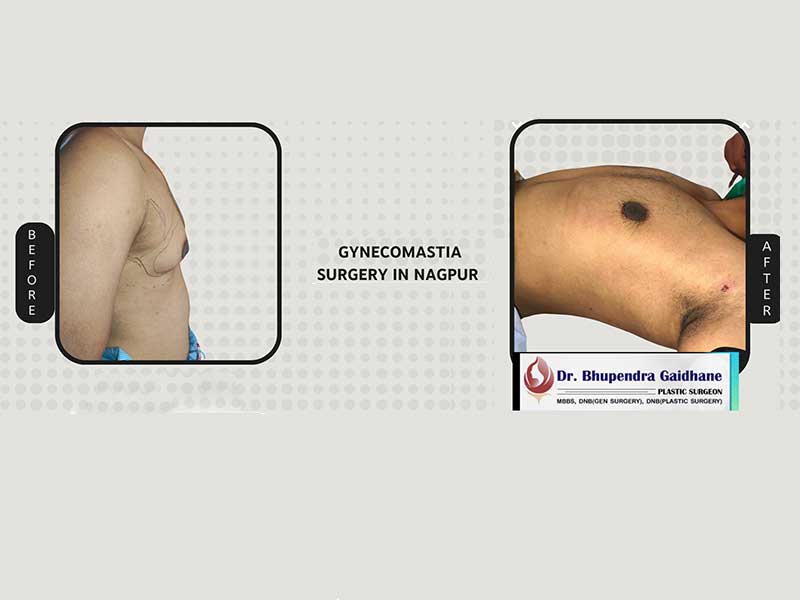
Want to see outcomes before deciding? View before-and-after results.

Our Case of the Month features a Grade 2 gynecomastia case, highlighting the assessment of excess glandular tissue and chest contour, along with the approach to treatment. Explore this case to understand how the surgical plan is tailored to the individual rather than relying on the grade alone.

COST BREAKDOWN

What affects the cost of gynecomastia surgery?

The estimate reflects the work and resources needed for the individual case—not just the grade label.

01

Grade and extent of enlargement

More extensive enlargement or skin excess can require additional contouring or skin-management planning. A higher grade does not automatically mean a particular operation.

02

Fat-to-gland proportion

Fatty tissue may be treated with liposuction. Firm glandular tissue often needs direct excision; many patients need a combination.

03

Surgical technique

The plan may include liposuction, gland excision through a small incision around the areola, or both. The choice depends on examination and the desired contour.

04

VASER-assisted liposuction (Lipovase)

VASER uses ultrasonic energy to assist fat removal. It may be useful in selected cases as part of contouring, but it is not necessary for every patient and does not replace gland excision when glandular tissue needs removal.

Learn more about VASER liposuction and the gynecomastia treatment approach.

05

Anaesthesia and operating facility

The anaesthesia plan, operating facility, day-care arrangements and clinical requirements are part of the overall estimate.

PACKAGE CLARITY

What is included in the surgery package?

Ask for a written estimate that clearly states what is included for your proposed procedure. The exact package should be confirmed with the clinic rather than assumed from a general online list.
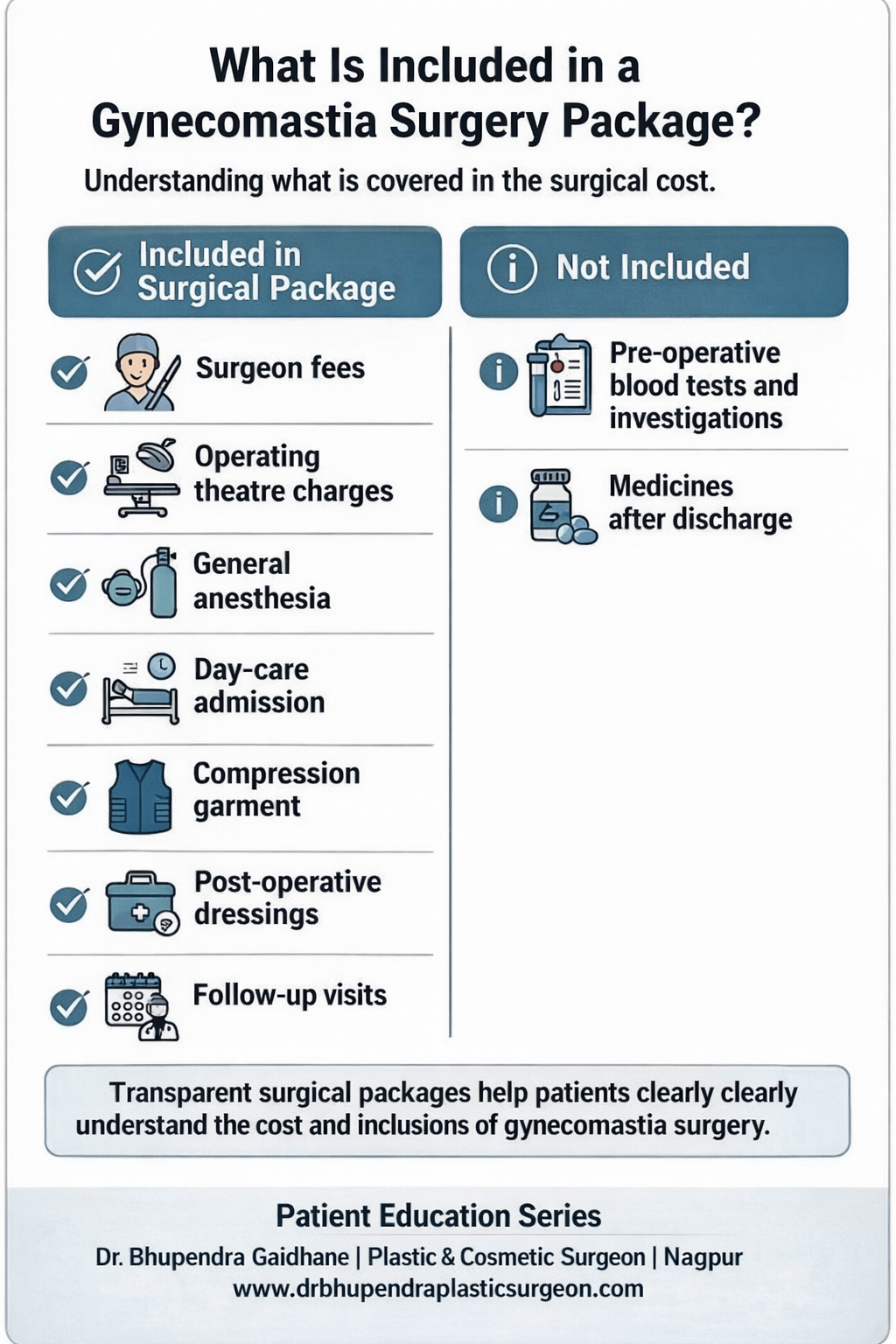

Guide to items to clarify in a gynecomastia surgery package, including surgeon fees, anaesthesia, facility, garment and follow-up
Confirm package inclusions and exclusions before scheduling surgery.

Confirm whether these are included

  • Surgeon’s fees
  • Anaesthesia charges
  • Operating theatre and day-care admission
  • Compression garment
  • Dressings and follow-up visits

Ask whether these are extra

  • Pre-operative blood investigations
  • Medicines after discharge
  • Any additional stay or procedure if clinically needed

Recovery and time away from work are also worth planning. Read the gynecomastia surgery recovery timeline.

BOOKING IN ABOUT 2 MINUTES

Get a cost estimate based on your chest examination

A consultation helps assess glandular tissue, fat distribution, skin quality and which treatment options are appropriate.

Choose from available afternoon and evening appointments at either clinic location.

Book an Appointment →

Prime Polyclinic

Cabin No. 3, 1st Floor, Diamond One Building, Dhantoli, Nagpur

Consultation clinic

Nirvi 2 Surgical & Maternity Hospital

Besa, Nagpur

Surgical unit

Considering surgery in Nagpur?

Patients may travel from nearby cities and districts for assessment and treatment. If you are travelling, discuss the likely consultation and surgery schedule, follow-up plan, and how long you should remain nearby before arranging transport or accommodation.

The cost comparison between cities can be difficult because packages may include different services, facilities and follow-up arrangements. Compare like with like rather than relying on a headline price alone.
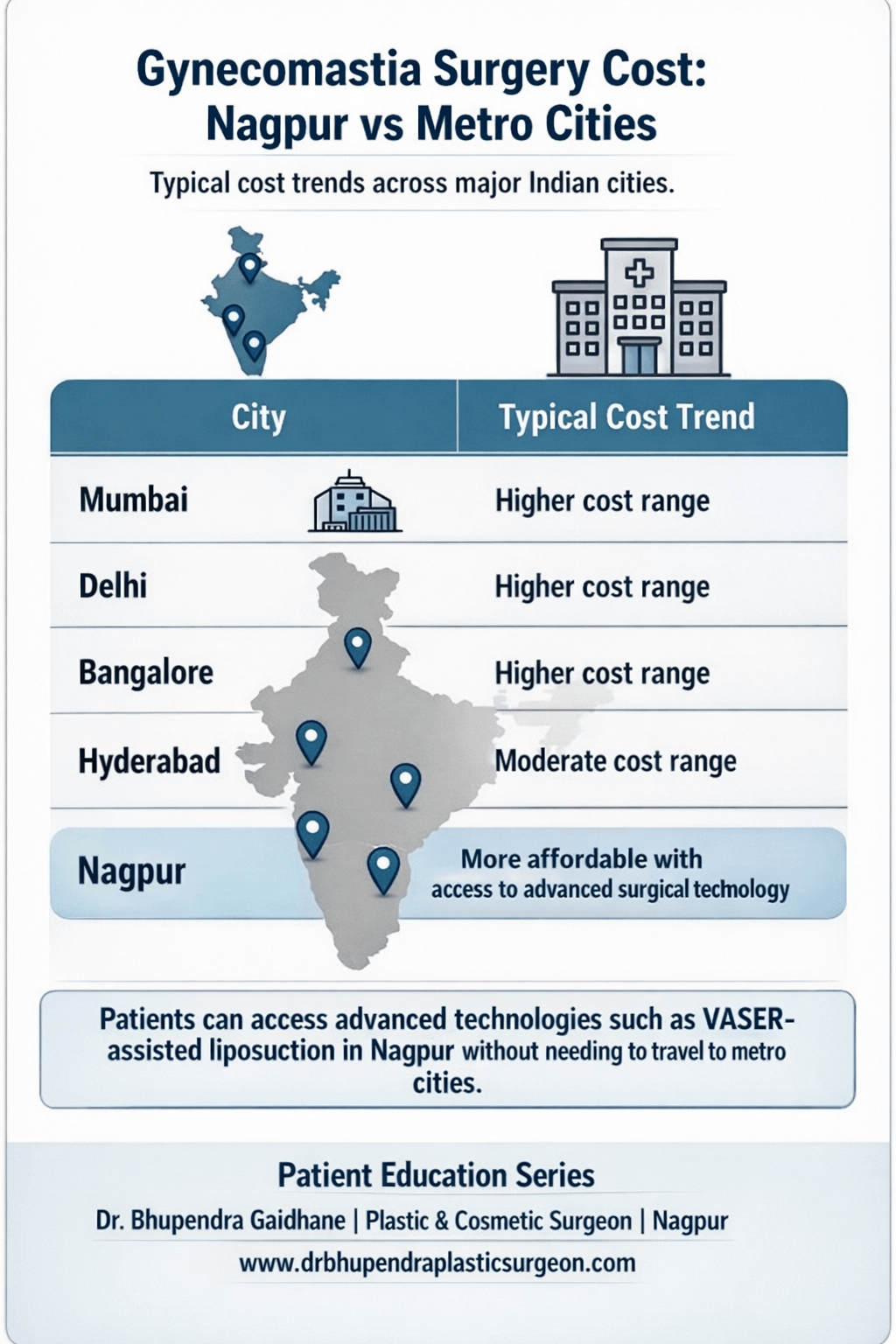

Considerations when comparing gynecomastia surgery packages in Nagpur and other cities
When comparing quotes, check the treatment plan and package inclusions.

For younger patients, read Teenage Gynecomastia: When to Wait and When to Treat.

COMMON QUESTIONS

Frequently asked questions about gynecomastia surgery cost

What is the cost of gynecomastia surgery in Nagpur?

The indicative range on this page is ₹50,000–₹90,000+. The final estimate depends on the clinical findings, treatment plan, anaesthesia and facility requirements. It is confirmed after examination.

Can the cost be confirmed from a photograph?

Photographs can help with an initial discussion, but they cannot reliably establish all the factors needed for a final surgical plan. An in-person clinical assessment is needed before confirming the exact procedure and cost.

Does every patient need VASER or Lipovase?

No. VASER-assisted liposuction may be appropriate for selected patients, but it is not necessary for every case. Firm glandular tissue may still require excision, depending on examination.

Is gynecomastia surgery covered by health insurance?

Coverage depends on the insurer, policy terms and medical indication. Many procedures performed for cosmetic reasons are not covered. Check directly with your insurer and obtain written confirmation before relying on coverage.

Is gynecomastia surgery usually a day-care procedure?

Many patients can go home on the same day, but this depends on the procedure, anaesthesia, medical condition and recovery after surgery. Your surgeon will advise whether an overnight stay is needed.

Is surgery performed on one side or both sides?

Gynecomastia can affect one or both sides. The plan depends on the examination and the need to achieve a balanced chest contour; treatment on both sides is common, but is not automatic in every case.

How long is recovery, and when can I return to work?

Recovery varies with the extent of surgery and the individual. Light activities may resume before strenuous exercise, while swelling and contour continue to settle. See the recovery timeline guide and follow your own postoperative instructions.

YOUR NEXT STEP

Get clarity on the treatment and cost for your case

An assessment can help determine what is contributing to chest enlargement and which options may be suitable. The final cost is discussed after clinical examination.

Online booking usually takes about 2 minutes. Choose an available afternoon or evening slot at either clinic location.

Book an Appointment →

Prime Polyclinic

Cabin No. 3, 1st Floor, Diamond One Building, Dhantoli, Nagpur

Consultation clinic

Nirvi 2 Surgical & Maternity Hospital

Besa, Nagpur

Surgical unit
About the author

Dr. Bhupendra Gaidhane is a Plastic and Cosmetic Surgeon in Nagpur with qualifications MBBS, DNB General Surgery and DNB Plastic Surgery. Individual treatment recommendations are made after clinical assessment.

This page provides general educational information and indicative pricing. It is not a personalised quote or a substitute for consultation.

Gynecomastia Surgery Recovery Timeline – What to Expect Week by Week

PATIENT RECOVERY GUIDE

Gynecomastia Surgery Recovery Timeline: What to Expect Week by Week

If you are planning gynecomastia surgery, it is natural to wonder how sore you will feel, when you can return to work, and when your chest will start looking settled. Recovery usually happens in stages—not all at once.

Many patients are able to walk on the day of surgery and return to light daily activities within a few days. Desk work may be possible within 3–7 days, depending on how you feel and the work you do. Swelling and firmness can take longer to settle, and the chest contour usually continues to change over the first three months.

These are general timeframes, not a personal clearance plan. Follow the instructions given by your treating surgeon, especially if your procedure or recovery is different from what is described here.

The short answer

Most people can start light activities within a few days, return to desk work in about 3–7 days, and build back towards exercise gradually. Driving may be possible after around 7–8 days, light cardio around two weeks, and gym training around six weeks—but only when healing is progressing well and your surgeon agrees. The final chest shape takes time to settle.

Recovery at a glance

Recovery is not a straight line. You may feel better one day and notice swelling or tightness the next. These milestones are a guide to what often happens—not a test you have to pass on an exact date.

01

Surgery day

Rest, follow discharge instructions and take short, gentle walks when advised.

02

Days 2–7

Dressings and garment instructions are reviewed. Swelling, bruising and tightness may be noticeable.

03

Week 2

Everyday movement often feels easier, though the chest may still feel firm or look uneven.

04

Weeks 3–6

Healing continues. Activity can be increased in stages according to your surgeon’s advice.

05

Around month 3

The chest contour is usually more settled, although small changes can continue beyond this point.

KEEP IT HANDY

Prefer a step-by-step guide?

Use the recovery handbook to revisit the main instructions at home. If anything in the guide differs from the advice given to you after surgery, follow your own surgeon’s instructions.

Download the recovery guide (PDF)

What happens immediately after surgery?

You may feel drowsy for a while after anaesthesia. The chest can feel tight beneath the dressings, and you may notice mild discomfort, bruising or swelling. The amount of discomfort varies from person to person; follow the pain-relief plan provided by your surgical team.

Before going home

Your team will check that you are recovering appropriately and can mobilise, drink fluids and pass urine as expected before discharge.

Your first night

  • Rest and sleep on your back in a comfortable, slightly elevated position if advised.
  • Keep prescribed medicines, water and essentials within easy reach.
  • Avoid lifting, straining or raising your arms high if your surgeon has restricted these movements.
  • Arrange help if you need it, and do not drive while affected by anaesthesia or pain medicines.

A common worry: “My chest feels tight and looks swollen—is something wrong?” Some tightness and swelling can be part of early healing, but a sudden change, rapidly increasing swelling or worsening severe pain should not be ignored. If you are unsure, contact your surgical team rather than trying to diagnose it yourself.

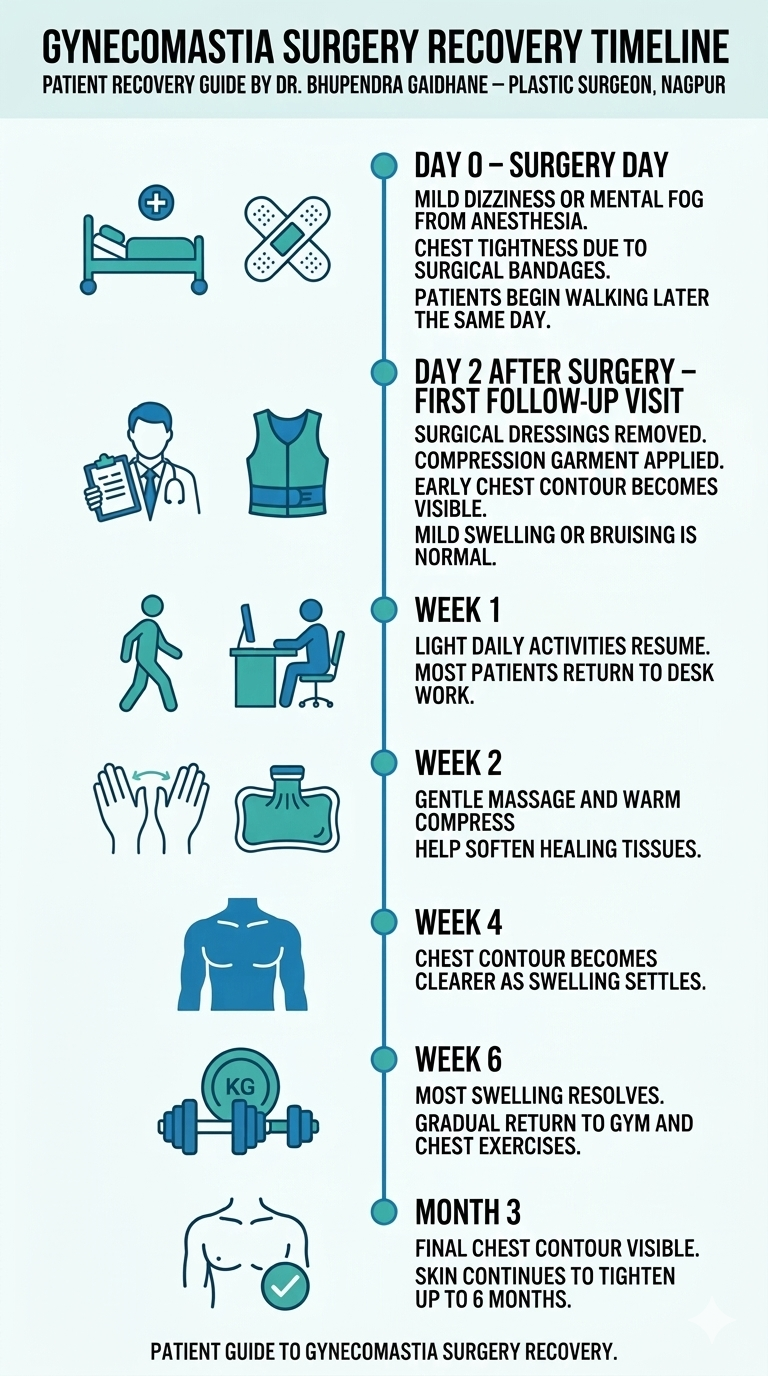
Gynecomastia surgery recovery: week by week

Your own timeline depends on the procedure performed, your general health and how your body heals. The milestones below are approximate.


Illustrated gynecomastia surgery recovery timeline from surgery day through the first three months
Recovery milestones after gynecomastia surgery. Individual healing times vary.
Day 0

Surgery day

Rest as instructed, begin gentle walking when your team says it is appropriate, and keep the dressings in place as directed. Do not judge your final chest shape from its appearance on the first day.

Day 1–2

First follow-up

Your dressing and compression garment plan will be reviewed. Early swelling can affect how the chest looks, so the first follow-up is mainly about checking healing and making sure you understand the care instructions.

Week 1

Getting back into a routine

Many patients manage light daily activities and some desk work. Bruising, swelling, tightness or tiredness may still be present. Increase activity gradually rather than pushing through discomfort.

Week 2

Feeling more mobile

Swelling may be starting to improve, but the chest can still feel firm, numb or uneven. Massage should only begin when your surgeon has advised that it is appropriate for your healing.

Weeks 3–6

Gradually increasing activity

Healing continues beneath the skin even when you feel well. Follow your garment plan and increase exercise in stages, rather than returning immediately to your previous training intensity.

Month 3

Assessing the developing result

The chest contour is often more settled by this stage. Some firmness, altered sensation or subtle changes can take longer to resolve. Your follow-up examination is the right place to discuss concerns about your result.

To understand what changes can look like over time, see our gynecomastia before-and-after results.

A DOCUMENTED CLINICAL CASE

See a real gynecomastia case

Recovery information helps you understand the healing process. Looking at a documented case can also help you understand the treatment journey. Every patient starts from a different place, and the procedure, healing process and result can vary.

Explore the Case of the Month

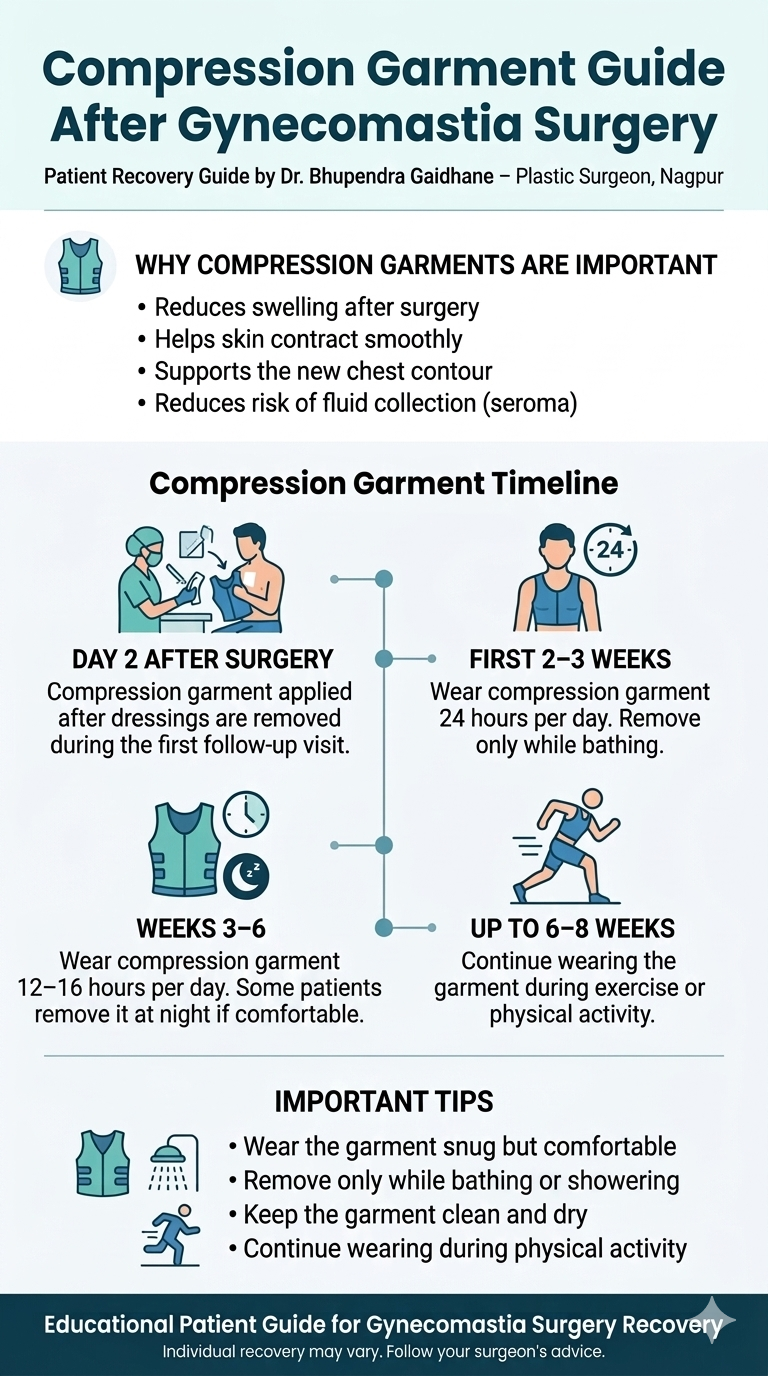
How long should you wear the compression garment?

The garment supports the healing chest and may help manage swelling. It should feel supportive, not painfully tight. Your surgeon may adjust the schedule depending on your operation, skin, swelling and comfort.


Compression garment guidance after gynecomastia surgery, with stages of use during the first six weeks
Follow the garment instructions given specifically for your operation.
Weeks 1–3

Continuous wear

Wear it day and night, removing it for showering, according to your surgeon’s instructions.

Weeks 3–6

Part-time wear

The usual plan is around 12–16 hours a day, if this is the schedule prescribed for you.

After week 6

Review as needed

Some patients may be advised to use it during physical activity for longer. Do not extend or stop use solely based on a calendar.

If the garment causes significant pain, skin injury, breathing difficulty or a concerning change in swelling, remove pressure if necessary and seek advice promptly.

Massage, firmness and the “hard phase”

One concern patients often have is that the chest can feel hard, lumpy or slightly uneven after surgery. During healing, swelling and internal tissue changes can create areas of firmness. That does not automatically mean the final result will feel or look that way.

Firmness should gradually be assessed over time. If it is worsening, is associated with increasing pain or redness, or comes with sudden swelling, contact your surgeon rather than assuming it is normal healing.


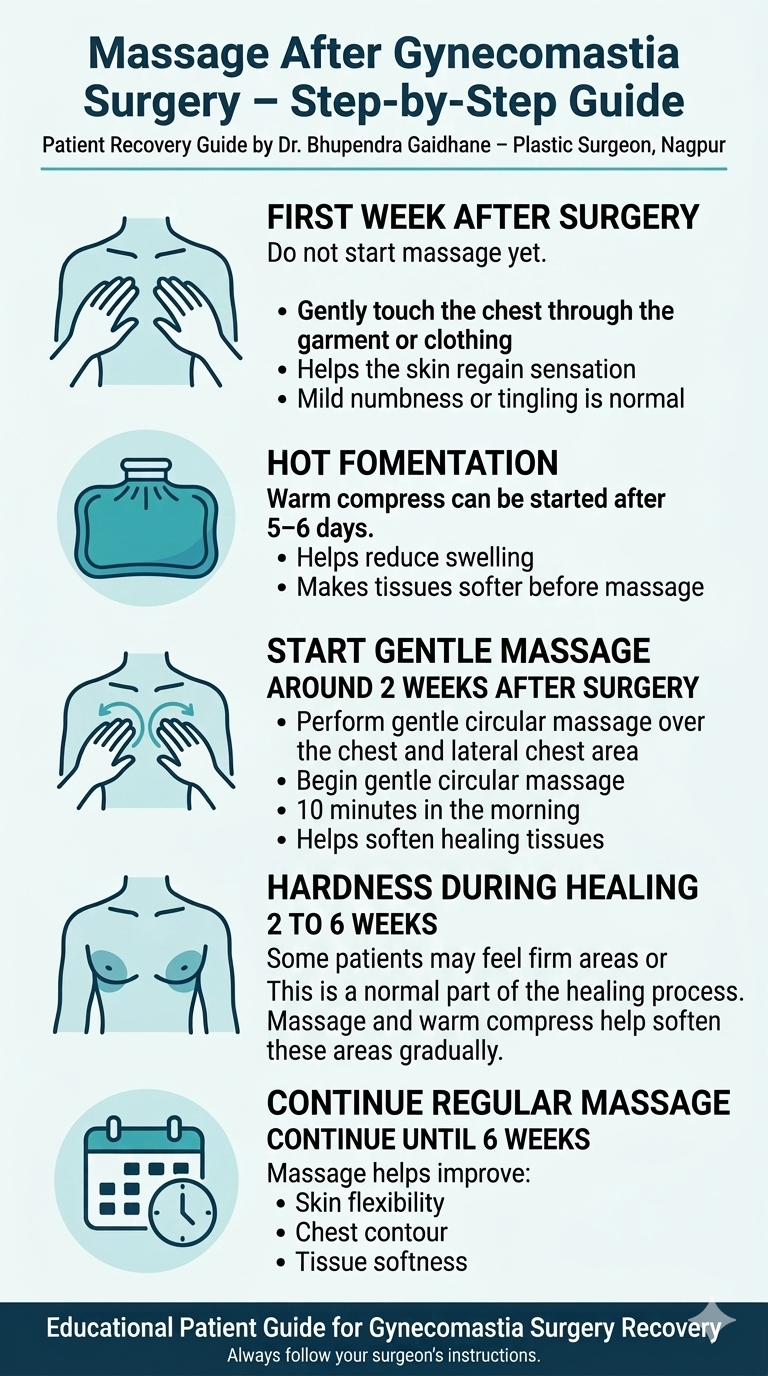
Guide to massage after gynecomastia surgery, including timing and gentle handling of healing tissues
Do not start massage or heat treatment until your surgeon has confirmed that it is suitable for your recovery.

During the first week

Handle the chest gently and follow the dressing and garment instructions. Temporary numbness or tingling can occur as sensation changes during healing.

Warm compresses

They may be advised after about 5–6 days in your protocol, but only use heat when your surgeon confirms it is safe for your wounds and skin.

Gentle massage

In the usual plan described here, gentle circular massage may begin at around two weeks, with the timing and pressure guided by your surgeon. Do not massage forcefully or over an area that is unusually painful or swollen.

When can you return to work, driving and the gym?

It is understandable to want to get back to normal quickly—especially if you work, train regularly or have responsibilities at home. The safest return is gradual. Use these timeframes as a guide, not permission to resume an activity if you are still uncomfortable or taking medicines that affect alertness.

WalkingFrom surgery day, when advised

Short, gentle walks are generally encouraged. Increase duration as you feel able.

Desk workAbout 3–7 days

Depends on discomfort, fatigue, travel and whether your work involves lifting or physical effort.

DrivingOften around 7–8 days

Only when you can move comfortably, react safely, are not impaired by medication and your surgeon agrees.

Light cardioAround 2 weeks

Restart gently only after clearance; avoid activity that strains the chest or causes discomfort.

Gym and chest trainingAround 6 weeks

Return gradually after your surgeon clears you. Start below your previous intensity and increase step by step.

If your work is physically demanding, your recovery is slower than expected, or you had a more extensive procedure, you may need more time.

What is normal—and when should you seek help?

It can be difficult to know whether a change is part of healing or needs attention. You do not need to work that out alone.

Changes that can occur during healing

  • Mild swelling or bruising
  • Tightness in the chest
  • Temporary numbness or tingling
  • Areas that feel firm as tissues heal

These should generally improve over time. Tell your surgeon if you are unsure or the pattern concerns you.

Contact your surgical team promptly

  • Rapid or increasing swelling, particularly if one side changes suddenly
  • Severe or worsening pain
  • Increasing redness, warmth, wound discharge or fever
  • A wound opening or a sudden, concerning change in appearance

Seek urgent medical assessment for severe symptoms, breathing difficulty, fainting or any rapidly deteriorating condition.

Why follow-up with your surgeon matters

Gynecomastia surgery is not simply about removing tissue. The chest needs time to heal and settle, and your surgeon can assess swelling, firmness, symmetry, skin response and your return to activity during follow-up.

If something worries you, ask. A photograph or a message may help your team decide whether you need an examination, but it does not replace an in-person assessment when one is necessary.

For a broader overview of the procedure and decision-making, read our complete guide to gynecomastia surgery in Nagpur. You can also learn about VASER liposuction and see our patient results gallery.

Questions patients often have during recovery

When your chest is changing day by day, it is easy to wonder whether everything is going as it should. These are examples of the kinds of questions worth asking your surgeon. They are written in everyday language, not presented as quotations from particular patients.

“Doctor, it still looks puffy. Did the surgery work?”

It is too early to judge the final shape from the first few days or weeks. Swelling can hide the developing contour, and the chest continues to settle over time. A sudden increase in swelling—especially on one side—needs prompt assessment.

“One side feels harder, and the two sides don’t look the same. Is that expected?”

Healing is not always perfectly symmetrical, and temporary firmness can occur. But do not assume every lump or difference is normal. Tell your surgeon if it is new, getting worse, painful or changing quickly.

“I feel okay now. Can I get back to the gym—or train chest?”

Feeling better is encouraging, but deeper tissues may still be healing. Build activity back gradually and wait for your surgeon’s clearance before lifting heavy weights or restarting chest exercises.

“What if something doesn’t feel right and my next follow-up is still days away?”

You do not have to wait and worry. Contact your surgical team, explain what changed and when it began, and follow their advice. Severe pain, rapidly increasing swelling, fever or breathing difficulty needs urgent assessment.

“When will I stop thinking about every little change in my chest?”

It is understandable to watch the area closely after an operation that matters to you. Try to judge progress over time rather than checking every small change in the mirror. Keep your follow-up appointments and raise concerns that persist or worry you.

These are common examples of patient concerns, not verbatim statements from named or identifiable patients. If your question is different, ask it—there is no need to feel embarrassed about discussing your recovery.

Frequently asked questions about recovery

How long does recovery take after gynecomastia surgery?

Light activities may be possible within a few days. Many patients return to desk work in about 3–7 days, while exercise takes longer. Swelling and firmness can continue to change over several weeks, and the chest contour is often more settled around three months.

Will my chest look swollen or uneven at first?

It can. Swelling, bruising and differences between the two sides may be noticeable early in recovery. What matters is how the change develops and whether there are warning signs. Sudden or rapidly increasing asymmetry should be assessed promptly.

When can I shower?

Follow the instructions given by your surgical team. In many cases, showering is allowed after the first follow-up once dressings have been reviewed or removed, but this depends on your wounds and dressing plan.

How long should I wear the compression garment?

The schedule described on this page is continuous wear for the first three weeks, followed by around 12–16 hours a day through Week 6. Follow the plan prescribed for your own operation if it differs.

Is chest hardness after surgery normal?

Temporary firmness can occur during healing, but it should be interpreted in context. Do not assume a new, worsening, painful or rapidly changing lump is normal; contact your surgeon for advice.

When can I return to the gym?

Gradual gym training often resumes around six weeks, after your surgeon has cleared you. Chest exercises should be restarted carefully, with intensity increased step by step.

What if I am worried that my recovery is not going as expected?

Contact your surgical team and explain what has changed, when it started and whether you have pain, fever, redness or increasing swelling. If symptoms are severe or rapidly worsening, seek urgent medical assessment.

Medical reference

American Society of Plastic Surgeons (ASPS): Gynecomastia surgery recovery.

PERSONALISED GUIDANCE

Have a question about your recovery?

Recovery advice is most useful when it reflects your procedure and how you are healing. If you are considering gynecomastia surgery or want to discuss a concern, arrange a consultation.

Book an appointment

Online booking usually takes about 2 minutes. Afternoon and evening appointments may be available depending on the booking schedule.

Consultation clinic

Prime Polyclinic, Cabin No. 3, 1st Floor, Diamond One Building, Dhantoli, Nagpur.

Surgical unit

Nirvi 2 Surgical & Maternity Hospital, Besa, Nagpur.

Lipoma Removal Surgery in Nagpur — Educational Guide & Scar-Minimising Options

This comprehensive guide is designed for patients in Nagpur who want clear, reliable information about lipoma removal, scarless lipoma surgery, minimally invasive lipoma removal, and lipoma removal costs in Nagpur. Whether you discovered a lump recently or have lived with it for years, this page explains everything—from causes and diagnosis to treatment options and recovery.

Book Consultation   Call: 9960961451

Understanding Lipomas: What They Really Are

A lipoma is a benign tumor of fat cells that develops slowly beneath the skin. It is one of the most common soft‑tissue lumps found in adults. People often discover lipomas accidentally—during a shower, grooming, workouts, or while checking a sore spot. Panic usually follows, driven by fear of cancer. The reassuring fact is: lipomas are non-cancerous, harmless, and treatable.

Lipomas feel soft, rubbery, and mobile because they sit in the natural fat layer between the skin and muscle. They don’t attach to deeper tissues in typical cases, which is why they slide when pressed. These features help distinguish them from more concerning lumps.

Why Do Lipomas Form?

Patients frequently ask what triggered their lipoma—”Did I gym too hard? Was it my diet? Is it cholesterol?” Scientific studies show that lipomas form primarily due to genetic tendencies. If a parent or sibling has lipomas, there’s a higher chance you may develop them too.

Other contributing factors include:

  • Familial Multiple Lipomatosis – a condition where individuals develop numerous lipomas through life.
  • Age – most appear between 30–60 years.
  • Minor trauma – sometimes discussed but not consistently proven.

Importantly, lipomas are not caused by obesity, cholesterol, food choices, protein supplements, heavy lifting, or lifestyle habits. Even extremely fit individuals and athletes commonly develop lipomas.

"Before and after results of lipoma removal surgery performed by Dr. Bhupendra Gaidhane, a skilled plastic surgeon in Nagpur."
“Effective lipoma removal surgery in Nagpur by Dr. Bhupendra Gaidhane. Witness the precise technique and professional care through these before-and-after images.”

Types of Lipomas (and Why the Type Matters)

Understanding the type of lipoma helps determine the safest and least invasive removal method. Common types include:

  • Superficial Lipomas – just beneath the skin; the most common and easiest to treat.
  • Deep Lipomas – under the fascia or close to deeper structures; may require imaging.
  • Intramuscular Lipomas – grow within muscle fibers; often slow-growing but deeper.
  • Fibrolipomas – contain more fibrous tissue, making them firmer.
  • Multiple Lipomas – seen in people genetically predisposed to forming many lumps.

Superficial lipomas are straightforward to remove, while deep and intramuscular lipomas benefit from more structured planning.

Are Lipomas Dangerous?

Typical lipomas are harmless and not considered medically dangerous. However, removal may be recommended when the lipoma is:

  • Growing noticeably in size
  • Causing discomfort or pain
  • Affecting movement or daily activities
  • Cosmetically visible and difficult to hide
  • Located near nerves or vessels
  • Not behaving like a typical soft, mobile lipoma

For atypical cases—such as deep lumps, rapidly enlarging lumps, or firm, fixed masses—imaging such as ultrasound or MRI may be advised.

Diagnosis: What Tests Are Actually Needed?

Most lipomas in Nagpur are diagnosed clinically based on appearance and feel. However, your surgeon may recommend:

  • Ultrasound – useful for confirming depth, size, and consistency.
  • MRI – reserved for deep, intramuscular, or suspicious masses.

Biopsy is not routinely required unless the behavior of the lump is atypical.

When Should You Consider Lipoma Removal?

Many patients in Nagpur opt for lipoma removal surgery for cosmetic confidence, comfort, and peace of mind. Common reasons include:

  • The lump is visible on the arms, neck, shoulders, or back.
  • It has grown large enough to interfere with movement.
  • It becomes uncomfortable during gym workouts or daily activities.
  • The patient wants confirmation of diagnosis.
  • The lipoma causes embarrassment or clothing discomfort.

Treatment Options for Lipoma Removal in Nagpur

1. Scarless / Keyhole Lipoma Removal

For small to medium superficial lipomas, a 3–5 mm incision is used to free the lipoma and remove it with minimal skin disruption. This is commonly called scarless lipoma removal or keyhole lipoma surgery. Patients prefer this technique because healing is fast and the resulting scar is extremely small.

Before and after lipoma removal by liposuction in Nagpur performed by Dr. Bhupendra Gaidhane. Effective treatment for multiple lipomas with minimal scarring.
Before and after results of lipoma removal in Nagpur using advanced liposuction techniques by Dr. Bhupendra Gaidhane. Safe and effective treatment for multiple lipomas

2. Minimal-Incision Excision

For larger or slightly firm lipomas, a small incision is used to remove the lump cleanly. This method remains the gold standard for reliable, predictable removal. Fine sutures help achieve cosmetically pleasing results. This is the most common approach for lipoma removal surgery in Nagpur.

3. Traditional Excision for Deep or Intramuscular Lipomas

Deep-plane or intramuscular lipomas require a carefully planned excision to ensure safe removal around muscles, nerves, and vessels. Although the incision may be slightly larger, healing is predictable, and recurrence rates remain low.

Recurrence: What Does the Research Show?

One of the most common online questions is whether lipomas “come back” after removal. Published surgical literature shows:

  • Superficial lipomas: recurrence 1–5% (very low).
  • Deep / intramuscular lipomas: recurrence 5–19%.

Recurrence depends on the biological nature of the lipoma rather than a single surgical step. Most patients enjoy permanent resolution.

“lipoma removal surgery in Nagpur”

Lipoma Removal Cost in Nagpur

The cost of lipoma removal in Nagpur varies depending on:

  • Size of the lipoma
  • Number of lipomas
  • Depth (superficial vs deep)
  • Technique used
  • Need for imaging

Patients frequently search for terms such as lipoma removal cost Nagpur, scarless lipoma removal cost, and lipoma surgery price in Nagpur. A personalised estimate is provided after examination.

Insurance may cover removal if the lipoma is causing discomfort or functional issues.

Recovery After Lipoma Surgery

Most lipoma procedures are day-care surgeries with excellent recovery:

  • Return to desk work in 24–48 hours
  • Mild soreness for 1–3 days
  • Stitches removed in 7–10 days (if used)
  • Scar fades gradually over months

Patients can resume light exercise soon, while heavy workouts may be delayed briefly depending on the site of surgery.

Frequently Asked Questions (FAQs)

Can lipomas turn into cancer?
No. Lipomas do not transform into cancer. Only atypical lumps require further tests.
Why do I keep getting new lipomas?
Genetics. Some individuals naturally form multiple lipomas through life.
Does liposuction cure lipomas?
It can help reduce incision size in selected cases, but excision is preferred for firm or deep lipomas.
Can lipomas be removed without stitches?
Small lipomas with keyhole techniques sometimes yes; others require fine sutures for best cosmetic healing.
Do lipomas affect gym workouts?
Large lipomas on the arms, shoulders, or back may interfere with exercise or cause discomfort.
Will removing a lipoma prevent new ones?
No. Removal treats the existing lump but does not change your genetic tendency.
Can lipomas come back in the same spot?
Rare for superficial lipomas; slightly higher for deep or intramuscular ones.

Why Choose Dr. Bhupendra for Lipoma Removal in Nagpur?

Patients across Nagpur and nearby districts choose our clinic for:

  • Experience with superficial, deep, and multiple lipomas
  • Scar-minimising and minimally invasive techniques
  • Day-care, walk-in/walk-out procedures
  • Detailed pre- and post-operative guidance
  • Comfortable clinic located in Dhantoli

To consult: 9960961451 • Clinic: No 3, 1st Floor, Diamond One Building, Prime Polyclinic, Dhantoli, Nagpur.

Book Your Lipoma Consultation

For expert evaluation and personalised lipoma removal treatment in Nagpur, book a consultation or call 9960961451.


Minimal Scarring Sebaceous Cyst Removal in Nagpur — The Plastic Surgeon’s Guide

Sebaceous (epidermoid) cysts are common and usually harmless — but they can become painful, infected, or cosmetically bothersome. If your priority is a small scar and minimal recurrence, the technique and the surgeon matter. 👨‍⚕️✨

What is a sebaceous (epidermoid) cyst?

A sebaceous or epidermoid cyst is a slow-growing sac under the skin filled with keratin — a white, paste-like material. They can appear on the scalp, face, neck, back, armpit, or groin. Most are painless until they become infected, inflamed, or large enough to be visible.

Common confusion: Sebaceous cyst vs Lipoma (“Charbi chi Gath”)

Many patients call lumps “sebaceous cysts” when they actually have a lipoma (fatty lump), locally called “Charbi chi Gath.” Accurate diagnosis changes the surgical plan and the expected cosmetic result.

Condition Common Name Contents Feel Best Specialist
Sebaceous / Epidermoid Cyst सिबेशियस सिस्ट Keratin / sebum Firm, fixed Plastic Surgeon
Lipoma Charbi chi Gath Fatty tissue Soft, mobile Plastic Surgeon

Why treat it early? What happens if you wait

Untreated cysts can:

  • Become infected (red, painful, pus-filled)
  • Burst and inflame surrounding tissue
  • Require a larger incision later — leading to a bigger scar
  • Recur if the cyst wall is not fully removed

Short version: early, planned excision = smaller scar and faster recovery. 🕒➡️✨

Minimal-scar treatment options offered

Minimal Excision (Punch / Tiny Incision)

Often done through a 5–7 mm incision. The surgeon removes the whole cyst wall to prevent recurrence. Local anesthesia, quick recovery, usually a 1-day procedure.

Laser-Assisted Excision (Premium Cosmetic Option)

Laser helps make ultra-precise incisions with less bleeding and tissue trauma — ideal for face, neck, or other highly visible areas. Higher cost, but excellent aesthetic outcome.

Staged Treatment for Infected Cysts

If infected, the correct approach is drainage and antibiotics first, then definitive excision after healing — this reduces scars and recurrence risk.

Cost & insurance — what patients should know

Costs vary by size, technique, and whether the cyst is infected. Minimal excision is cost-effective; laser is premium. Insurance commonly covers cyst removal if it is symptomatic (infected, painful, rapidly growing). Purely cosmetic excisions are rarely covered.

At the clinic we assist with documentation and pre-authorization where applicable.

Who comes to us — Nagpur and surrounding districts

Our clinic is based in Nagpur and routinely treats patients from Nagpur and nearby districts. Patients travel for the combination of plastic-surgery expertise and modern, minimal-scar techniques.

Nearby districts / areas served: Bhandara, Gondia, Chandrapur, Wardha, Yavatmal, Amravati. Patients also consult from bordering regions in Chhattisgarh and Madhya Pradesh (for example, Rajnandgaon, Durg, Balaghat, Seoni).

Why choose a Plastic Surgeon for cyst removal?

  • Precision incisions that heal well
  • Removal of the entire cyst lining to prevent recurrence
  • Laser options for best cosmetic outcomes in visible areas
  • Experience with lumps and soft-tissue anatomy

In short: anyone can cut out a cyst, but a plastic surgeon cuts it out beautifully. 🎯

Frequently Asked Questions

Is a sebaceous cyst dangerous?

No — but it can get infected and painful. Treat early for best cosmetic results.

Will the cyst come back after removal?

If the entire cyst wall is removed, recurrence is rare. Proper technique matters.

Does removal leave a scar?

Yes, but with minimal excision or laser the scar is tiny and often barely noticeable.

Is cyst removal covered by insurance?

Often yes when the cyst is symptomatic (infected/painful). Cosmetic-only removals are usually not covered.

How long does the procedure take?

Most procedures are 10–30 minutes under local anesthesia; it’s a same-day, outpatient treatment.

Can multiple cysts be removed in one session?

Yes — depending on size and location, multiple cysts can often be removed together.

Next step: If you want a small scar and reliable result, book a consultation for assessment and a clear plan. 🔍Dr. Bhupendra Gaidhane — Plastic & Cosmetic Surgeon, Nagpur
Phone: 9960961451
Clinic: Prime Polyclinic, Dhantoli, Nagpur
Website: drbhupendraplasticsurgeon.com

Book a confidential consultation 📞

Gynecomastia Surgery Recovery: 4-Week Guide | What to Expect | Nagpur

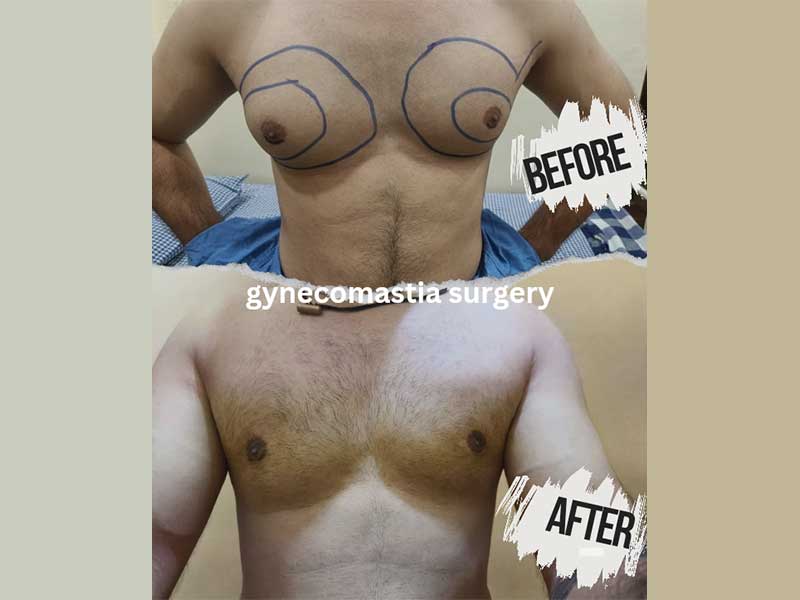
“Before after puffy nipple gynecomastia correction with minimal-incision gland removal.”
“Complete flattening of the areola using tiny-incision gland excision.”

Quick Answer

Gynecomastia surgery recovery is usually progressive and predictable. Most patients return to desk-based work within 3–5 days, feel significantly better by the second week, resume light exercise around week 3, and gradually return to full gym activities between weeks 4–6. Mild swelling, firmness, and temporary asymmetry are normal during the healing process.

4-Week Recovery Snapshot

  • Days 1–7: Swelling, tightness, and bruising are most noticeable.
  • Week 2: Pain decreases and swelling begins to settle.
  • Week 3: Most patients feel 70–80% recovered.
  • Weeks 4–6: Gradual return to chest workouts and sports.
  • Compression garments remain an important part of recovery.
  • Final chest definition continues improving over the following months.

Most men who come in for gynecomastia surgery don’t worry about the procedure itself. The real concern is simple and practical: “How long will I be down for?” “When can I start working again?” “When can I hit the gym?”

Planning surgery? Most patients return to desk work within 3–5 days and resume gym activities within 4–6 weeks, although individual recovery varies.

Fair questions — and you deserve clear, honest answers. This guide gives you a straightforward 4-week recovery roadmap based on modern techniques like the Ultrasonic-Assisted Micro-Incision Protocol and our 3-Day Accelerated Recovery Package. No vague statements. No guessing. Just real expectations.

For a detailed week-by-week explanation of the healing process, read the complete Gynecomastia Surgery Recovery Timeline Guide.

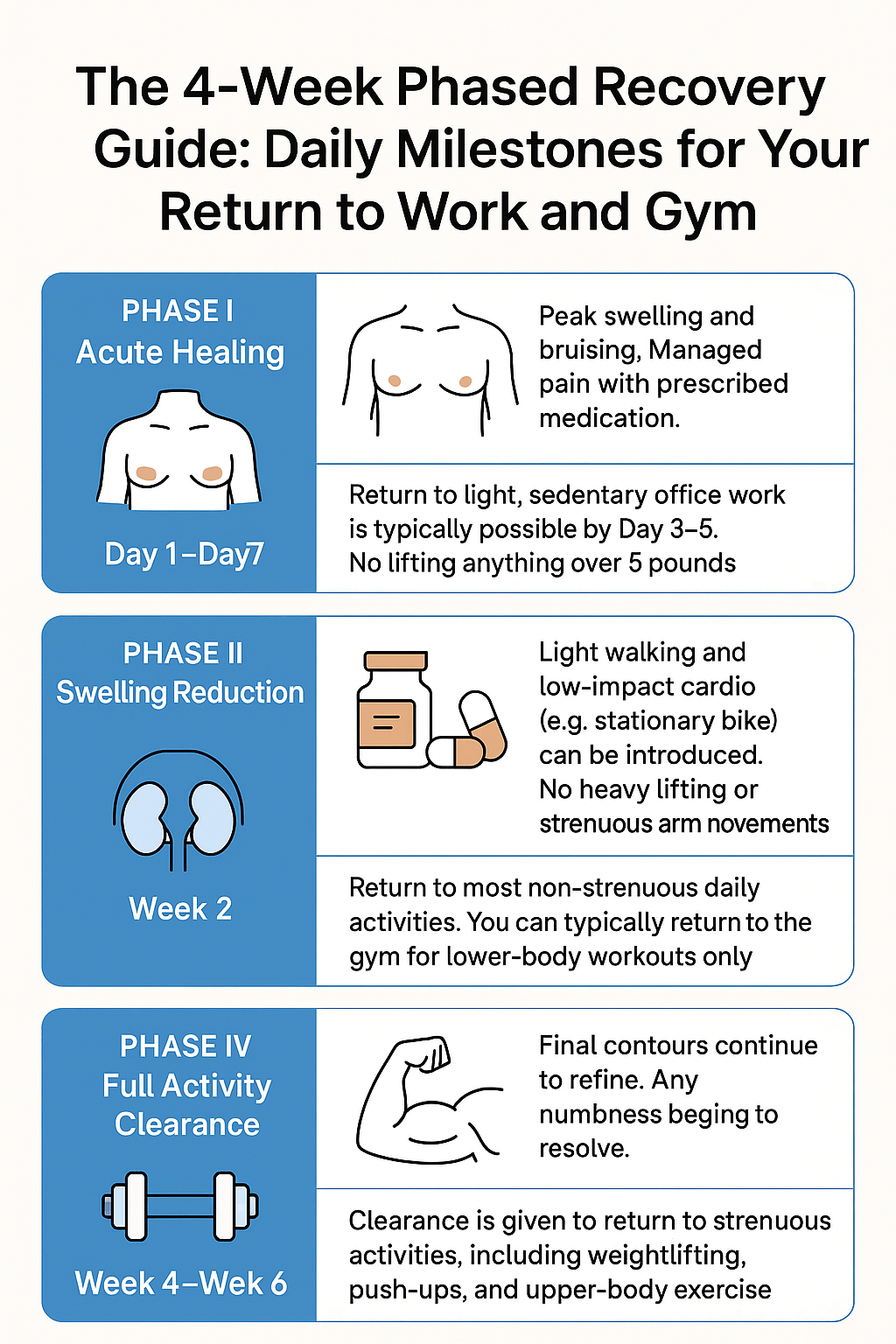
Phase I: Acute Healing (Day 1 to Day 7)

This is the “heavy lifting” week — your body is working hard and you’ll feel it. Expect swelling, tightness, and some bruising. The compression garment stays on 24/7.

  • Swelling is highest during the first 48 hours.
  • Pain is moderate but controlled well with medication.
  • Mild asymmetry, hardness, or uneven swelling is normal.
  • Compression garment is mandatory.

Return to work: Most patients can resume light, desk-based work by Day 3–5.
Avoid lifting anything heavier than 5 kg.


Phase II: Swelling Reduction (Week 2)

This is the week where you start feeling “normal” again. Pain reduces significantly, swelling begins to settle, and bruising fades.

  • OTC pain relief is usually enough.
  • Skin begins to stick smoothly to your new chest contour.
  • Walking and stationary cycling are safe.

Avoid: running, chest exercises, heavy weights, and anything that causes chest bounce.

Phase III: Integration & Light Exercise (Week 3)

Your chest shape becomes clearly visible and most bruising disappears. Most patients feel around 70–80% recovered by this point.

  • Compression garment often shifts to 12 hours/day.
  • Energy levels improve.
  • You can train legs, abs, and do light cardio.

Avoid: bench press, push-ups, dips, pull-ups, chest machines, swimming.

Phase IV: Full Activity Clearance (Week 4 to Week 6)

Now your healing stabilises. Swelling continues to settle and any numbness starts improving.

  • Upper body workouts are usually cleared by Week 4–6.
  • Sports, running, and swimming are back on the table.
  • Final definition improves over the next several weeks.

Most patients feel completely normal by Week 4 or 5.

The Compression Garment: Your Results Depend On It

Compression is not optional. It is a major reason why some patients heal with crisp definition and some don’t.

  • Helps swelling resolve faster.
  • Improves skin tightening.
  • Prevents fluid pockets.
  • Maintains consistent chest contour.

Protocol:
24/7 for the first 14 days → then 12 hours/day for 2–3 more weeks.

Maintaining Your Results Long-Term

The surgery fixes the gland and fat, but long-term results depend on you:

  • Maintain a stable weight.
  • Avoid steroids and hormonal supplements.
  • Stay consistent with workouts after clearance.
  • Follow your follow-up schedule.

Why Our Recovery System Works

Our outcomes stay predictable because our process is disciplined. Using ultrasonic energy for precise fat removal, micro-incisions for minimal scarring, and structured aftercare allows faster recovery without rushing your body.

Thinking About Gynecomastia Surgery?

If you want a transparent, predictable, and patient-first approach to gynecomastia surgery in Nagpur, you’re welcome to book a consultation. Clear recovery planning is part of your treatment — not an afterthought.

Clinic: Prime Polyclinic, Dhantoli, Nagpur

Contact: 9960961451

Website: https://www.drbhupendraplasticsurgeon.com/


The Nagpur Micro-Incision Gyno Protocol: Minimize Scars, Maximize Skin Tightening for a Flatter Silhouette


Quick Answer

Gynecomastia surgery can often be performed through small, strategically placed incisions using a combination of Lipovase (4th-generation VASER liposuction) and gland excision. The Nagpur Micro-Incision Gyno Protocol is designed to minimize visible scarring while achieving effective gland removal, chest contouring, and skin retraction whenever appropriate. The exact technique depends on the grade of gynecomastia, skin quality, and individual anatomy.

Key Takeaways

  • Uses small, strategically placed incisions whenever suitable.
  • Combines Lipovase (4th-generation VASER) with gland excision.
  • Aims to reduce visible scarring on the chest.
  • Helps improve chest contour and definition.
  • Not every patient is a candidate for a purely micro-incision approach.
  • Surgical planning depends on gynecomastia grade and skin laxity.

Ideal Candidates

This approach is often most suitable for:

  • Grade 1 gynecomastia
  • Grade 2 gynecomastia
  • Selected Grade 3 cases
  • Patients with good skin elasticity
  • Patients concerned about visible scars

May Require Additional Techniques

  • Advanced Grade 4 gynecomastia
  • Significant skin excess
  • Major weight-loss patients
  • Severe chest skin laxity

Why choose a micro-incision approach for gynecomastia in Nagpur?

Gynecomastia is common and can cause self-consciousness and avoidance of tight clothing. Traditional approaches that rely on large open excisions often leave wider scars and may not optimally address skin contour. Our Nagpur Micro-Incision Gyno Protocol focuses on three clinical priorities:

  • Complete removal of glandular tissue (so recurrence is unlikely).
  • Precise fat removal and controlled collagen stimulation using 4th-generation VASER ultrasound for improved skin retraction.
  • Minimization of visible scars through tiny, strategically placed micro-incisions.

This protocol is performed as part of our gynecomastia surgery in Nagpur.

Our 3-Phase Protocol (Ultrasonic-Assisted Micro-Incision Protocol)

Phase I — Advanced Lipo-Contouring & Collagen Stimulation

We begin with targeted liposuction using ultra-small cannulas to sculpt the chest. After initial infiltration, a 4th-generation VASER ultrasonic probe is used to selectively emulsify fibrous fat and tough tissue. The ultrasound energy eases removal of stubborn deposits while producing controlled thermal effect in the deep dermis that promotes collagen reorganization and measurable skin tightening over the weeks following surgery.

Benefits of Phase I:

  • More precise contouring and the option for high-definition shaping.
  • Less bleeding and bruising versus blunt mechanical undermining.
  • Enhanced potential for natural skin retraction due to internal collagen stimulation.

Phase II — Micro-Incision Glandular Excision

Firm glandular tissue beneath the nipple is excised through  tiny (≈4–8mm) incisions placed at the areola edge or in the axillary fold. These micro-portals allow full gland removal while keeping external scars minimal and well-concealed. Because we access and remove the gland thoroughly, the chance of residual tissue and re-operation is substantially reduced.

Key points:

  • The combination of VASER liposuction and micro-incision gland excision treats both fat and gland — the complete solution for most grades of gynecomastia.
  • Incisions are small and placed in low-visibility locations so scars typically mature to fine, faint lines.

Phase III — Aesthetic Closure & Skin Contouring (quilting sutures not used)

After tissue removal we refine and secure the skin with layered, tension-free closure techniques tailored to each chest. Instead of internal quilting sutures, we rely on meticulous multi-layer skin closure, conservative trimming where needed, and appropriate contour-preserving maneuvers so the skin sits smoothly over the chest wall. Post-operative compression and a structured recovery plan further assist skin re-adaptation to the newly contoured muscle surface.

What this achieves:

  • A snug chest surface without relying on large surface scars.
  • More predictable contour with minimal surface irregularities.

4th-Generation VASER: Why it matters

Using modern VASER ultrasound provides two practical advantages for gynecomastia:

  1. Selective tissue emulsification for gentler, more precise fat removal and less surrounding tissue trauma.
  2. Thermal stimulation at depth that encourages collagen tightening — improving the chance that skin will retract smoothly after volume removal.

Combined with micro-incision gland excision and careful closure, VASER helps deliver a flatter, more athletic chest with less bruising and a faster functional recovery.

Who is a good candidate?

The Nagpur Micro-Incision Gyno Protocol is suitable for men with:

  • Mixed fatty and glandular gynecomastia (common presentation).
  • Desire to minimize visible scarring and obtain a defined chest contour.
  • Reasonable skin elasticity or moderate excess where internal tightening combined with collagen stimulation is expected to give a satisfactory result.

During a consultation we assess grade, skin quality, chest shape and expectations, then recommend the exact combination of micro-incision excision and targeted VASER liposuction or, in rare cases, additional resurfacing/skin-reduction options if there is severe excess.

Recovery highlights — including our 3-Day Accelerated Recovery Package

Because the procedure minimizes tissue trauma and uses regional anesthesia with light sedation when appropriate, many patients return to light daily activities quickly. We offer a structured 3-Day Accelerated Recovery Package that focuses on early mobility, optimized pain control, and guided compressive support to reduce swelling and speed comfort.

Typical timeline

  • Day 0–3: Rest, compression garment, short walks — most patients are comfortable with light activity.
  • Week 1–2: Decreasing soreness; return to desk work; avoid heavy chest activity.
  • 3–6 weeks: Gradual return to gym with cleared chest exercises; contour settling continues for several months.

Individual recovery varies; the goal of the 3-Day package is faster functional comfort, not rushed healing. Follow-up protocols and graded activity instructions are provided at discharge.

Safety, outcomes & what to expect

Our protocol emphasizes safety and predictability. You can expect:

  • Complete gland removal (reducing recurrence risk).
  • Small, well-concealed scars around the areola or in the axilla that typically fade over months.
  • Progressive improvement in skin firmness over 3–6 months as collagen remodeling occurs.
  • A tailored contour — from flat to subtly defined depending on your goals.

We prioritize clear communication about realistic outcomes, documented before/after expectations and a personalised postoperative plan to maximise results.

Frequently asked questions (FAQ)

Will I have big scars?

No — scars are intentionally tiny (≈4–5 mm) and positioned to be inconspicuous. Proper closure and scar care further reduce visibility as they mature.

Does VASER guarantee skin tightening?

VASER improves the potential for skin retraction by stimulating collagen, but the degree of tightening depends on your baseline skin elasticity and the amount of excess. We design the plan to maximise your chances of good retraction; in rare cases with severe redundancy, additional skin procedures may be discussed.

How soon can I go back to work and gym?

Many patients resume light office work within a few days and return to full gym activity in 3–6 weeks depending on progress. The 3-Day Accelerated Recovery Package helps achieve safe early comfort and mobility.

Is there a high chance of revision?

By combining complete gland excision and precise VASER liposuction we minimise the risk of residual tissue. Careful planning and technique significantly reduce revision rates compared with partial or fat-only approaches.

Schedule a confidential consultation

If you’re concerned about persistent gynecomastia, loose chest skin or visible scars, the Nagpur Micro-Incision Gyno Protocol offers a modern, minimally visible solution. Contact our Nagpur centre for a one-to-one evaluation and a personalised plan.

Clinic: Dr. Bhupendra Gaidhane — Diamond One Building, Prime Polyclinic, Dhantoli, Nagpur, Maharashtra 440012

Phone / WhatsApp: 9960961451

Note: A confidential in-clinic assessment is required to confirm candidacy and to provide a tailored cost estimate and perioperative plan.


Gynecomastia Surgery in Nagpur with Lipovase (VASER 4th Gen) – A New Era in Male Chest Contouring


"Before and after photos of a male chest showing gynecomastia treatment results by Dr. Bhupendra in Nagpur. The left photo displays enlarged breast tissue, and the right photo shows a flatter, more masculine chest post-surgery."
“Discover the transformative power of gynecomastia surgery in Nagpur with Dr. Bhupendra—see the visible difference from before (left) to after (right).”

Quick Answer

Gynecomastia surgery using Lipovase (4th-generation VASER-assisted liposuction) combines ultrasound-assisted fat emulsification with gland excision to improve chest contouring while preserving surrounding tissues. This approach may help surgeons address both the fatty and glandular components of gynecomastia more precisely, creating a flatter and more masculine chest contour when appropriately selected for the patient’s anatomy. Gynecomastia itself commonly involves a combination of gland tissue and fat, making a tailored treatment approach important

Key Takeaways

  • Lipovase is a 4th-generation VASER-assisted liposuction platform.
  • Gynecomastia often contains both fat and gland tissue.
  • Lipovase helps address the fatty component before gland excision.
  • Treatment is customized according to the grade of gynecomastia.
  • Small-incision chest contouring may be possible in appropriately selected patients.
  • Final results depend on gland size, skin quality, healing, and surgical planning.

Struggling with male breast enlargement? You’re not alone. Gynecomastia affects 40–60% of Indian men — often leading to self-consciousness, avoiding tight t-shirts, and hesitating to go shirtless. Whether you’re a lean guy with a gland under your nipple or dealing with large, sagging male breasts, it’s time to explore a permanent, scarless solution.

Component Traditional Liposuction Alone Lipovase + Gland Excision
Fat Removal Yes Yes
Gland Removal No Yes
Chest Contouring Limited in gland-heavy cases Comprehensive
Suitable for True Gynecomastia Often insufficient alone Commonly used approach
Treatment Planning Fat-focused Fat + gland-focused

Welcome to Lipovase – India’s advanced 4th Generation VASER Liposuction, now available in Nagpur under the expert hands of Dr. Bhupendra Gaidhane.


What is Gynecomastia? 🤔

Gynecomastia is a condition where male breast tissue enlarges abnormally. It can be caused by hormonal imbalances, obesity, medications, or even genetic factors. It appears in different grades:

  • Grade 1: Small gland, puffy nipples
  • Grade 2: Moderate enlargement, some fat
  • Grade 3: Large chest with excess skin
  • Grade 4: Sagging breasts resembling a female chest

Exercise helps reduce fat but cannot remove glandular tissue. That’s where surgery becomes essential.


Why Choose Lipovase (VASER 4th Gen) Over Traditional Surgery? ⚙️

Feature Traditional Liposuction VASER LIPOVASE (4TH GEN)
Gland Removal May need open excision Breaks & removes gland + fat together
Scarring Visible scars possible Tiny hidden incisions
Skin Tightening Minimal Stimulates collagen tightening
Downtime 5–10 days 2–3 days (light work)
Chest Definition Basic shaping High-definition sculpting

💡 What is VASER Technology?

VASER stands for Vibration Amplification of Sound Energy at Resonance. The Lipovase system is the 4th generation of this technology, using ultrasound energy to precisely break down fat and tough gland tissue — without damaging blood vessels, nerves, or skin.

Here’s what makes it revolutionary:

  • 🎯 Targets only fat and glands, preserving other tissues
  • 🎨 Contours the chest instead of just removing bulk
  • 💪 Stimulates skin tightening – great for Grades 3–4 gynecomastia
  • 💉 Less blood loss, bruising, and trauma
  • ⏳ Faster recovery, less post-op pain

Before/after results can be dramatic – especially for those who’ve been working out but still have a stubborn chest bulge.


Where Else is VASER Used? 🌍

Globally, VASER is the go-to technology for elite body contouring. Apart from gynecomastia, Lipovase is successfully used in:

  • ✅ Six-pack abdominal etching
  • ✅ Arm sculpting
  • ✅ Double chin removal
  • ✅ Thigh & buttock shaping
  • ✅ Back rolls and love handle reduction

Earlier, patients had to travel to Mumbai, Delhi, Pune, or Hyderabad to access this. But now, it’s available in Nagpur at an affordable cost, delivered by a surgeon you can personally consult with — not a chain hospital.


📍 Why Choose Dr. Bhupendra Gaidhane in Nagpur?

  • 🔬 Over 10+ years of surgical expertise
  • 💼 Personal consultation, not a corporate setup
  • 🧪 USFDA-approved Lipovase equipment
  • 🔒 Daycare surgery, quick discharge
  • 💬 Personalized pre- and post-op support
  • 💰 Transparent pricing & EMI options

💰 Cost of Gynecomastia Surgery in Nagpur

Depending on the grade and procedure complexity, the cost ranges from:

  • ₹45,000 – ₹85,000*

This includes:

  • Surgery charges
  • OT + anesthesia
  • Post-op care

*Exact cost varies based on gland size, skin excess, and whether liposuction alone or excision is needed. EMI and insurance assistance available in select cases.


🧠 Frequently Asked Questions (FAQs)

❓ Is gynecomastia surgery painful?

No. It’s done under anesthesia. Most patients report only mild soreness post-op.

❓ Will there be scars?

Only 2–3 small incisions (5mm), hidden under the chest or armpit. These fade quickly and are often invisible in 6–12 months.

❓ Can VASER remove both fat and gland?

Yes. Lipovase emulsifies fat content in glandular tissue, making fat extraction and subsequent gland excision easy . It gives a cleaner, smoother chest contour.

❓ Can I go back to gym after surgery?

Light activity in 3 days, gym in 3–4 weeks, chest training after 4–5 weeks.

❓ Is gynecomastia surgery permanent?

Yes. Once gland tissue is removed, it doesn’t grow back unless triggered by steroids, hormone imbalance, or certain medications.

❓ Is it covered under insurance?

In some cases with pain or hormonal causes, insurance may cover the surgery. Ask us for documentation support.

❓ Do I need a skin lift if I have loose chest skin?

In most cases, VASER tightens skin naturally. Rarely, a small skin-only lift may be suggested — with no large scars.


📞 Contact Us Today — Reclaim Your Confidence!

No more hiding behind loose shirts. Whether you’re dealing with a stubborn gland or full-grade gynecomastia, you’re just one consultation away from a confident new look.

✅ Let’s sculpt the best version of you — safely, painlessly, and permanently.

 “Book Your Consultation Today”

Benefits of Gynecomastia Surgery in Nagpur: Expert Care with Advanced VASER Technology


"Before and after gynecomastia surgery performed by Dr. Bhupendra Gaidhane, a leading cosmetic and plastic surgeon in Nagpur."
“Before and After Gynecomastia Surgery by Dr. Bhupendra Gaidhane in Nagpur – Expert treatment for male breast reduction.”


Benefits of Gynecomastia Surgery in Nagpur

Are you struggling with gynecomastia? Discover how gynecomastia surgery in Nagpur with Dr. Bhupendra Gaidhane can help you regain confidence and improve your quality of life.

Understanding Gynecomastia

Gynecomastia is the enlargement of male breast tissue due to hormonal imbalances, genetics, or lifestyle factors. This condition affects men of all ages and can lead to physical discomfort, emotional stress, and reduced confidence. If left untreated, gynecomastia can significantly impact your mental well-being and quality of life.

Common Challenges Faced by Men with Gynecomastia

Many men with gynecomastia experience:

  • Embarrassment about their appearance in social situations.
  • Reluctance to participate in activities like swimming or going to the gym.
  • Emotional distress, such as low self-esteem and social withdrawal.
  • Physical discomfort, including tenderness or pain in the chest area.

How Gynecomastia Surgery in Nagpur Can Help

Gynecomastia surgery, also known as male breast reduction, offers a permanent solution by removing excess glandular tissue and fat. With advanced technology like VASER liposuction, the procedure delivers safe, effective, and natural-looking results. Benefits include:

  • Improved Appearance: Achieve a flatter, more masculine chest contour.
  • Enhanced Confidence: Feel more comfortable in fitted clothing and social situations.
  • Physical Comfort: Eliminate tenderness and discomfort caused by excess tissue.
  • Long-Lasting Results: Enjoy a permanent transformation with proper post-surgery care.

What Makes VASER Liposuction Unique?

Dr. Bhupendra Gaidhane uses VASER (Vibration Amplification of Sound Energy at Resonance) liposuction for gynecomastia surgery in Nagpur. VASER technology offers:

  • minimal bleeding during Surgery: Precision fat removal with minimal bleeding.
  • Quick Recovery: Reduced downtime and faster healing compared to traditional methods.
  • Better Skin Contraction: Superior skin-tightening for smoother, more natural results.

This advanced technique is especially beneficial for patients with higher grades of gynecomastia involving significant fat deposits.

Why Choose Dr. Bhupendra Gaidhane in Nagpur?

Dr. Bhupendra Gaidhane is a leading plastic and cosmetic surgeon in Nagpur with years of experience in gynecomastia and liposuction procedures. His use of cutting-edge technology, personalized treatment plans, and patient-focused care ensures superior outcomes for every individual.

Learn more about Dr. Bhupendra Gaidhane and his expertise.

Frequently Asked Questions

What causes gynecomastia?

Gynecomastia is caused by hormonal imbalances, obesity, medication side effects, or medical conditions like liver disease. It can also result from the use of anabolic steroids or recreational drugs.

Can gynecomastia be treated without surgery?

In mild cases, lifestyle changes or medications may help. However, surgery is the most effective solution for significant glandular tissue or fat deposits.

What is the role of VASER liposuction in gynecomastia surgery?

VASER liposuction uses ultrasonic energy to precisely target and remove fat, ensuring minimal bleeding, quicker recovery, and better skin contraction compared to traditional methods.

How long does recovery take?

Most patients return to light activities within a week and resume strenuous activities in 4-6 weeks. Recovery time may vary depending on individual factors.

Will gynecomastia come back after surgery?

Gynecomastia surgery provides permanent results, but maintaining a healthy lifestyle is crucial to prevent recurrence caused by factors like weight gain or hormonal imbalances.

How much does gynecomastia surgery cost in Nagpur?

The cost varies based on the severity of the condition and the techniques used. Nagpur offers affordable options compared to major cities, making it a preferred destination for this surgery.

Is gynecomastia surgery covered by insurance?

In most cases, gynecomastia surgery is considered cosmetic and is not covered by insurance. However, exceptions may apply if the condition causes significant pain or discomfort.

Are the results of gynecomastia surgery natural-looking?

Yes, with techniques like VASER liposuction, the results are smooth and natural, giving the chest a more contoured and masculine appearance.

What are the risks associated with gynecomastia surgery?

Risks include infection, scarring, or temporary numbness, but these are minimized when performed by an experienced surgeon like Dr. Bhupendra Gaidhane.

Conclusion

Gynecomastia surgery in Nagpur offers a transformative solution for men seeking to regain confidence and improve their quality of life. With expert care from Dr. Bhupendra Gaidhane and advanced technologies like VASER liposuction, you can achieve safe, effective, and long-lasting results. Take the first step toward a more confident you by scheduling a consultation today.

Internal Links

External Links


The Game-Changer: Vaser Liposuction in Nagpur by Dr. Bhupendra Gaidhane

"Before and after results of Vaser liposuction performed by Dr. Bhupendra Gaidhane, a plastic surgeon in Nagpur."
“Remarkable transformation with Vaser Liposuction in Nagpur by Dr. Bhupendra Gaidhane. Before and after images showcase the precise contouring and effective fat removal.”

Vaser Liposuction in Nagpur: Advanced Body Contouring by Dr. Bhupendra Gaidhane

Imagine achieving the sculpted body of your dreams with a cutting-edge, minimally invasive technique. This is exactly what Vaser Liposuction in Nagpur offers under the expert guidance of Dr. Bhupendra Gaidhane, a trusted name in cosmetic surgery specializing in gynecomastia, lipoma removal, and breast implants. With the latest Lipovase Technology, patients can expect safer, more effective, and precise results. Let’s explore why Vaser liposuction is revolutionizing the field of body contouring.

What is Vaser Liposuction?

Vaser Liposuction is a state-of-the-art technique that uses ultrasound energy to break down fat before removing it. Unlike traditional liposuction, Vaser ensures selective fat targeting, leaving surrounding tissues, blood vessels, and nerves unharmed. Whether you’re looking to refine your body shape or address specific areas like the abdomen, chest, or thighs, this method guarantees excellent results with minimal downtime.

How Lipovase Technology Takes Vaser Liposuction to the Next Level

Dr. Bhupendra Gaidhane proudly introduces Lipovase Technology, the 4th generation of Vaser liposuction, to his practice in Nagpur. This advanced system delivers unparalleled precision, allowing for:

  • Enhanced Skin Tightening: Stimulates collagen production for smoother, firmer skin.
  • Greater Safety: Minimal damage to surrounding tissues ensures faster recovery.
  • Efficient Fat Removal: Removes both large and small pockets of fat with ease.
  • Versatility: Ideal for body contouring, gynecomastia treatment, and lipoma removal.

Applications of Vaser Liposuction

This cutting-edge technology caters to a wide range of cosmetic and medical needs:

  • Body Contouring: Achieve a slimmer silhouette by targeting stubborn fat in problem areas.
  • Gynecomastia Surgery in Nagpur: A breakthrough for men struggling with enlarged breast tissue.
  • Breast Implants: Enables precise fat grafting for natural augmentation.
  • Lipoma Removal: Non-invasive removal of fatty tumors without scarring.

Why Choose Vaser Liposuction Over Traditional Methods?

Patients in Nagpur increasingly prefer Vaser liposuction for several reasons:

  1. Precision Targeting: Selectively removes fat while preserving surrounding tissues.
  2. Shorter Downtime: Recovery time is significantly reduced compared to traditional techniques.
  3. Skin Tightening: Unlike older methods, Vaser offers a smoother and more toned appearance with significant skin contraction than conventional liposuction .
  4. Improved Comfort: Minimal bruising, swelling, and pain ensure a better experience.

Gynecomastia Surgery in Nagpur: A Special Focus

For men dealing with gynecomastia, or enlarged male breasts, Vaser liposuction is a game-changer. This specialized procedure reduces glandular tissue and excess fat with precision, spcially in higher grades with extra skin and moderate amount of fat deposits  with high BMI patients, restoring a more masculine chest profile. As one of the most sought-after surgeons for gynecomastia surgery in Nagpur, Dr. Bhupendra Gaidhane has helped countless men regain their confidence.

Breast Implants and Lipoma Removal with Vaser Technology

Breast implants require expert precision, especially during fat grafting. Vaser liposuction makes this process seamless, ensuring a natural and symmetrical look. Similarly, for patients with lipomas, this advanced technology offers a safe, scar-free solution.

The Role of Expertise: Why Choose Dr. Bhupendra Gaidhane?

Choosing the right surgeon is as important as the technology itself. Dr. Bhupendra Gaidhane, renowned for his expertise in cosmetic surgery, brings years of experience to every procedure. His dedication to patient satisfaction, combined with his mastery of Vaser liposuction, has made him a trusted name in Nagpur.

FAQs About Vaser Liposuction in Nagpur

  • Is Vaser liposuction safe? Yes, especially under the expertise of a skilled surgeon like Dr. Bhupendra Gaidhane.
  • How much does Vaser liposuction cost in Nagpur? The cost varies based on the treatment area and patient needs. Contact Dr. Gaidhane’s clinic for a personalized quote.
  • Can Vaser liposuction address gynecomastia? Absolutely. Vaser liposuction is a leading solution for male chest contouring.
  • What is the recovery time? Most patients recover in 5–7 days, with noticeable results within weeks.
  • Are the results permanent? Yes, provided you maintain a stable weight and healthy lifestyle.
  • Why choose Dr. Bhupendra Gaidhane for Vaser liposuction? His expertise, combined with the latest Lipovase Technology, ensures world-class results.

Conclusion

If you’re considering Vaser liposuction in Nagpur, look no further than Dr. Bhupendra Gaidhane. From body contouring to gynecomastia and lipoma removal, his use of cutting-edge Lipovase Technology delivers exceptional results with minimal downtime. Contact his clinic today to schedule a consultation and take the first step toward achieving your aesthetic goals.

Frequently Asked Questions About Liposuction and VASER Liposuction

What is liposuction?

Liposuction is a cosmetic surgical procedure designed to remove excess fat deposits from specific areas of the body, such as the abdomen, thighs, arms, and chin. While traditional liposuction involves mechanical removal, advanced techniques like VASER liposuction utilize ultrasound technology for greater precision and faster recovery.
Learn more from Healthline.

How is VASER liposuction different from traditional liposuction?

VASER liposuction uses ultrasound waves to liquefy fat before extraction, allowing for selective fat cell removal. Traditional liposuction relies on more invasive techniques, which can lead to more trauma and longer recovery times.

Who is a good candidate for liposuction?

Liposuction is ideal for individuals close to their target weight who have localized fat deposits that are resistant to diet and exercise. It is not a substitute for weight-loss programs.

What areas of the body can be treated with liposuction?

Both traditional and VASER liposuction are versatile and can target multiple areas, including:

  • Abdomen
  • Thighs
  • Arms
  • Buttocks
  • Neck and chin
  • Back
  • Calves and ankles

How does VASER liposuction improve skin tightening?

The ultrasound waves used in VASER liposuction stimulate collagen production, promoting natural skin contraction. This results in tighter, smoother skin, even when significant fat is removed.

Can VASER liposuction be used for treating lipomas?

Yes, VASER liposuction is effective for removing large lipomas. By emulsifying fat cells within the lipoma, the technology ensures precise and minimally invasive removal, leaving minimal scarring.

What are the risks associated with traditional liposuction?

Traditional liposuction carries potential risks, such as bruising, swelling, infection, and irregular contours. However, these risks are significantly reduced when performed by an experienced surgeon like Dr. Bhupendra Gaidhane.
Read more on risks at WebMD.

Is VASER liposuction safer than traditional liposuction?

Yes, VASER liposuction is safer and less invasive, as it targets fat cells without damaging surrounding tissues like blood vessels or nerves. This leads to a faster and more comfortable recovery experience.

How long does a liposuction procedure take?

The length of the procedure depends on the treatment area. Traditional liposuction usually takes 2-4 hours, whereas VASER liposuction is often faster due to its efficiency in emulsifying fat.

What is the recovery time for liposuction?

Traditional Liposuction: Recovery takes about 4-6 weeks.
VASER Liposuction: Most patients can return to normal activities within 1-2 weeks, thanks to minimal tissue trauma.

What type of anesthesia is used for liposuction?

Both traditional and VASER liposuction can be performed under local or general anesthesia, depending on the size and number of areas being treated.

How much fat can be removed during liposuction?

Typically, a maximum of 5 liters of fat can be safely removed in one session. Removing more than this can increase the risk of complications.

Is liposuction a permanent solution?

Yes, liposuction permanently removes fat cells. However, maintaining the results requires a healthy lifestyle to prevent fat accumulation in untreated areas.

Are the results of VASER liposuction more precise?

Yes, VASER liposuction allows for greater precision, especially in delicate areas like the neck, chin, and arms. This results in smoother contours compared to traditional techniques.

How much does liposuction cost in Nagpur?

The cost varies based on the technology used, treatment area, and complexity. While VASER liposuction may be priced slightly higher than traditional methods, it offers better results, faster recovery, and enhanced skin tightening.
Contact Dr. Bhupendra Gaidhane for a personalized estimate.

Can liposuction help with cellulite?

Traditional liposuction is not designed to treat cellulite. However, VASER liposuction can improve the skin’s appearance by stimulating collagen, which may reduce the look of cellulite in some cases.

Is liposuction painful?

Recovery from traditional liposuction may involve some discomfort. VASER liposuction, being less invasive, typically results in less pain and a quicker healing process.

What are the possible side effects of liposuction?

Side effects may include bruising, swelling, numbness, and minor scarring. VASER liposuction minimizes these risks by preserving surrounding tissues during fat removal.

Are there non-surgical alternatives to liposuction?

Non-surgical options like CoolSculpting and laser lipolysis are available. However, these methods may not deliver the dramatic results or precision offered by VASER or traditional liposuction.

Why should I choose Dr. Bhupendra Gaidhane for liposuction in Nagpur?

Dr. Bhupendra Gaidhane is a trusted expert in traditional and VASER liposuction. With advanced technology like the Lipovase device and a patient-first approach, he ensures safe procedures with exceptional results for clients in Nagpur.

Holistic Weight Management and Liposuction Solutions in Nagpur


"Holistic weight management and liposuction solutions in Nagpur with Dr. Bhupendra Gaidhane for a healthier lifestyle and body contouring."In today’s fast-paced world, weight management is a growing concern, and achieving lasting health goes beyond conventional weight loss methods. At my practice in Nagpur, I, Dr. Bhupendra Gaidhane, specialize in holistic weight management and body contouring solutions like localized liposuction. A holistic approach emphasizes the physical, mental, and emotional aspects of health, recognizing that weight challenges often involve multiple interrelated factors. By integrating lifestyle changes, medical support, stress management, and cosmetic procedures, we help patients build sustainable, fulfilling paths to a healthier lifestyle.

The Health Risks of Obesity

Obesity is a serious health condition that goes beyond body weight. It significantly increases the risk of developing chronic diseases, including heart disease, type 2 diabetes, joint issues, and respiratory problems. Obesity also correlates with a higher risk of hormonal imbalances, affecting metabolism and making weight management more challenging. According to the World Health Organization, obesity is one of the leading risk factors for preventable diseases worldwide, emphasizing the importance of comprehensive weight management strategies.

The Psychological Impact of Obesity

Beyond physical health, obesity has a profound psychological impact on many individuals. Societal stigma and self-esteem challenges often create a cycle of stress and emotional eating. This psychological burden affects both men and women, leading to issues such as depression, anxiety, and social withdrawal. Addressing these mental health aspects is crucial in a holistic approach to weight management. By acknowledging these challenges, we can help patients rebuild a positive self-image and adopt healthier coping mechanisms, reducing the mental and emotional toll that obesity often brings.

Holistic Weight Management: A Comprehensive Approach

True weight management requires a multi-faceted approach, combining various healthcare specialties to address the complex causes of obesity. Our holistic weight management approach includes:

  • Health Coach: Health coaches play a crucial role in guiding lifestyle changes. By helping patients set realistic goals, adjust dietary habits, and develop sustainable exercise routines, health coaches make it easier for patients to adopt changes that fit into their lives long-term.
  • Endocrinologist: An endocrinologist identifies and manages hormonal imbalances, which can often contribute to weight gain. Conditions like hypothyroidism, insulin resistance, and metabolic syndrome are common in individuals with obesity and require targeted treatment.
  • Psychiatrist or Psychologist: Mental health support is vital, especially for patients dealing with emotional eating, anxiety, or depression. Therapy helps individuals address emotional eating patterns, build self-compassion, and improve mental resilience.
  • Plastic Surgeon: Targeted body contouring procedures, such as localized liposuction, help patients see visible progress, enhancing their confidence and encouraging continued efforts toward a healthier lifestyle.

Localized Liposuction: Boosting Confidence and Motivation

For patients who struggle with stubborn fat pockets that resist diet and exercise, localized liposuction offers a valuable solution. Liposuction is particularly effective for contouring areas such as the abdomen, thighs, and arms, providing a more streamlined appearance. Although not a weight-loss method, liposuction can be an important tool in the holistic weight management journey by removing fat in specific areas, giving patients visible results that encourage continued progress.

In high-BMI patients, localized liposuction can significantly improve body symmetry and help individuals feel more comfortable in their skin. This boost in self-confidence can play a motivational role, especially for patients embarking on longer-term lifestyle changes. When integrated with a holistic approach, liposuction supports not just body contouring but also mental well-being, helping patients stay committed to their weight management goals.

Gynecomastia in Men: A Sensitive Issue Related to Obesity

In men, gynecomastia—the development of excess breast tissue—can occur due to hormonal imbalances often associated with obesity. Gynecomastia can be a sensitive issue that impacts self-esteem and social interactions, making it challenging for men to feel comfortable in their bodies. For these cases, liposuction is a viable option for contouring the chest area and enhancing body confidence. This procedure helps men feel more comfortable and encourages them to embrace a healthier lifestyle.

The Role of Stress Management in Weight Management

Chronic stress is a common yet overlooked factor in weight management. High stress levels cause elevated cortisol, a hormone linked to increased appetite, abdominal fat accumulation, and reduced motivation for physical activity. For both men and women, managing stress is essential for maintaining healthy eating habits and mental well-being. Effective stress management techniques include:

  • Mindfulness and Meditation: Techniques like deep breathing, meditation, and yoga can help patients reduce stress and feel more in control of their reactions to cravings or emotional eating triggers.
  • Physical Activity: Regular exercise not only supports weight management but also reduces stress by releasing endorphins. Simple activities such as walking, cycling, or stretching help patients unwind while benefiting their health.
  • Therapy and Counseling: Therapy provides patients with coping strategies to handle stress without turning to food, ultimately helping them maintain a healthier relationship with eating and body image.

Setting Realistic Goals for Sustainable Results

Setting realistic, achievable goals is an essential part of a holistic weight management approach. Rather than focusing on rapid weight loss, we encourage patients to make small, sustainable changes that they can incorporate into their daily routines. Incremental progress—such as gradually increasing activity levels, improving diet quality, and prioritizing self-care—creates a foundation for long-term success.

Personalizing these goals based on individual lifestyle, capabilities, and health needs ensures that patients can adapt changes without feeling overwhelmed. This approach helps build confidence, making it easier for patients to embrace a lasting, healthy lifestyle.

Empowering Patients Through Education and Support

Education and ongoing support are integral to the success of any weight management plan. Patients who understand the “why” behind each aspect of their treatment are more likely to remain committed to their goals. At my practice, we strive to empower individuals with knowledge about how diet, exercise, stress, and even hormonal factors impact their health. This understanding helps patients feel engaged and in control of their journey, reinforcing that holistic weight management is a journey of growth, not a quick fix.

FAQs on Holistic Weight Management and Liposuction in Nagpur

What is holistic weight management?
Holistic weight management addresses all aspects of well-being, combining diet, exercise, stress management, and targeted cosmetic procedures to promote sustainable health.
How does liposuction help with weight management?
Liposuction isn’t a weight-loss method but can enhance body contour by removing stubborn fat pockets. It complements holistic weight management by improving body shape, boosting confidence, and encouraging continued progress.
Is gynecomastia surgery common among men with obesity?
Yes, gynecomastia surgery is a common solution for men with excess chest tissue due to hormonal imbalances. This procedure can help men feel more comfortable and improve body confidence, which supports their overall health journey.
Why is stress management important in weight management?
Stress increases cortisol, leading to increased appetite and weight gain. Effective stress management reduces emotional eating, supports mental well-being, and helps patients sustain a healthier lifestyle.
Who is a good candidate for localized liposuction?
Individuals who maintain a healthy lifestyle but struggle with specific fat deposits may benefit from localized liposuction to enhance body contour and boost motivation for continued health efforts.


Book an Appointment